
Stop Throwing Your Food Into the Trash
Our world’s food waste problem is dumb. Here are a few practical ways we can solve it 🍌 ⇨ 🌱.
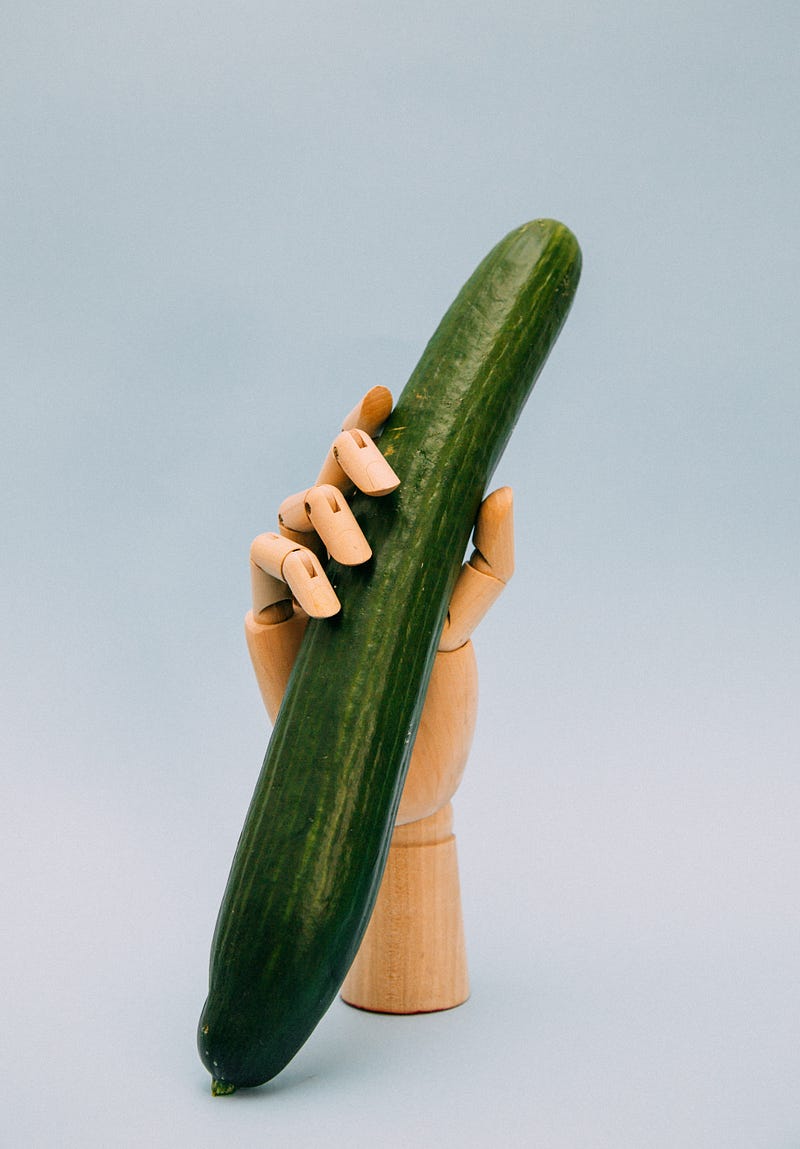
“A Massachusetts man is facing an assault charge after he allegedly threw a large pickle from a moving vehicle that hit a Vermont highway worker…A passenger in a southbound vehicle threw an object ‘later determined to be a large pickle’ that hit the highway worker and ‘caused him pain,’ police said.”
Okay, I know that chucking a pickle at someone while driving on the highway is messed up, but I’d be lying if I said that the image of this whole thing playing out didn’t make me laugh.
But in all seriousness, this silly news story got me thinking about how nonchalantly we go about wasting our food, without a second thought. I mean out all things this dude could have thrown — not that I’m justifying his crime — he chose a fricken pickle.
Little did he know, that pickle would add to the whopping 125–160 billion pounds of food wasted per year in the U.S. alone!
Food waste is no joke, and I’m sure we’re all aware of that.
Yet, a lot of us proceed to throw our perishables to the back of the fridge, only to be discarded as the stench that hits your nose reminds you of those strawberries you bought a couple of weeks ago.
We have no problem with filling up our plates — yes more than one plate — with an arrangement of food we know damn well we can’t finish.
Instead of throwing our food into the trash, or at someone’s head like the dummy mentioned earlier, it would be a hell of a lot more effective and beneficial to our planet and people if we could all reduce our food waste in some form or fashion.
“If hunger is truly a logistics problem, then we as consumers have the power to flip this issue into one of the past.”
The Colossal Amount of Food Going Down the Drain

“Imagine a football stadium filled to its absolute brim — not with last night’s pad thai or this morning’s half-eaten croissant, but with healthy, high-quality, untouched food. That’s how much food goes wasted every single day in America.” — Komal Ahmad, Founder and CEO of Copia
As fictional as that image sounds it’s, unfortunately, a reality in the U.S.
Given that about 40% of the food in the U.S. goes uneaten and that 11% (14.3 million) of U.S. households faced food insecurity in 2018, it’s baffling how much of a difference would be made if we learned how to utilize the food we grow and buy.
Farmers, manufacturers, transporters, grocery markets, and restaurants all play a role in contributing to our global food waste problem.
Clearly, consumers aren’t the only ones to blame for this issue. It’s going to take reform from all institutions and individuals to reduce the humungous amount of food wasted throughout the globe.
However, we can’t deny that of the billion pounds of yearly food waste, roughly 43% of that is contributed by U.S.households alone. Hence, we consumers waste a lot more food than we ever imagined.
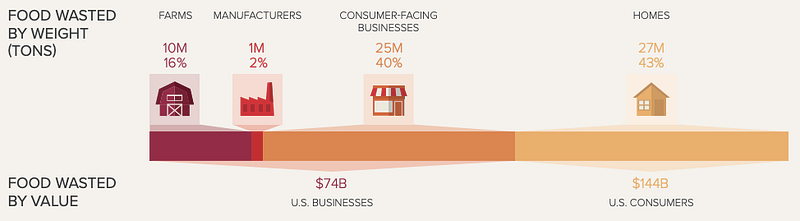
Although we are one of the biggest contributors to our country’s food waste, that also means that we have the power to create the biggest change in mitigating these towering statistics to a minimum.
Here are a few practical ways you and I could make sure our food ends up in our hungry stomachs, instead of an abominable landfill.
1) Don’t Use Your Food As a Weapon
Most of us are somewhat reasonable human beings, but considering that somebody got arrested for assaulting a person with a pickle, I gotta emphasize this point.
Yes, that means no chucking pickles at highway workers and no throwing banana peels on the road like it’s Mario Kart.
On top of harming the environment and our wallets, the last thing we want to have is someone smacked in the face by a flying pickle, or someone slipping on a banana peel. Food is for eating, not fighting.
2) The Bigger the Plate, the Bigger the Waste
In a study done by consumer behavior researchers, Brian Wansink and Koert van Ittersum, they found that “Chinese buffet diners with large plates served 52% more, ate 45% more, and wasted 135% more food than those with smaller plates.”
Portion distortion — a.k.a the normalization of gargantuan food portions through huge plates and serving sizes — is a health problem in of itself for millions around the world, especially for Americans. Not only are we overeating and contributing to the development of poor dietary habits resulting in poor health, but we are also contributing to more food waste by trying to eat more than we can chew.
Thinking that we need to fill up the entire surface of our plates with mom’s pancit and lumpia (my favorite Filipino food), or that we always need to opt for the larger size of a food product whenever we go grocery shopping, is asking for money down the drain and food into our landfills.
It would be great if we all could swap out our huge plates with reasonable portion-sized dinnerware. There’s a reason why McDonald’s got rid of their supersized fries and sodas.
3) Listen to Your Needs, Not Your Cravings
There are two rules that everyone grocery shopping needs to follow:
- Don’t shop when you’re hungry.
- Have a grocery list before going.
When you shop without a grocery list, it’s like going back to school shopping without a supply list. You end up buying a bunch of notebooks and G2 pens that end up not being used, only to be stuffed in a drawer to be forgotten.
Except with food, it doesn’t last forever like the plastic pens or notebooks you bought for the school year.
Purchasing groceries impulsively leads to unneeded perishables that rot in the fridge, and expired snacks that take up unnecessary space in the food pantry. Coming into your local Trader Joe’s while starving doesn’t help moderate this problem of overconsumption either.
Be intentional with what you purchase, and eat a peanut butter & jelly sandwich or something before you head out to the grocery store.
4) When In Doubt, Freeze It Out
The freezer isn’t only for storing popsicles and ice cream. It can store almost anything. Meat, fish, fruits (peeled bananas are my favorite), veggies, dairy, and baked goodies to name a few.
Freezing will prolong the life of the excess food so that you and your family could indulge in them for weeks or even months later. However, this doesn’t mean that we should stuff everything we can into the freezer — we’re trying to limit food waste, not condone hoarding.
5) Turning Banana Peels into Soil
How do we do such magic? By composting.
In a nutshell, compost is a soil-like material created from the mixture of old organic ingredients, such as the leftover skins and peels of fruits and vegetables.
In other words, we have the ability to turn rotten banana peels and leftover pickles into rich, fertile soil for growing new plants. Sounds a lot better than using those bananas and pickles as weapons, doesn’t it?
By redirecting these inedible and unused parts of produce into compost, we have the opportunity to recreate soil for the growth of new plants — allowing us to grow more fruits and vegetables for us to enjoy!
Composting may be a long process, taking anywhere from 3 months to 2 years depending on the size, but it‘s worth it in the end. There’s nothing better than knowing that we’re recycling the scraps of our food into rich soil to nurture the growth of plants for our environment, and ultimately for the reduction of wasted food.
A Logistics Problem, Not Scarcity
When I say stop throwing food into the trash, I’m saying that we need to learn how to utilize and maximize the value of the food we grow and purchase. Before it hits the garbage can, it would be ideal if we all exhausted at least one of the above measures before we do so.
As Founder and CEO of Copia — a platform for donating excess food to non-profits who need it — Komal Ahmad expressed,
“Clearly, hunger is not a scarcity problem — it’s a logistics problem.”
Instead of maximizing our plates to maximize our waste, let’s maximize the utility of our food to minimize the whopping statistics that make our actions worth committing.
If hunger is truly a logistics problem, then we as consumers have the power to flip this issue into one of the past.