
Stop Saying “We’re Already in a Recession”
Recession means six months (or more) of economic decline
California Gov. Gavin Newsom just ordered America’s largest state to stay home, arguing more than half of Californians might be infected with Coronavirus.
Our economy has virtually stopped — shut down by the Corona Crisis — but a recession is (by definition) six months (or more) of negative economic growth. Not two weeks or three months — but six months.
The 1918–20 Spanish Flu Pandemic helped trigger two recessions.
The August 1918-March 1919 recession, coming at the end of World War I, lasted seven months, while the 1920–21 Depression lasted one year and six months. But we don’t yet know how long the 2020 shut-downs will last or whether they helped trigger a recession.
Far too many people on TV keep saying something no one knows: that “we are already in a recession.” No one knows that.
They’ve forgotten — or don’t know — the meaning of recession: six months of negative growth (half a year of a shrinking economy).
“We may well be in a recession,” Federal Reserve Chairman Jerome Powell told NBC March 26. “But I would point to the difference between this and a normal recession. There is nothing fundamentally wrong with our economy. Quite the contrary. We are starting from a very strong position.”
It’s actually possible overall economic growth won’t decline this year…
Economic growth is measured by quarters. GDPNow, from the Federal Reserve of Atlanta, estimated this week the U.S. economy is still on track (as of March 18) to grow 3.1 percent in the first quarter.
James Bullard, president of the St. Louis Federal Reserve, said to expect the GDP to be cut in half (around 1.5 percent growth) and it would be inaccurate to call this is recession. He said this is actually a “planned temporary shutdown the U.S economy.’’
Even when the shutdowns lower that number before the quarter ends (new estimates will be updated March 25) the second quarter starts on April 1 so the shutdowns are coming at the tail end of a strong quarter. And the second quarter is already slated to include great infusions of economic activity.
The National Bureau of Economic Research calls a recession: “a significant decline in economic activity spread across the economy, lasting more than a few months.’’
Ronald Reagan won the presidency from a sitting president by saying: ““Recession is when your neighbor loses his job. Depression is when you lose yours.’’
How the current shutdown could become a recession:
If the economy contracts for six months or more, that is by definition, a recession. On February 12, the Dow Jones hit a record high of 29,551. By March 18, the Dow had crashed to below 20,000.
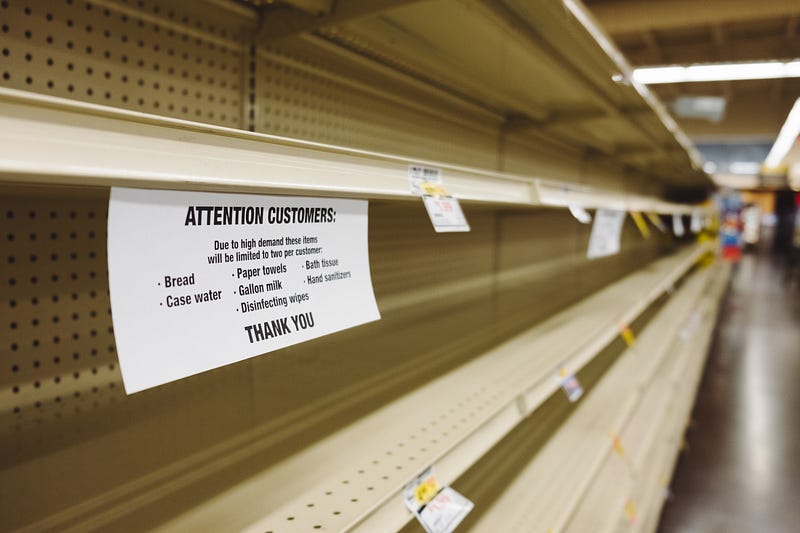
Economic activity has virtually stopped, especially after governments began “lock-downs,’’ ordering businesses to stay home and businesses to close or scale back to protect people from the virus. But the lock-downs are limited. Will the economy shrink over the next six months?
Rule 1: In every kind of economy, someone is making money…
Congress is pumping an extra $1 trillion into the economy in April, including checks for most taxpayers and money for businesses to keep the economy growing. The goal: to help workers and keep the economy growing.
“We’re going to starve the virus by staying apart, bomb it with drug therapies and kill it with a vaccine,’’ U.S. Sen. Lindsay Graham, R-S.C., said, adding the stimulus toward workers will get workers and businesses through the slowdown.
Most American taxpayers will be getting checks of $1,200 or more
The latest stimulus legislation is offering to pay American taxpayers $2,400 per couple for families that earned $150,000 or less with an additional $500 per child. Individuals who earned $75,000 in 2019 will receive $1,200. Higher earners up to $99,000 will have pro-rated smaller checks. The package will hit in the early second quarter, helping Americans pay bills or debts incurred during the March slowdown.
Will the economy shrink in the second quarter with all that money — including the $1 trillion stimulus bill, crashing oil prices and interest rate cuts being poured into the economy at once? Not to mention most people (likely) returning to work as quarantines expire?
Just a decade ago, Barack Obama said his own $831 billion stimulus bill helped end the 2008–09 Great Recession.
The largest long-term economic change sped up by the current crisis?
The United States is moving economic production away from China, where the virus originated, returning jobs to the United States. Some analysts expect a major boost to the U.S. economy as production shifts from offshore to domestic sources.
Why three months — or less — isn’t a recession.
Since 2011, we’ve had three quarters where the economy shrunk in a given quarter, only to grow again the following quarter:
- The 1st Quarter of 2011 (negative 1 percent).
- The 3rd Quarter of 2011 (negative .01 percent).
- The 1st Quarter of 2014 (negative 1.1 percent).
Other events that slow or temporarily stop economies include everything from blizzards to hurricanes to earthquakes and other natural disasters. Disasters and emergencies trigger new spending and economic activity from rebuilding, reinvestments, insurance claims and new government spending.
In summer 2003, a blackout shut down electricity to much of the United States.
But power was restored and people went back to work. The economy moved upward with new emergency spending and upgrades in the following weeks.
The longest and shortest recessions in U.S. history
There have been 47 recessions in U.S. history. The longest were at the very beginning: a four year (1785–88) panic followed by a second four year panic from 1789–93.
The most infamous recession in U.S. history was the Great Depression: The economy shrunk between August 1929 and March 1933 (three years and seven months) and the economy went into a second recession (one year and one month) from May 1937 to June 1938.
The shortest recession in U.S. history hit in 1980, lasting six months from January to June.
The last recession, called the Great Recession, lasted one year and six months, from December 2007 to June 2009. The Great Recession triggered by the subprime lending crisis (widespread bad investments in the financial sector) required massive government bailouts and changes to the financial sector and auto sector, with the GDP shrinking 5 percentage points from the peak to worst points, the biggest drop since the 1945 recession (which was a 12 percentage point drop). The drops were far higher during the Great Depression (26.7 percent) and the 1937–38 recession (18.2 percent).
The 2001 and 1990 recessions both lasted eight months while the 1981–82 recession lasted a year and four months.
Conclusion
It’s fair to say the current crisis is a downturn and major health crisis that could possibly trigger a recession. But that assumption assumes the massive bailouts and other expected new economic activity will be overwhelmed by larger economic declines over the next six months, something no one knows with anywhere close to certainty.


