
Coronavirus | Personal Stories
Animal Crossing is No Substitute for Human Interactions
Stop Kidding Yourselves
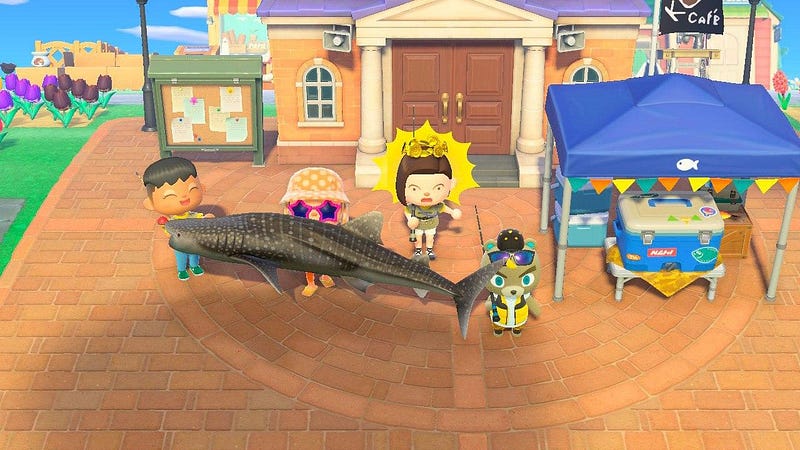
Animal Crossing: New Horizons is the latest instalment of the Animal Crossing franchise that launched on the Nintendo Switch platform on March 20. Within six weeks of its debut, Animal Crossing: New Horizons sold 13.41 million copies and counting. Its success amid this pandemic has led Imad Khan to write in a New York Times Op-ed that:
“Animal Crossing offers a haven and can give players a feeling of empowerment and community, particularly at a moment when many are being told to stay at home.”
To catch you up to speed, the context of Animal Crossing involves the player moving to a deserted island and setting up camp. The gameplay starts slowly with the player gathering resources such as wood, stones and iron ores for ‘DIY Projects’ that enable you to craft indoor furniture, garden furniture, tools and bridges. You are allowed to develop the island at your own pace, being as idle or as driven as you would prefer. The game mirrors the real world as in-game time is in sync with your preset time zone, the seasons pass as they would and as I found out last night, shark season begins in June. Animal villagers gradually move onto your island and they may reward you with DIY recipes and clothes as you interact with them daily. In other words, players are incentivised to pop by their islands every day.
As an Economics student, I was pleasantly surprised when I discovered the Animal Crossing equivalent of the stock market. Except, it is called the ‘stalk market’ and you trade turnips instead of stocks. Turnips can be purchased every Sunday from a snotty-looking NPC called Daisy Mae and can be sold during the shop’s operating hours with prices varying at opening and noon of each day. To simulate the risks of stocks trading, turnips rot at the end of each week making stalks trading a weekly gamble. I know, it’s peculiar, isn’t it? I purchased turnips at 99 bells last weekend and for two days in a row, they have been pricing in the mid-50s. The stalks market on my island is evidently not doing very well. I guess my islanders are sceptical or are simply not in the loop about Moderna’s vaccine trial.
Players can also visit their friends’ islands via online play. I know of people who have hosted birthday parties and even gone on dates with their significant other on Animal Crossing during this pandemic. Last night, for the first time since I started playing Animal Crossing, I visited a friend’s island for a fishing tourney. The medieval language in a “fishing tourney” and its nostalgia for a simpler, pastoral life is not lost on me.
It is easy to see how Animal Crossing can be a bubble or a refuge for players who are currently staying home, devoid of physical interactions with the outside world. Perhaps, to some, Animal Crossing offers an opportunity to design a virtual utopia resembling a simpler, laidback life. The mindless hours spent fishing and interacting with NPC villagers could provide the illusion of socialisation. Unfortunately, it is ironic that this simpler life exists on a gaming console.
Despite the best efforts of the game developers, Animal Crossing is at best a weak substitute for human interactions. They are not the same. Not for me anyway. As I dart across my island, going from tree to tree and rock to rock to collect supplies for my next DIY project, the NPC villagers out on a stroll with fishing rods and bug nets do not make me feel any less lonely. Sure, I am thrilled to visit my friends’ islands and to check in on what they have been up to. I am also in awe of the biodiversity of their islands as compared to my slow-developing, desolate island. Even so, the initial exhilaration of visiting my friends’ islands wears off several minutes in when the reality that I am faced with programmed emotes and hastily typed three-word messages in speech bubbles hits. At some point, it is just depressing.
Imad Khan may be accurate in his verdict of Animal Crossing but no matter how empowering or communal Animal Crossing may be, it is ultimately a “feeling”. A feeling derived from a virtual reality involving NPCs with pre-programmed reactions and friends with a fixed set of emotes. Instead of satisfying my need for human interactions, Animal Crossing triggers a deep yearning for real, organic, face-to-face interactions. Even if emotions can only be conveyed by the look of an eye since the rest of our facial features will probably remain hidden behind a mask for the foreseeable future, I would take it over Animal Crossing any other day.


