
Stop Flapping Your Gums About Polyamory
Unless you are living it or are a subject matter expert, be quiet and learn
I wouldn’t dream about writing a story about what it’s like to be a gay man. Neither would I dare to write about what it’s like to be an Orthodox Jew. Although I do actually know a little bit about both of those things from listening to people who have that as their lived experience, I still wouldn’t presume to tell a gay man or an Orthodox Jew what their relationships and experiences are really like.
And yet, there are all kinds of people who know little to nothing about polyamory who have no problem writing about it or even telling others who are actually polyamorous what it’s really all about. To those people, I say, “Please just stop! You don’t know what you are talking about and you’re making an ass out of yourself as well as completely misrepresenting this relationship style.”
For starters, if you don’t know the difference between polygamy and polyamory, you have no business speaking about either. Polygamy is plural marriage, most often between one man, and two or more women. The man is the head of the family and the women are all subservient to him. It’s what radical Mormons and some Muslim cultures do, and it’s about as different from polyamory as fast food is from fine dining.
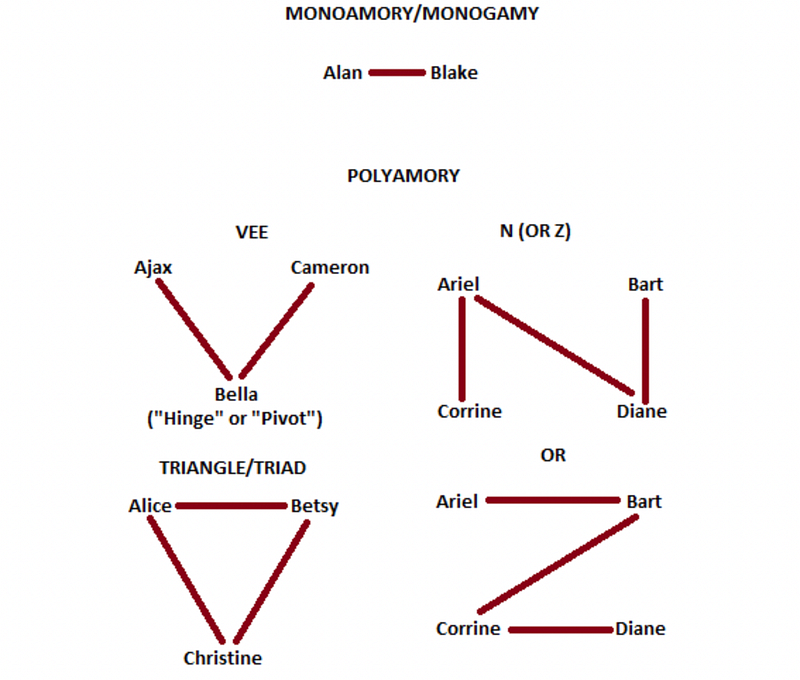
Polyamory is intimate connections of different types with more than one person. These connections may well have a sexual component to them, but not necessarily. Unlike traditional marriage or most monogamous relationships, there are no pre-set rules or expectations. There are nearly infinite ways to go about non-monogamous relationships — the only constant is that they are done openly and honestly. This is what ethical non-monogamy means.
Besides the fact that there are myriad ways to go about polyamory, that’s not the only way to be ethically non-monogamous. If you don’t know that and want to conflate poly relationships with swinging or open marriages, you are once again wildly off base and should sit down and be quiet because you don’t know what you’re talking about.
Swinging tends to be more about the physical aspects, although even then, it’s often done with great fondness and caring. Polyamory is about having multiple relationships where love or at least intimacy are at the core. As I said before, sex may well be an important aspect too, but just like in monogamy, sex isn’t the only aspect. Many people in ethically non-monogamous relationships don’t fit squarely into only one camp. They may have ongoing love relationships with more than one person and also sometimes have casual sex as well.
In general, swingers have a primary love relationship and it is more likely to become an issue if they begin to have strong emotions for someone they are playing with (having sex with). Poly people, however, expect to love more than one person at a time and it presents no inherent issues if one’s partner falls in love with someone else, since they don’t have to choose between the two. Love is not considered an exclusive commodity to be only shared with one person.
When most people hear the term polyamory I think they tend to imagine established or cohabitating couples who each have other separate love interests or solo people who have more than one ongoing relationship. Although this is a pretty common way to go about ethical non-monogamy, it’s far from the only way. In fact, the ways to do non-monogamy are probably as many and varied as the people who enter into those kinds of relationships.
One of the upsides (which is also a downside) is that there are no pre-established rules. Every relationship has to be talked about and negotiated with the other person or people in it. This can get complicated and messy, particularly if one or more of the people involved is not being completely open and honest. But for the most part, poly people value honesty and communication, and with this lifestyle, you essentially get to chart your own course and make your own way; however many yous there are in the relationship or polycule.
Beyond the wide variety of possible relationship configurations, there are also a wide variety of style options.
Solo poly — these people don’t want to live with anyone else or have their lives be too linked as far as finances, etc. They don’t have one main partner, although they may still have deep commitments to the people they are involved with, or they may be interested in more casual relationships. It all depends on the person.
Hierarchical poly — often a married or otherwise long-term committed couple whose primary connection is to and with each other, possibly because they are raising children together. Other partners take less priority.
Non-hierarchical poly — people who do not prioritize any of their relationships over the others. No one partner has more of a say or input than anyone else. The main priority is for everyone to get their needs met, regardless of the length of time together or living arrangements.
Parallel poly — partners have no interest in meeting or being connected to the other people in their partner’s lives. They acknowledge their existence but don’t want to be friends or have involvement in their metamour’s (the partners of their partners)lives.
Kitchen table poly — the name for this comes from the idea that everyone would be comfortable sitting around the kitchen table having a meal or a cup of coffee together. Metamours are actively friendly with and involved in each other’s lives (to whatever degree that works for them — from friends on social media to enjoying spending time together.
Mono-poly relationships — where one person is monogamous and the other is not, with the consent of both.
You wouldn’t believe some of the assertions that I’ve come across from people who don’t really know anything about the subject writing to tell me about what polyamory is actually like. Here is a small sampling, along with the real deal about those assertions.
Communal living eventually breaks down into a jealous mess.
Most polyamorous relationships are parallel poly, not communal relationships. Although sometimes threesomes (or moresomes) live together, it’s much more common for individuals to simply have parallel couplehoods running with more than one person at a time. Although sometimes couples date the same person, they don’t necessarily all live together.
Solo poly practitioners don’t live with any of their partners, and even if someone has a nesting partner (someone they live with) they usually only live with that person, and not their other partners as well. I say usually because there are no hard and fast rules for any of this and other configurations are possible. But even as throuples become more commonplace, most poly relationships are a series of one-on-one dynamics that are all taking place at the same time. They aren’t free-love communes where everyone is having sex with everyone else.
Polygamy is an economic structure. Polyamory is something similar, if not the same.
Since there is no inherent or default structure to polyamory, this couldn’t possibly be true. Solo poly practitioners have no economic ties to their partners, and it’s typical to only have a monetary or economic component with a nesting partner. If someone had children with multiple partners, they might have economic ties to more than one of them, but that too is far from the norm.
Polyamory is unfair and destructive to women.
As Anne Shark put it so well, this couldn’t be further from the truth. “In my experience, poly women (myself included) are much less tolerant of toxic behavior from their male partners. The nature of polyamory is indeed equality!”
This doesn’t mean that it’s perfect and ideal all the time, but the relationship structure allows for much more autonomy than is typical in most monogamous relationships and bad behavior (from anyone) is less likely to be tolerated.
Two-thirds of existing monogamous relationships that open up do so at the request of women, although it’s definitely something that both partners really need to be on board with in order for it to work well.
If monogamy isn’t socially enforced, it will lead to chaos since only a few elite men will have large harems of women and many men will have no partners.
This is one of the most absurd assertions about polyamory made by people who simply have no understanding of it and can only envision things through the lens of polygamy. This would never, ever happen because polyamorous women also get to have other partners too — multiple other partners if they so wish (the complete opposite of polygamy). Even when I point this out, a certain percentage of people (men) still can’t wrap their brains around it. They can only envision a man wanting multiple partners.
The women who enjoy polyamory like it because it gives them a less co-dependent, less controlling relationship structure where they can not only have sexual variety but get their other needs met by a variety of other partners. It’s a relationship structure where people have to communicate well in order to make it work. You have to literally build your relationship together from the ground up because there is no default.
As I said at the beginning, polyamory has got about as much relationship to polygamy (what these naysayers are envisioning) as fast food does to fine dining. They aren’t remotely the same thing, and if you don’t know that you have no business speaking authoritatively about polyamory as if you understand it and know how it works.
Infidelity is harmful to intimate relationships even if you are doing it with each other’s consent.
It’s not infidelity if it’s being done consensually. Lying and deception are what is harmful to intimate relationships, not having sex or being in love with someone who isn’t your main partner. Many ethically non-monogamous people find this lifestyle quite beneficial to their primary or original relationship. They find the intense level of communication and trust to be strengthening to their relationship. In addition, the element of compersion (the joy you feel when your partner is happy) is something that can bring a lot to relationships that are strong and healthy.
Polyamory isn’t for everyone and that’s just fine. What isn’t fine is people who don’t really know what they are talking about or who don’t understand how monogamy is different from any form of ethical non-monogamy speaking as if they are an expert on the subject. I’ve never seen another topic where people who don’t know the first thing about it feel so free about putting forth their beliefs and opinions.
Even in the face of clear explanations to the contrary, they are still often sure that polyamory is just another form of polygamy, that it’s as destructive as cheating, that it’s only about sex, and a host of other beliefs that are deeply rooted in what I suspect is thinly veiled moral outrage. How can anyone be happy and in healthy relationships when they are flaunting the moral center that is monogamy? Well, because they can.
© Copyright Elle Beau 2021 Elle Beau writes on Medium about sex, life, relationships, society, anthropology, spirituality, and love. If this story is appearing anywhere other than Medium.com, it appears without my consent and has been stolen.