
‘Stooges Among Us’ contributor Scott Reboul traces his journey to the hysterically funny trio
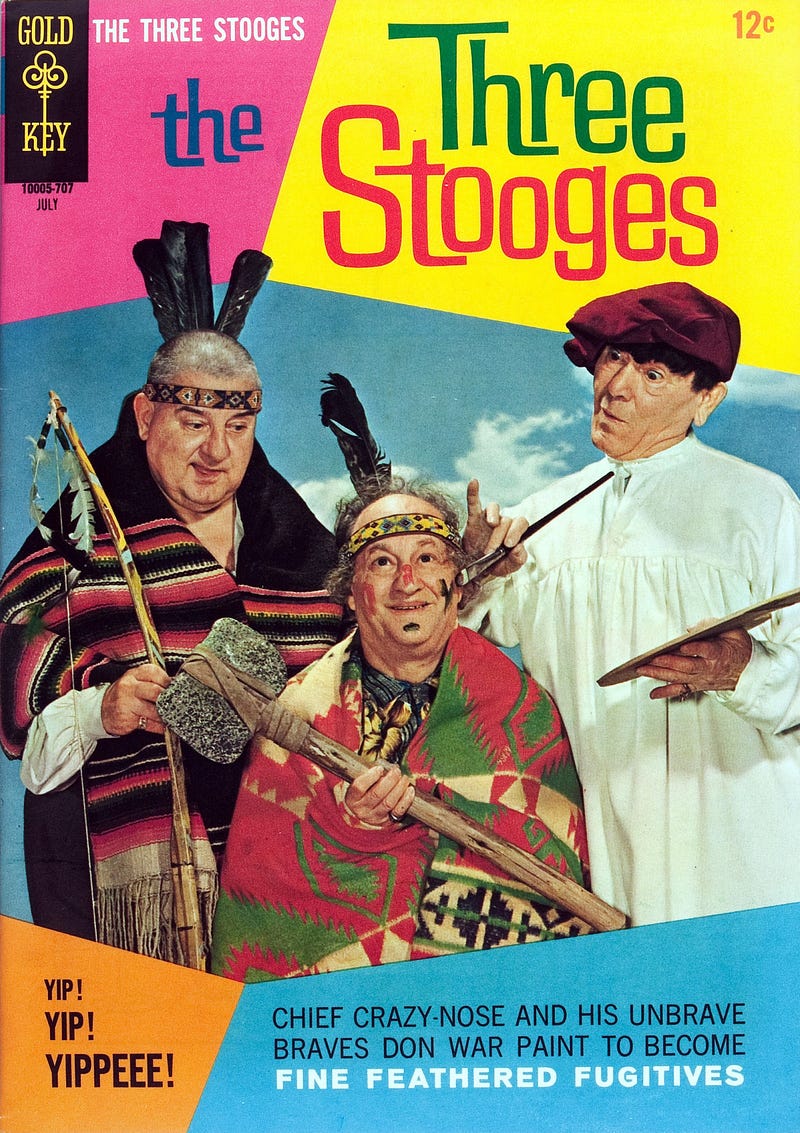
Until his retirement in July 2018, Scott Reboul was a radiochemist at the Savannah River Site, ensuring the environmental safety of 36 million gallons of radioactive liquid waste, remnants of Cold War-era nuclear material, during a distinguished 24-year career. The only clue that Reboul’s colleagues had pertaining to his Three Stooges fascination “was the wallpaper on my computer screen, which just happened to be a picture of Moe Howard and me taken outside the Harwan Theatre in New Jersey two years before his passing.”
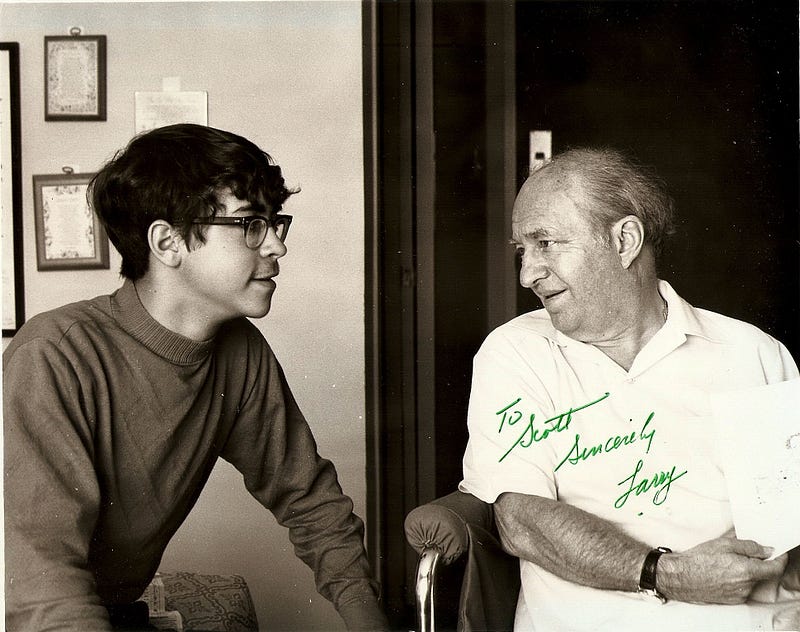
As a savvy, determined 15-year-old teenager coming of age in New Jersey, Reboul faithfully watched Stooge shorts on Philadelphia station Channel 29 and discovered that Moe, Larry Fine, and Shemp Howard replacements Joe Besser and Curly Joe DeRita were still among the living, albeit largely vacant from the limelight. Learning that Larry was recovering from left side stroke paralysis at the Motion Picture Country Home and eager to hear from fans, Reboul composed an autograph request letter. With Larry’s advantageous assistance, Reboul ultimately spent priceless moments with all the surviving Stooges on various trips to Southern California with his accommodating father Theophile Todd, a research physicist for DuPont and RCA. Starting below Reboul grants a thorough walk down memory lane honoring the all-time gods of comedy who mastered timing and physical pratfalls.
The Scott Reboul Interview, Part One
Who approached you to take part in Stooges Among Us?
Lon Davis, the lead editor of Stooges Among Us, is the one who contacted me about contributing to his book. He had gotten my name from Gary Lassin, the gentleman who runs the Three Stooges Fan Club, publishes The Three Stooges Journal, and owns the Stoogeum. Around that time I had developed a multi-media presentation about my Stooges encounters and had presented it at the Stoogeum, so Gary suggested me as a possible author.
Part of my Stooges story had already been documented in Steve Cox and Jim Terry’s One Fine Stooge [2006], so I figured it would be appropriate to tell the rest of my story in Stooges Among Us. The fact that I had just put the multi-media presentation together made it easy to assemble the information in the form of a chapter for Stooges Among Us.
How did a kid growing up in New Jersey become so enamored with the Three Stooges and want to reach out to them?
From the ages of two to seven, I lived in Princeton, New Jersey, where the primary antenna-based television stations were those coming from New York City.
WPIX Channel 11 and WNEW Channel 5 were the two television stations I most remember watching as a young kid. At the time, those stations routinely broadcast films of all the classic comedy teams such as Laurel and Hardy, Abbott and Costello, and the Marx Brothers.
They also broadcast a number of popular children’s comedy programs including The Sandy Becker Show, Chuck McCann’s Let’s Have Fun, Sonny Fox’s Wonderama, The Chuck McCann Show, and Officer Joe Bolton’s Funhouse featuring the Three Stooges comedy shorts.
From an early age, I fell in love with watching all these classic comedy films on NYC TV and would ask my parents if they knew anything about each of the comedy teams. My parents’ general answer was that the films were made many years ago, they had seen many of these films at the theatre when they were growing up, and most of these comedy teams were no longer performing.
As a kid I couldn’t understand why the teams would no longer be performing, so I would ask my parents for more details. I didn’t really like the answers my parents provided — Oliver Hardy, Lou Costello, and Chico Marx had died — and Groucho had left the Marx Brothers to perform on his own.
Of course, back then there was no simple way of getting information on the members of the comedy teams, as there was no Internet searching and none of the plethora of books that now exist on the comedy teams had yet been published. Over the next few years that followed, I learned that Harpo Marx and Stan Laurel had died by reading the 1964 and 1965 annual editions of the World Book Encyclopedia Year in Review.
Also in 1965, The New Three Stooges cartoons with live beginnings and endings began being broadcast, which made clear that Moe, Larry, and Curly Joe were intact as a team. Two years later, I just happened to see the Stooges’ cameo appearance in the Off to See the Wizard television program, which confirmed they were still active as of 1967.
However, I kept doing the math in my head to figure out the approximate age of each Stooge and was unable to reconcile the results. As a teenager, I was not a very good judge of age.
My guess was that Moe and Larry were both about 45 years old when they made the 1934 Columbia short Men in Black, which led me to approximating their birth year as 1889. But if they were born in 1889, they would have been 78 in Off to See the Wizard, which was hard to believe, given that they still appeared relatively recognizable and agile.
This disparity stuck in my mind, along with the notion that the Stooges were the last apparent remaining comedy team from the old days, making me zealous to learn everything I could learn about each of the Stooges and about their history in comedy [of course, my estimates of Moe and Larry’s ages were 8 to 13 years too high, but at the time I didn’t know any better and was using this misinformation to further confuse myself!].
With zero books available on the subject at the time — Leonard Maltin’s 1970 Movie Comedy Teams had not yet been published and it wasn’t until 1973 that I learned the tome was available — I got it in my head that I would be on the look-out for any clues that shed light on the Stooges current lives and their comedy history.
As addressed in Stooges Among Us, my first clue enabling me to learn more about the Stooges came with delivery of the March 14, 1973, edition of the Philadelphia Evening Bulletin, which contained an interview with Larry Fine’s brother Morris Feinberg. I was 15 years of age at the time, and once I read the Feinberg interview, I was off and running.
Tell me about seeing the Stooge shorts on your local Philadelphia station Channel 29. Do you remember the very first short you glimpsed?
Unlike today, in the 1960s and 1970s, there were minimal television channel choices available to viewers. In most cities, there were typically three VHF standard channels for the ABC, NBC, and CBS networks, one standard VHF channel for PBS, and a couple of miscellaneous UHF channels.
In the Philadelphia area, standard VHF choices included Channel 3 NBC, Channel 6 ABC, Channel 10 CBS, and Channel 12 PBS. Correspondingly, the miscellaneous UHF channels in the Philadelphia area were Channels 17, 29, and 48. Of course, this was in the days before home video, so your only viewing choices were those presented on the available channels.
Daytime television programming in the 1960s and 1970s typically consisted of news programs, talk shows, game shows, reruns of older television programs, and motion pictures produced in the 1930s to 1950s.
Because of the high popularity of the Three Stooges shorts and the relatively low costs of airing them, many of the local television stations chose to broadcast the Stooges shorts multiple times on a daily or near daily basis.
In the ’60s and ’70s, I recall that three different Philadelphia-based stations were airing the shorts every weekday — Sally Starr’s show on WFIL Channel 6, Wee Willie Weber’s show on WPHL Channel 17, and an unhosted, hour-long broadcast on WTAF Channel 29 which showed three unedited Stooges shorts each weekday.
A concise schedule of each day’s local programming was included in the newspaper, and because of the low number of television stations, it was very easy to review the schedule and identify which programs were of interest.
So upon moving to the Philadelphia area, I quickly found the times and channels of Stooges programming by reviewing the schedule in the newspaper and through conversations with classmates at school.
The fact that the showings of the Stooges shorts on Philly TV remained constant for so many years made it easy to get into the habit of watching them every day, especially on Channel 29, which broadcast the shorts starting at 3:30 p.m., the same time that most kids were arriving home from school.
To emphasize the consistency of the showings, I will tell you that I kept a log of the shorts being broadcast each day and quickly realized that Channel 29 showed them in a particular sequence that repeated itself on the calendar continuously for several years. Based on this order, I knew exactly which shorts would be shown on any given day. Obviously, I was a fanatic!
One of my earliest memories of viewing a Stooges short was from about 1960, when I was about three years of age. That was the time frame when I lived in Princeton and viewed the shorts via NYC television hosted by Officer Joe Bolton.
The short that sticks in my mind is the latter Curly-era Idiots Deluxe [1945] with the memorable interchange between the Stooges and the black bear. I can’t guarantee it’s the first Stooges short I saw, but that’s the one I remember most from my early childhood.
In contrast, by the early 1970s when I was a teenager, I had seen the shorts so many times over the previous 10 years that I have no recollection of one short standing out amongst the others. At that point, I loved them all, some more so than others, but all of them sufficiently entertaining to watch over and over again.
Which Three Stooges shorts do you find yourself watching repeatedly?
It’s hard to say exactly which Stooges shorts I re-watch the most because I like re-watching so many of them — almost all of them in fact. But I guess I do tend to gravitate towards certain shorts from each era.
In chronological order, here are my favorites starting with the Curly era — Punch Drunks, Pop Goes the Easel, Hoi Polloi, Three Little Beers, Slippery Silks, We Want Our Mummy, A Plumbing We Will Go, Dutiful But Dumb, An Ache in Every Stake, and Micro-Phonies.
Let me add to that three shorts that are less conventional due to the musical content — Woman Haters [yes, I know I’m unusual for liking this one], Violent is the Word for Curly, and Gents Without Cents.
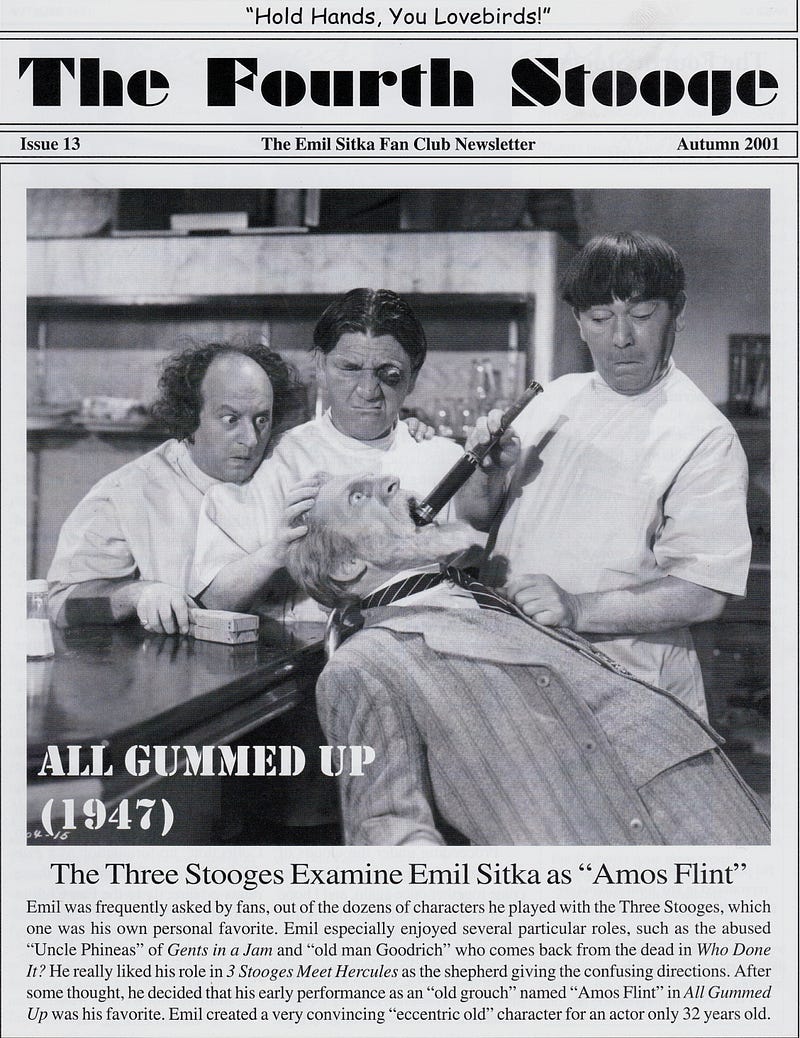
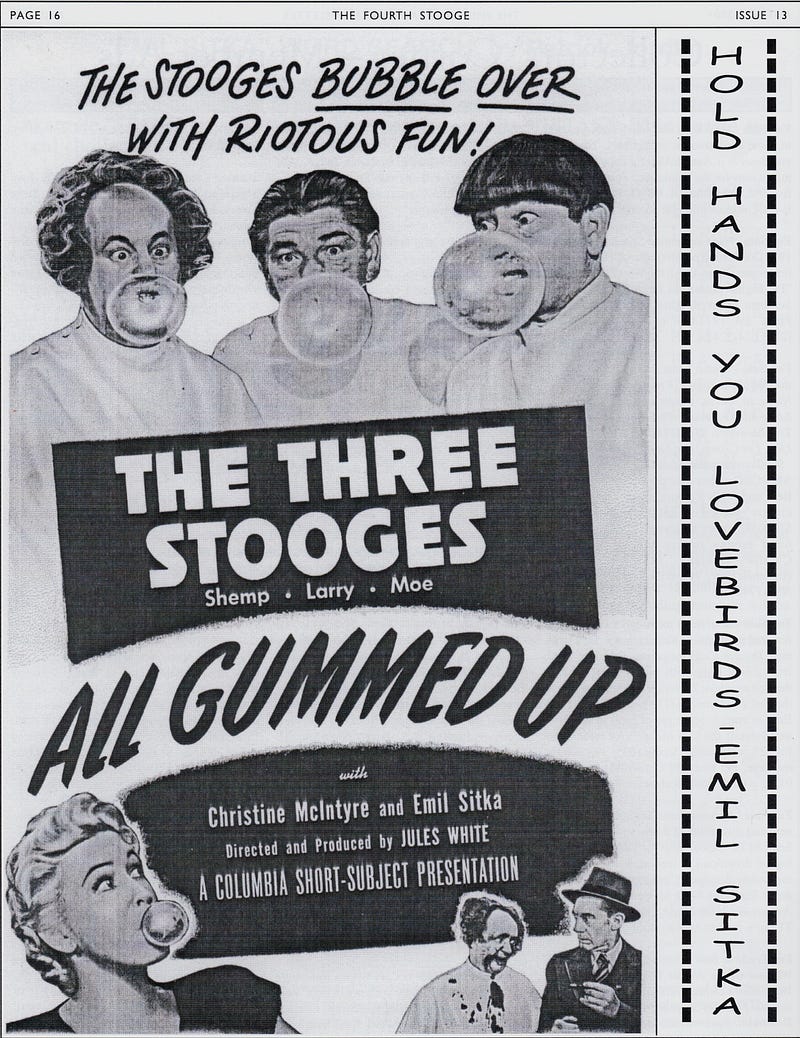
During the Shemp era, Hold That Lion is at the top for obvious reasons — i.e. the surprise cameo appearance of Curly featured alongside Larry, Moe, and Shemp — along with Brideless Groom, All Gummed Up, its remake Bubble Trouble, Heavenly Daze, Crime on Their Hands, its remake Who Done It?, The Ghost Talks, Vagabond Loafers, Scrambled Brains, Three Dark Horses, and Blunder Boys.
Finally, I choose A Merry Mix-Up, Quiz Whiz, and Oil’s Well That Ends Well from the Besser era. I always found Besser funny, but he wasn’t a perfect match with the Stooges. Columbia was putting so little effort into the Stooges’ shorts at that point that those last shorts truly paled in comparison to the earlier shorts. It can be a strong endurance test sitting through some of them. I am a big fan of the “hello…hello…hello” introduction that precedes each of Besser’s 16 Stooge contributions.
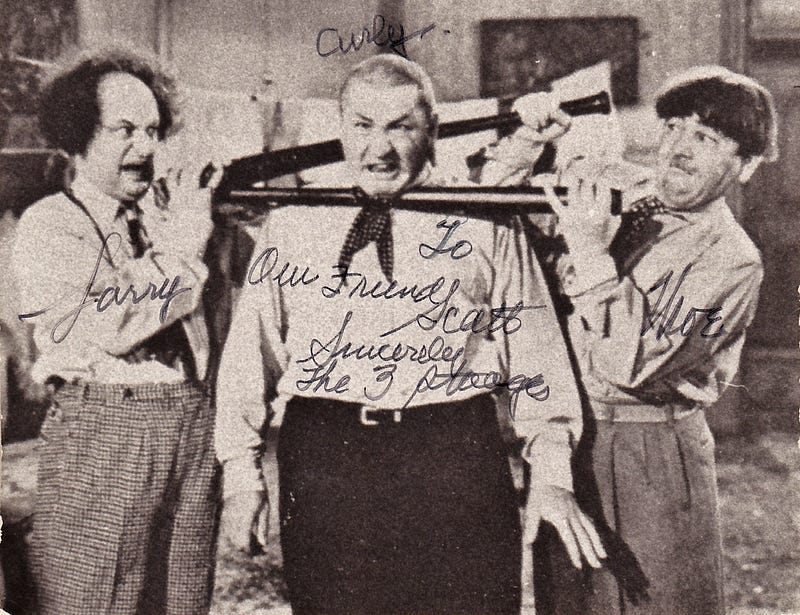
Shemp Howard was a founding Stooge long before baby brother Curly entered the scene, so let’s turn the spotlight over to him. What is Shemp’s contribution to the continuity, popularity, and legacy of the Stooges?
Let’s start with a brief overview of the obvious attributes of many of the Curly-era Columbia Stooges’ performances. There was an abundance of performance energy, with each member of the Stooges exhibiting a unique visual appearance and personality. That includes straight, black-haired, medium-small build, gruff Moe; wild curly, lighter receding-haired, slim, goofy Larry; and hairless, round, childlike, surreal and colorful Curly. A great contrast between each member of the Stooges and magical chemistry between the three.
The good production values of the Curly-era shorts provided a polish that allowed the Stooges’ performances to shine. In the words of Larry, “We took a hit when we lost Curly.” Larry’s words seem to reflect the general popular opinion regarding the transition from Curly to Shemp, although close examination of the Stooges’ long term legacy may show otherwise.
With the loss of Curly and the introduction of Shemp, the most obvious difference in the appearance of the team was that two of the members, Moe and Shemp, now looked strikingly similar to one another. Both had black hair — albeit different styles — Moe’s combed forward and Shemp’s combed back. Larry’s appearance now stood out significantly less starkly than it did when viewed against Curly’s. Of course, the Stooges’ comedy talents extended way beyond physical appearances. Nonetheless, the significantly lessened physical contrast of the Shemp-era Stooges had an immediate impact on the reaction of the viewing public.
In terms of comedic timing, Shemp had a bit of an edge over Curly, although Curly offered so many other positive character facets that timing alone could not necessarily make viewers gravitate to the Shemp-era Stooges. However, Shemp is probably the only person in the world who could have stepped in for his brother Curly without missing a beat, with Shemp’s character fully established and his rapport between Moe and Larry solid from day one. And he did it admirably, regardless of the challenges he faced for not being Curly.
The fact that Shemp appeared in 76 Columbia Stooges shorts over a nine-year period, as opposed to 98 over a 12-year period for Curly, is very telling that Shemp’s contribution to the Stooges is significant and intact. Shemp maintained the Stooges’ popularity over a large portion of their Columbia history. He kept the Stooges visible to the extent that they were able to continue making the shorts for three additional years with Joe Besser as the third Stooge after Shemp’s demise. Joe DeRita then replaced Besser for the full length feature and live stage appearances extending until 1970.
As a child, I didn’t know the history of the shorts and wondered why the third Stooge changed from Curly to Shemp to Joe. That never got in the way of me enjoying them. Just like the declining production values that impacted the Columbia shorts over the years, I could sense an impact on the quality of the shorts, but the comedic talent of the Stooges was what always still grabbed my attention, regardless of the changes in the act occurring over time.
Today, I still have favorite shorts from the Curly, Shemp, and Joe eras. However, I find that the scenes I tend to find most humorous and the lines that make me laugh out loud the most are those associated with Shemp. “Can I help it I ain’t Cousin Basil!?” [Shemp’s line from Brideless Groom] and the scene from Scrambled Brains where Shemp is playing the piano are two examples that never fail to crack me up!
Not to take anything away from Curly who proved his immense contribution to the Stooges, but the Shemp-era shorts have their own charm and hold up exceedingly well. If it weren’t for Shemp, the Stooges’ body of work might well have ended with the release of the final Curly Columbia short Half-Wits Holiday in 1947, cutting the Stooges’ career short by nearly a quarter of a century. Only Shemp had the abilities needed to maintain continuity and effectiveness of their shorts, ultimately leading to the latter day Stooges revival and reincarnation beginning in the late 1950s.
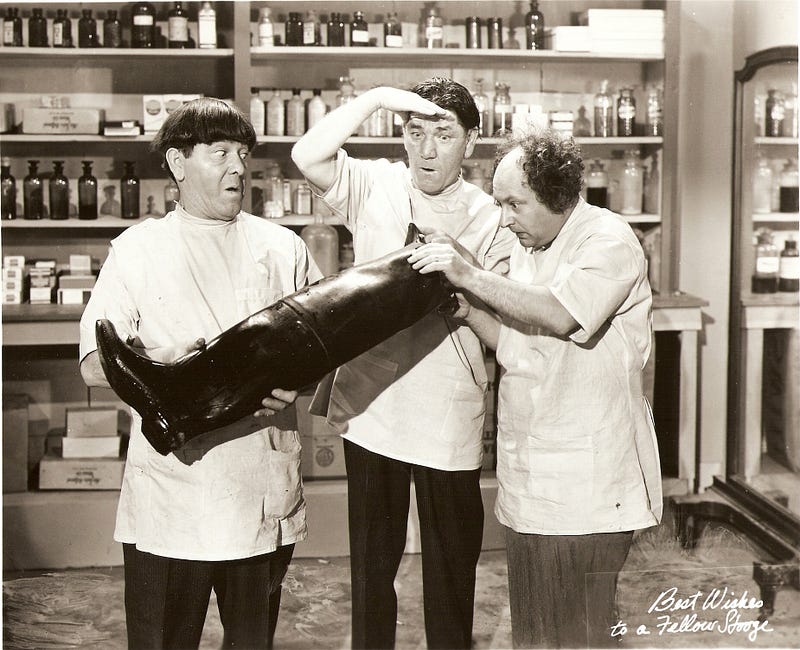
Why do you like the 1953 Bubble Trouble remake so much?
All Gummed Up and its remake Bubble Trouble both appeal to me because of the somewhat unusual story premise, the particularly ludicrous Stooge antics and reactions, and the outstanding characterizations by Christine McIntire and Emil Sitka.
The darker elements of the short highlighting the difficulties of getting old coupled with the upbeat resolution due to the Stooges actions combine to make for an especially gratifying viewing experience.
I must say there was something particularly prophetic about watching these two shorts in the early 1970s and hearing Moe’s line “It’s tough to get old,” knowing that at the time Larry was wheelchair-bound and that Moe was performing on his own “as a single” in his seventies.
The Bubble Trouble remake is a notch better than the original for a couple of reasons. First, a bit of the filler from All Gummed Up has been removed, making the story line of Bubble Trouble a bit tighter.
Second, the sequence of events has been changed, with the primary resolution occurring at the end of Bubble Trouble versus occurring three-quarters of the way through All Gummed Up. Having the resolution at the end just works better.
I recognize that the resolution in All Gummed Up — Sitka’s villain character regressing back to a young kid after ingesting “the fountain of youth” — makes more sense than the resolution in Bubble Trouble — Sitka’s villain character turning into a gorilla after ingesting “the fountain of youth.” I doubt it, but maybe the gorilla is intended to represent some type of Cro-Magnon man.
I really like the finale of Bubble Trouble where Moe walks into the camera doing his “monkey face” as the short concludes. That cracks me up every time I see it!
I was perusing one of the Stooges’ Facebook pages — I don’t have a Facebook account but sometimes use my wife’s Facebook to scrutinize the Stooges’ pages — and found that Argentina artist Diego Puglisi had very recently posted a comment that he, too, thinks Bubble Trouble is better than All Gummed Up. I got a kick out of seeing his answer, especially so soon after providing my Bubble Trouble answer here!

Beginning with 1953’s Booty and the Beast through Commotion on the Ocean distributed a year after Shemp’s death, do the Shemp remakes endure alongside the original shorts?
Most of the Shemp era remakes are similar enough to the originals that they hold up well, assuming the original was sound. Some of the bits in the remakes add value and some detract, but on the whole, I like the remakes about the same as I like the originals.
The one exception is where it’s obvious that the remake uses Joe Palma to double for Shemp after his death. Seeing Palma as Shemp definitely breaks the continuity of the short and makes it difficult to view the short without thinking about Shemp’s demise.
My guess is that 21st century viewers probably have a much greater opportunity to recognize remakes than the original movie-going public and the late 20th century television viewers, if for no other reasons than that home video has made sequential repeated viewings much more doable, and that so much more information about the chronology and details of the shorts is easily accessible today.
I’ve never watched the originals and remakes side-by-side for purposes of comparison. However, at this point in time, I have seen all the shorts so many times that I pretty much remember all the primary differences.
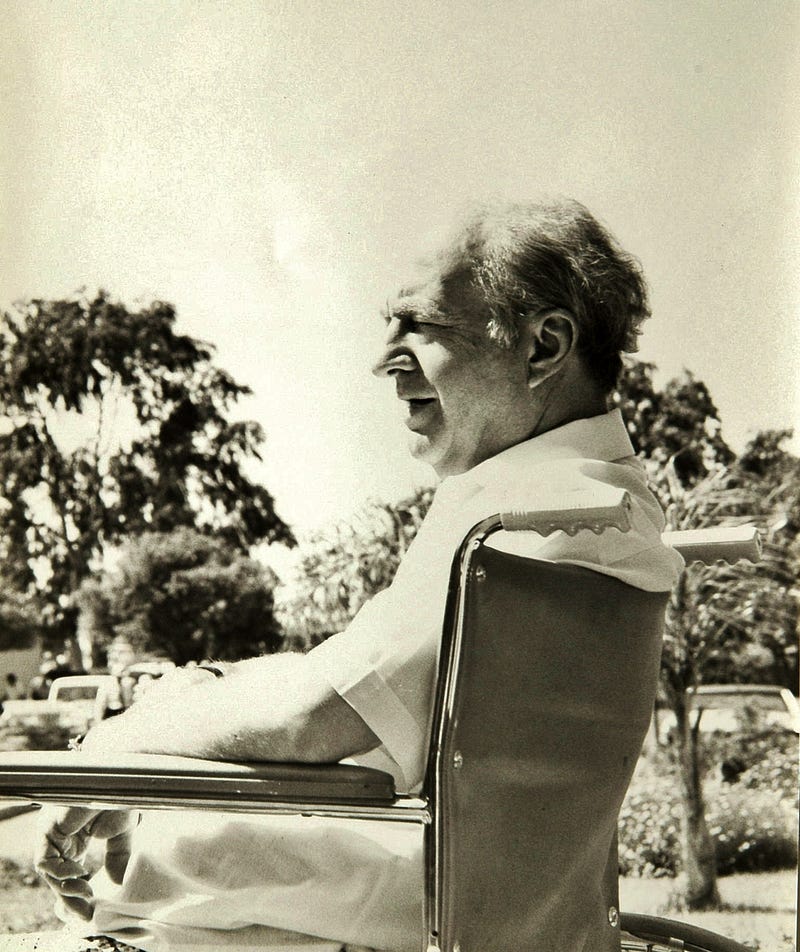
Why did Larry prefer decidedly oddball Stooge shorts like Cuckoo on a Choo Choo and Sweet and Hot?
Larry played the role of “second stooge” to perfection, so he repeated it over and over again in nearly 100 percent of the Stooges’ stage appearances, shorts, and feature films extending over multiple decades.
Coming from a vaudeville background where he utilized a much wider range of talents in the roles of musician, singer, dancer, and actor, he knew he was capable of much more than just the “second stooge” role, and yearned to use his other skills whenever appropriate. Of course, Larry accepted his fate as the “second stooge,” as it served him well, providing a lucrative salary and supporting an exceptional lifestyle.
But Larry was always looking for opportunities to utilize the other talents, be it his ability to play the violin, harmonize in song, perform a Russian dance, or play an alternate role. The oddball shorts like Cuckoo on a Choo Choo and Sweet and Hot provided Larry with the greatest potential opportunities for departing from his routine “second stooge” role — over a slightly sustained duration — and for showing a side of his talents that was normally hidden from the audience.
The fact that Choo Choo and Sweet and Hot were amongst the least well-received shorts of the various Stooges entries did not seem to phase Larry at all, for his enthusiasm of these two shorts was rooted in the opportunity given him to do something different and to utilize more of his vaudeville-honed talents. Can you imagine being limited to using only a small fraction of your talents over the majority of your career?
© Jeremy Roberts, 2018. All rights reserved. To touch base, email [email protected] and mention which story led you my way. I appreciate it sincerely.