
Stoicism | Stories | Health & Fitness
Stoicism, Balding, and Why I Am Grateful for Getting Long-Covid
Even though it still affects my daily life
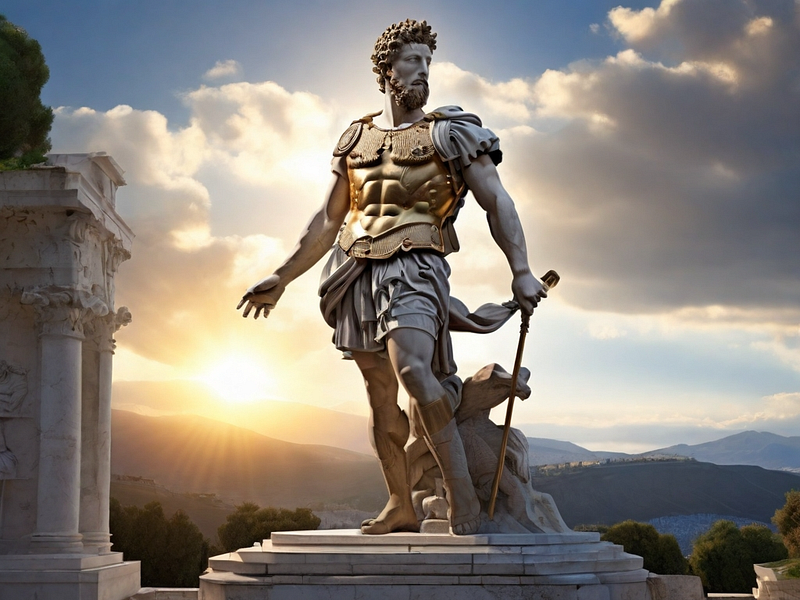
Fate is a bitter pill to swallow.
Or if you don’t believe in fate then maybe it isn’t. Perhaps it’s sweet and sour or something.
Either way, if fate is a thing, it kindly invited me to endure long-Covid symptoms about a year ago today. It turns out accepting the invite was non-negotiable, which I initially thought was quite rude.
Because I could not stop for fate / he kindly stopped for me.
At first, I kicked up a fuss (with admittedly little animation, since I was too tired) and got all indignant, cursing the world and everything in it.
A year on, however, I’ve come to accept what has happened (turns out there is no better option) and become grateful for the hardship I’ve had to put up with. Yeah, take that fate. Bet you didn’t see that coming.
Being over-encumbered with fatigue has surprisingly had quite a positive knock-on effect, leading me to rediscover stoic practices and finally come face to face with a terrifying likelihood: going bald.
Before I get into more of that, let me share my story of getting long-Covid, how it affected me, and how I have recovered — mentally and physically.
The reality of getting long-Covid
Just before Christmas of 2021, I got Covid-19.
The same thing happened in 2022, causing me to self-isolate two Christmases in a row. Third time’s a charm? I couldn't help but think to myself this Christmas, wondering if it was becoming a pattern.
Don’t worry, I passed the Covid vibe check this time ‘round.
In 2021 I was hospitalised with it, which kind of sucked*, but it was no big deal; I recovered fully after three weeks or so.
The 2022 version gave me flu-like symptoms, which were much more manageable than my reaction last Christmas… so I thought.
What I didn’t expect was for the symptoms to not go away.
It had been months, yet I still had:
- A persistent chesty cough,
- Chronic fatigue,
- Brain fog,
- Inability to focus or concentrate,
and more.
Being a highly active person who enjoys focusing on lots of mentally stimulating activities it was a real kick to the balls.
And like a kick to the balls — which I am so thoroughly experienced in — no matter how much you try to fight the pain, you’ll always end up on the floor keeled over in pain.
Learning to accept reality
At first, I refused to accept that I had long-Covid
I thought that if I believed I had it, then the effects would become true and actually manifest for real.
So I fought. And as it turns out, long-Covid’s got hands.
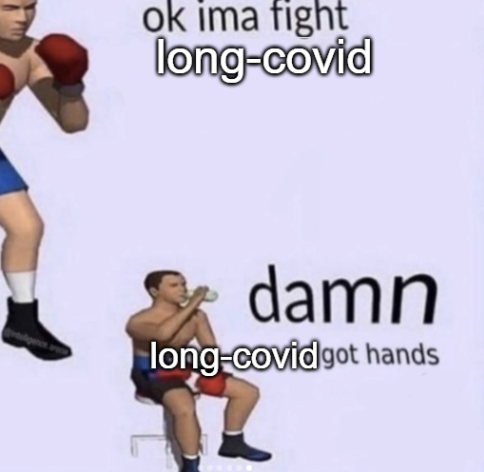
It didn’t take long before I got depressed and despondent. I was finally starting to get my life together. Then boom; a virus had different plans.
I could no longer:
- Go to the gym or Thai Boxing,
- Jog,
- Do calisthenic, gym ring and parallette workouts,
- Go to work (hospitality; physically demanding),
- Wake up early (I now needed 12–14 hours of sleep),
- Read books,
or do anything remotely functional other than sit in bed or stare at a screen.
I really gave it all I had in denying my symptoms. I was halfway through the 2nd set of my first exercise in the gym (which was a warm-up) gasping for breath, as if I’d just done my entire workout, when I decided that I needed to accept that something was wrong.
It had now been six months and I’d barely improved at all. I also started beating myself up, calling myself lazy and not good enough.
I should just have the energy, I kept saying, comparing myself to other people who lived on as normal.
It was at this moment — the peak of my forlorn self-pity — that I decided I needed help and guidance.
Using Stoicism against long-Covid
Through my decision to seek help, I turned back to an old friend of mine.
Stoicism.
It turns out it was the best decision I made. Here are the key lessons I extracted from some stoic books to help me deal with long-Covid:
- Do not stress or try to change things out of control; this makes no sense and will cause unnecessary stress.
- Accept any pain, fatigue or hardship placed upon you; it will become more bearable and, like all things, soon pass.
- Become indifferent to the fatigue or pain; it is neither good nor bad. Your judgement about it is what causes the suffering; don’t add to your sorrow by becoming sorry about your sorrow. Your attitude towards your ailment is what determines how upset you become.
- Stop looking at pain and fatigue through the lens of harm; separate your mind from the sensations and use this opportunity to respond with virtue and courage, thereby improving your character.
After a few years of distancing myself from the practices, I forgot how poignant the lessons and applicability of the philosophy are.
It was when I rediscovered and applied these methods that I started to turn a corner with my symptoms.
This, paired with meditation, light walks and reducing my use of social media has helped me immensely.
However, this isn’t to say I didn’t have any more downs (of which I had many).
He who knows how to suffer suffers less
~ Paul Dubois
I stopped beating myself up and feeling disempowered.
I started trying my best, treating my symptoms with indifference and employing strategies to remind myself of how easy this problem is to bear.
I began what the Stoics called voluntary hardship.
How I am coping now
After one year I’m doing a lot better.
I’m slowly starting to go back to the gym, wane in different light-cardio exercises, short Thai boxing sessions, reading, writing, and living life again (albeit with less energy).
I still can’t do many workouts due to post-exertional malaise, but I’m getting there.
Also, do you think 8 hours of sleep is a lot? Those are rookie numbers; you gotta bump those up! I’m averaging about 10.5 hours per night. Oversleeping is still a problem, though it is slowly getting better.
I’ve had a lot of relapses, highs, lows and points where I thought I’d nailed it. The highs, however, are becoming much more frequent.

Is this all thanks to Stoicism and the practices I learned? Probably not.
Regardless, it reduced a significant amount of stress and self-hate I was feeling, in addition to helping me flip the negative on its head.
Above all: stoicism made me feel grateful for my symptoms.
Confronting the likelihood of going bald
My hairline has been looking a little sus lately.
I’m not sure if it is an illusion, but it looks as if my hair is starting to recede a fair amount, which is terrifying.
To add insult to injury, I had a dream — no, a nightmare — a few weeks ago where my hair fell out while I was looking in the mirror. As any other rational person would do, I started screaming.
I woke up in a cold sweat, grabbing my head.
Oh, thank god, I thought, trying to get back to sleep. It was at this point that the seed of insecurity was planted about going bald.
My hairline is already quite far back (no, I'm not showing a picture) and most of my relatives are bald. Safe to say: it’s not looking good.
However, upon studying some of the Stoic lessons, I realised that going bald is completely out of my control. Why am I worrying about this? Also, there are more important qualities than my hair (or at least I hope).
This insight has allowed me to stop caring so much.
In fact, I’m thinking of shaving it all off to see how I’ll look. I’m sure that will be fun.
If I do shave my hair, I’ll be sure to write a thrilling article about it, so stay tuned.
Conclusion
So, is it bold to assume that getting long-Covid led me to confront my baldness?
If it wasn’t for that, maybe I’d still be sitting in abject fear, mirror in hand, shaking upon seeing my reflection with slightly less hair.
Maybe it was fate?
Whatever you want to call it, it’s given me courage and peace of mind, helping me bear with long-Covid and a plethora of other things.
For that, it has made me a better person.
For that I am grateful.
On top of that, I also had a respiratory tract infection, throat infection and chest infection; needing medical attention was inevitable.
What’s that? You loved this article? You’re going to love this one even more: