avatarData Overload

Free AI web copilot to create summaries, insights and extended knowledge, download it at here

2815

Abstract

are very competitive and efficient and also, the markets in question are full of rational and risk-averse investors who can maximize their level of returns from the investments they make.</p><div id="4520" class="link-block"> <a href="https://readmedium.com/understanding-the-capital-asset-pricing-model-capm-in-finance-1e08c92a7113"> <div> <div> <h2>Understanding the Capital Asset Pricing Model (CAPM) in Finance</h2> <div><h3>The Capital Asset Pricing Model (CAPM) is a widely used financial model that plays a crucial role in determining the…</h3></div> <div><p>medium.com</p></div> </div> <div> <div style="background-image: url(https://miro.readmedium.com/v2/resize:fit:320/0*Friqe7LaFgRqJmAZ)"></div> </div> </div> </a> </div><h2 id="cd59">Machine Learning Methods</h2><p id="29a3">The algorithms that started being used with the advent of computational technologies are called machine learning algorithms and can be divided into three subcategories. In supervised learning, observations are trained with their assigned labels to build a model. Unsupervised learning is used for descriptive data analysis. The dataset is clustered into several groups, the group members having the same hidden properties. If the data does not have labels but a correction is done in the training process, these kinds of algorithms are reinforcement learning.</p><p id="dcda">Regression and classification are the two types of supervised learning generally used as a solution to stock price prediction problems. Regression is associated with the level estimation of a stock price. On the other hand, classification is used to predict the direction a stock price moves in. Previous works show that treating the stock market prediction problem as a classification problem causes overfitting. On the contrary, classification models are found to give higher profits than level estimation models.</p><p id="a92b">Keeping in mind that linear models are not the best ones to explain the variance in stock prices and economic time series data can contain many kinds of nonlinearities, more complex models are convenient to use. Artificial neural networks are found to predict stock prices most accurately among the existing techniques.</p><p id="8e8e">If you want to learn more about artificial neural networks, check out my blog post <a href="https://readmedium.com/neural-networks-a-basic-intro-ef1209b4784e"><b>here</b></a><b>.</b></p><p id="7159">As said previously, more complex models are used in the finance field and the most frequent prediction-based machine learning algorithms used in the stock market prediction are artificial neural networks (ANN), c

Options

onvolutional neural networks (CNN), naive-Bayes, recurrent neural networks (RNN), deep neural networks (DNN), long short-term memory (LSTM) and support vector machines (SVM). As these models were used as prediction models, some baseline models to compare were LSTM, RNN, ARIMA, SVM, logit models, and the Buy and Hold strategy. D. P. Gandhmal and K. Kumar studied prediction-based techniques and clustering-based techniques and claimed that ANN for prediction and fuzzy-based techniques for classification are more effective than others in stock price prediction.</p><p id="858f">Enke and Thawornwong examined the artificial neural network models for level estimation and classification and tried to find the answer if one is better than the other. They found out that neural network classification models produce a higher profit than estimation neural networks and linear regression models under the same risk exposure. Korczak and Hernes claim that neural networks used for prediction had a maximum hidden layer of 2 in the last years. Another study points out, neural networks can be used with both qualitative and quantitative explanatory variables, and thus, they are far better than the ones using only quantitative explanatory variables.</p><p id="8f66">This was the second post of my Stock Price Prediction series. You can find my third post below.</p><div id="f868" class="link-block"> <a href="https://readmedium.com/stock-price-prediction-634cba31acd8"> <div> <div> <h2>Stock Price Prediction</h2> <div><h3>Features that are handy in Stock Price Prediction with Machine Learning</h3></div> <div><p>medium.com</p></div> </div> <div> <div style="background-image: url(https://miro.readmedium.com/v2/resize:fit:320/1*XAy2LxNqz83fPQ8p8Mi9aQ.jpeg)"></div> </div> </div> </a> </div><p id="9922"><b>I recommend you to read <a href="https://amzn.to/3rqvTbQ">this book</a> as well.</b></p><div id="1660" class="link-block"> <a href="https://amzn.to/3rqvTbQ"> <div> <div> <h2>The Signal and the Noise: Why So Many Predictions Fail--but Some Don't</h2> <div><h3>The Signal and the Noise: Why So Many Predictions Fail-but Some Don't [Silver, Nate] on Amazon.com. FREE shipping on…</h3></div> <div><p>amzn.to</p></div> </div> <div> <div style="background-image: url(https://miro.readmedium.com/v2/resize:fit:320/0*3QabnUEoie-ziSJF)"></div> </div> </div> </a> </div><p id="b4b7">Thank you!</p><p id="4796"><i>This post may contain affilliate links.</i></p></article></body>

Stock Price Prediction — Methods worth using to predict Stock Prices

This is my second post related to stock price prediction, you can find the first post below.

In this post, I tried to summarize the methods used previously.

For stock price prediction, there are mainly two methods: fundamental analysis and technical analysis. Fundamental analysis is more related to political and economic factors. Management policy, product innovation, marketing strategy, and financial ratios are used in this kind of analysis. In technical analysis, however, these factors that stem from the stock itself are believed to be already reflected in the price and deemed irrelevant. Historical prices are mainly used to predict future prices. To do that, a variety of indicators are used such as moving averages, relative strength index, Bollinger bands, etc. Since technical analysis indicators are derived from historical prices, it oversimplifies the prediction problem.
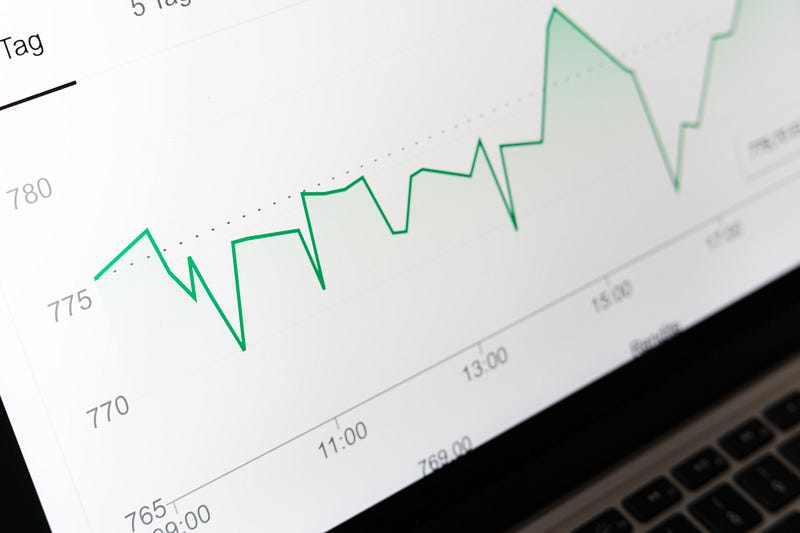
Photo by Markus Winkler on Unsplash

Capital Asset Pricing Models

Asset pricing models can also be used to decide whether to make investments. The most popular asset pricing model is the capital asset pricing model (CAPM), it was introduced by William Sharpe (1964) and it is often used to measure the performance of mutual funds and other managed portfolios.

CAPM calculates a β value for an investment which is a metric for the risk an investment bears compared to the market it is in. If it is greater than 1, it is riskier than the market and when added to a portfolio that is similar to the market (similar return, similar risk, etc.), it increases the risk of that portfolio. This method may have some problems due to the two assumptions it makes. It assumes that the markets are very competitive and efficient and also, the markets in question are full of rational and risk-averse investors who can maximize their level of returns from the investments they make.

Machine Learning Methods

The algorithms that started being used with the advent of computational technologies are called machine learning algorithms and can be divided into three subcategories. In supervised learning, observations are trained with their assigned labels to build a model. Unsupervised learning is used for descriptive data analysis. The dataset is clustered into several groups, the group members having the same hidden properties. If the data does not have labels but a correction is done in the training process, these kinds of algorithms are reinforcement learning.

Regression and classification are the two types of supervised learning generally used as a solution to stock price prediction problems. Regression is associated with the level estimation of a stock price. On the other hand, classification is used to predict the direction a stock price moves in. Previous works show that treating the stock market prediction problem as a classification problem causes overfitting. On the contrary, classification models are found to give higher profits than level estimation models.

Keeping in mind that linear models are not the best ones to explain the variance in stock prices and economic time series data can contain many kinds of nonlinearities, more complex models are convenient to use. Artificial neural networks are found to predict stock prices most accurately among the existing techniques.

If you want to learn more about artificial neural networks, check out my blog post here.

As said previously, more complex models are used in the finance field and the most frequent prediction-based machine learning algorithms used in the stock market prediction are artificial neural networks (ANN), convolutional neural networks (CNN), naive-Bayes, recurrent neural networks (RNN), deep neural networks (DNN), long short-term memory (LSTM) and support vector machines (SVM). As these models were used as prediction models, some baseline models to compare were LSTM, RNN, ARIMA, SVM, logit models, and the Buy and Hold strategy. D. P. Gandhmal and K. Kumar studied prediction-based techniques and clustering-based techniques and claimed that ANN for prediction and fuzzy-based techniques for classification are more effective than others in stock price prediction.

Enke and Thawornwong examined the artificial neural network models for level estimation and classification and tried to find the answer if one is better than the other. They found out that neural network classification models produce a higher profit than estimation neural networks and linear regression models under the same risk exposure. Korczak and Hernes claim that neural networks used for prediction had a maximum hidden layer of 2 in the last years. Another study points out, neural networks can be used with both qualitative and quantitative explanatory variables, and thus, they are far better than the ones using only quantitative explanatory variables.

This was the second post of my Stock Price Prediction series. You can find my third post below.

I recommend you to read this book as well.

Thank you!

This post may contain affilliate links.

Time Series Forecasting
Capm
Technical Analysis
Neural Networks
Stock Market Prediction
Recommended from ReadMedium