
Stochastic Modeling A to Z: Navigating the Uncertainty in Real-world Phenomena
Stochastic modeling is a powerful tool that allows us to capture and understand the inherent uncertainty present in various real-world phenomena. From financial markets and weather patterns to biological systems and traffic flow, stochastic modeling provides a framework for analyzing and predicting outcomes in situations where randomness plays a crucial role. In this comprehensive guide, we will explore stochastic modeling from A to Z, covering its fundamental concepts, applications, and techniques.
What is Stochastic Modeling?
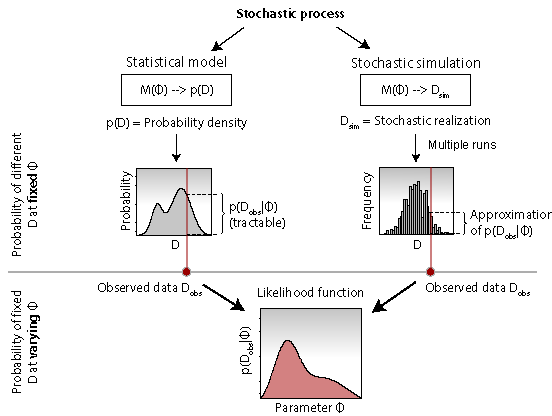
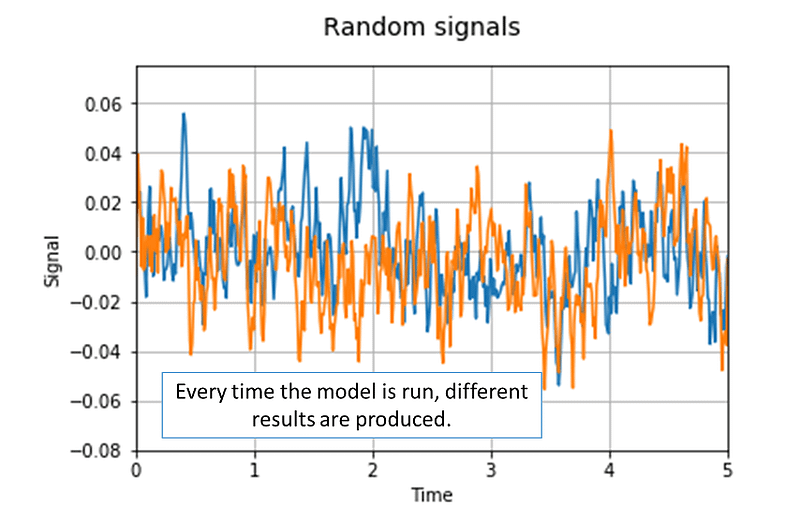
Stochastic modeling involves the use of mathematical structures to describe and analyze random processes. Unlike deterministic models that rely on fixed parameters, stochastic models incorporate randomness to simulate and predict outcomes in situations where uncertainty is a key factor.
Basic Concepts in Stochastic Modeling
1. Random Variables: The foundation of stochastic modeling lies in random variables, which represent uncertain quantities that can take different values with certain probabilities.
2. Probability Distributions: Probability distributions describe the likelihood of different outcomes for a random variable. Common distributions include the normal distribution, Poisson distribution, and exponential distribution.
3. Stochastic Processes: Stochastic processes model the evolution of a system over time in a probabilistic manner. Examples include Brownian motion and Markov processes.
Applications of Stochastic Modeling
1. Finance: Stochastic modeling is widely used in financial markets to predict asset prices, portfolio performance, and risk management.
2. Biology: In biological systems, stochastic models are employed to understand the dynamics of populations, gene expression, and biochemical reactions.
3. Operations Research: Stochastic models play a crucial role in optimizing decision-making processes, such as inventory management and supply chain logistics.
4. Engineering: Engineers use stochastic modeling to analyze and design systems with inherent variability, such as communication networks and manufacturing processes.
Techniques in Stochastic Modeling
1. Monte Carlo Simulation: This widely-used technique involves running numerous random simulations to estimate the probability distribution of outcomes for a given system.
2. Markov Chains: Markov chains model systems where the future state depends only on the current state, making them valuable for studying dynamic processes.
3. Stochastic Differential Equations: These equations describe how a system evolves over time with random fluctuations, making them essential for modeling continuous-time stochastic processes.
Challenges and Future Trends
1. Computational Complexity: Stochastic models often require intensive computational resources, and addressing this challenge remains a focal point for researchers.
2. Big Data and Machine Learning: Integrating stochastic modeling with machine learning techniques can enhance predictive accuracy, especially in data-rich environments.
3. Emerging Fields: Stochastic modeling is expanding into new areas such as quantum computing and artificial intelligence, providing novel solutions to complex problems.
Stochastic modeling offers a versatile framework for tackling uncertainty in diverse fields, providing valuable insights for decision-makers and researchers alike. As technology advances and new challenges emerge, the application and refinement of stochastic modeling techniques will continue to shape our understanding of complex, dynamic systems. Whether you’re delving into financial markets, biological processes, or engineering systems, a solid grasp of stochastic modeling is an invaluable asset in navigating the unpredictable nature of the world around us.
Stay up-to-date on my latest work! Follow me on Medium and clap for this article to support my content creation. Thank you for reading!
Also you can subscribe and become a member ! :)