

Stitch Fix’s Business Model
It’s All About Fit And Data
Not intended to be investment advice. I neither own nor plan to buy shares in Stitch Fix at this time.
I’ve been doing some reading on Stitch Fix lately. I find businesses that intersect technology, data, and physical goods (in this case, clothing) fascinating.
Also, ever since I wrote the article below:
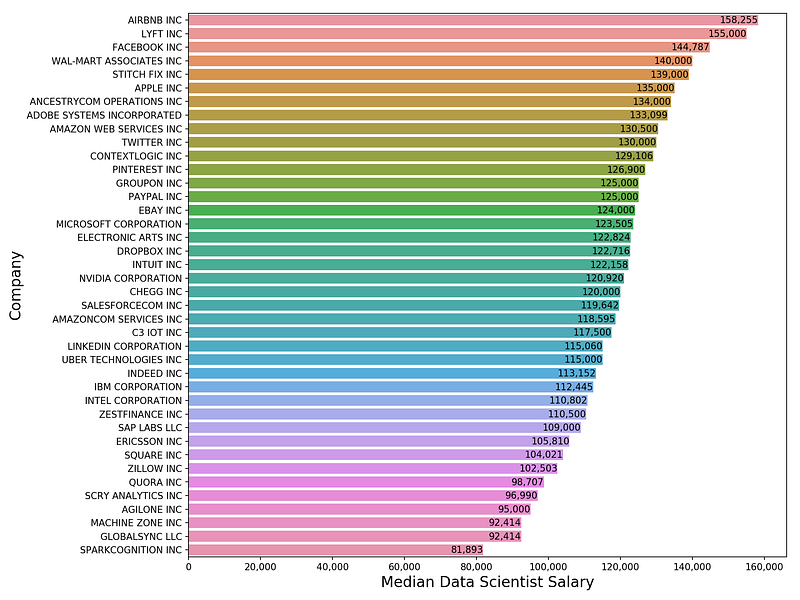
And found that Stitch Fix data scientists were some of the highest paid in the industry (by the way, the pay numbers in the figure below doesn’t include bonuses and stock compensation), I’ve been mildly curious about what exactly Stitch Fix data scientists do, and what secret sauce(s) they are able to add to the business to make it go.
The Challenges Of Selling Clothes Online
I will preface this by saying that I’m not a big buyer of clothes online so my reasoning will primarily be based on observing others and hypothesis — while perhaps rough, I find that writing out my still forming thoughts helps me do a better job of analyzing.
Despite e-commerce’s acceleration in recent years, much of clothes shopping is still done offline. For things that are as personal as clothing, people still like to touch, feel, and try them on. But even before COVID, this was not an efficient model because of:
- High fixed costs (rent).
- High upfront inventory costs — need to buy up inventory of all sizes and styles to fully stock the store before customers can begin shopping. And if you fail to sell it, you take a loss (once the season or trend changes, your ability to move the old inventory drops significantly).
- Business characterized by extreme competition and hunches — every retailer and designer is guessing at what the consumer will like. Some are lucky enough to be prestigious trend-setters, but many are forced to make educated but rough guesses at what people will like. Mass production of inventory is based primarily on these hunches.
- Given that each season’s success or failure is predicated on turning over the inventory as quickly as possible, marketing (ads and discounting) becomes a critical but expensive lever to help move product. This adds another expensive layer to the already sizable expenses, and helps explain why retail profit margins are so razor thin.
- Returns of unwanted clothes (or clothes that don’t fit) are costly as well. A common characteristic of shoppers is to buy indiscriminately and in bulk during sales. Then sift through the purchases, keep what they want, and return the rest. And contrary to what you might think, the returns don’t end up back in the store, they often end up in a landfill or at best sold for pennies on the dollar to a liquidator. This means that returns are not only a big loss for the retailer, they’re also terrible for the environment.
How Stitch Fix Differentiates Itself
I’m still torn on whether stitch fix truly possesses a sustainable economic moat or it merely does a great job of zigging when most of its competitors are currently zagging. But let’s run through its advantages.
Stitch Fix for those that aren’t familiar sends customers a box of clothes (called a fix) every few weeks (it can be as regular as every two to three weeks or as infrequent as once every few months). The contents of each fix are decided by a combination of data science (a clothing recommendation algorithm based on each user’s profile, tastes, past purchase behavior, and the purchase behavior of similar users) and human stylists. In other words, Stitch Fix picks the clothes for you.
In my opinion, the key to its business can be described with the following sentence:
Know each customer so well that it can accurately anticipate his or her clothing related desires and tastes.
At first glance, that sounds like what every retailer tries to do. But it’s not. Traditional clothing retailers don’t design their clothes for all of us individually. They have a few stereotypes in mind (think of the fashion models in catalogs), and they design by mixing their own hunches on trend and style, the brand’s signature style, and what they think best fits those stereotypes. Then they use marketing to attempt to convince us that the look they’ve conjured up is the one to go with for the season.
Without a prestigious brand that engenders customer loyalty, it’s extremely hard to attempt to win customers this way season after season. But retailers are forced to operate this way because they don’t possess deep and insightful data on individuals. They don’t know how your tastes differ from mine, so instead they consistently design for certain types of people (e.g. the young professional or the fitness enthusiast), and hope that those types choose them when it’s time to buy new clothes. So the traditional relationship between stylist/designer and customer is one-to-many with very few data feedback loops.
Stitch Fix changes this up by making the stylist and customer relationship one-to-one with many data feedback loops so that the relationship can be continually improved over time (as Stitch Fix collects more data allowing it to know its customers better and better).
Basically, whereas a traditional retailer spends most of its money on inventory, Stitch Fix spends most of its money on stylists (and to a lesser extant data scientists). This is nice because inventories depreciate in value over time while stylists and the data scientists that augment them should appreciate in contributed value over time.
There are several more important advantages:
- Knowing a customer’s wants and tastes really well and using data science and a stylist to recommend clothes that are personalized to that customer (and critically his or her measurements) significantly reduces returns. Reducing returns significantly improves the economics of the business.
- Knowing the customer base really well and operating online reduce the need to pre-purchase a ton of inventory. Instead Stitch Fix can just stock what it believes its customers want.
- Additionally, since it sends out fixes at regular intervals, it has much more visibility into its future inventory needs and can plan accordingly.
- Finally, its data loop allows it to gradually improve its product. It’s key to note that learnings from one customer can not only be used to improve that particular customer’s experience with the service, but all other customers as well. The more Stitch Fix learns from each customer interaction, the better it can serve all current and future customers.
Also interesting is that while it’s not technically a subscription service, it’s pretty similar to one. Customers tend to receive regular fixes, which means regular revenues for Stitch Fix (assuming it does a good job picking the clothes). It also means higher engagement with its existing customers — no need to repeatedly advertise to remind them that you exist, rather customers are conditioned by Stitch Fix to expect to receive fixes at regular intervals.
The big question is how successfully all of Stitch Fix’s efforts are in creating customer trust. Do customers trust Stitch Fix and its recommendation system to choose clothes for them? Trust is a powerful thing between a business and a consumer. If consumers reach a point where they trust Stitch Fix to not only know what they like but also to surprise and delight them with new styles and trends, this would allow Stitch Fix to gobble up more and more of the traditional clothing retail business.
Ironically, there’s a chance that the more Stitch Fix learns about each individual, the better its ability to dictate the fashion trends of the entire group.