
Stephen King Would Disapprove of SEO
In fact, SEO goes against standard writing advice from a multitude of authors
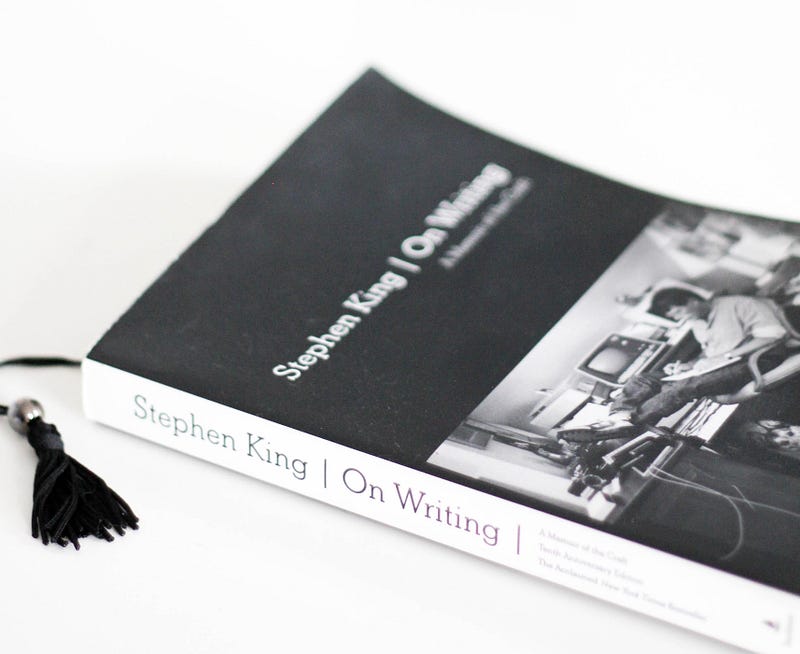
The most common [pitfall of figurative language] — and again, landing in this trap can usually be traced back to not enough reading — is the use of clichéd similes, metaphors, and images. He ran like a madman, she was pretty as a summer day, the guy was a hot ticket, Bob fought like a tiger … don't waste my time (or anyone’s) with such chestnuts. It makes you look either lazy or ignorant. Neither description will do your reputation as a writer much good.
- On Writing: A Memoir of the Craft by Stephen King -
The above quote is from Stephen King’s memoir which doubled as a book of advice on writing. King says that the usage of clichéd phrases amounts to lazy and ignorant writing, capable of tarnishing a writer’s reputation.
King is not the only writer to make this claim. From foundational texts on writing such as William Zinsser’s On Writing Well to Scott Dikkers’ handbook for humor writing, How to Write Funny, many writers across time and genres have echoed this disdain for clichés.
And yet, if you, like me, are a budding content writer today, you know that the search engine optimization(SEO) gods require us to intentionally include keywords and phrases that are often searched for. Keywords that have been repeated by multitudes of people.
In other words, search engine optimization demands that we use clichés.
Consider your thought process when trying to title a blog post:
You go to Google Search, type out your idea, and look for Google’s suggested phrases because these are the phrases that people are likely to look up. You dutifully title your blog post according to Google’s suggestions.
But when every writer does this,
we narrow the breadth of vocabulary that we use to express an idea
Our words converge. And eventually, so do our ideas.
It may not be practical to abandon SEO altogether, as we all want our writing to be read.
But surely there are ways to mitigate this narrowing of writers’ vocabularies. Perhaps as readers and consumers, we can look to curatorial practices of the past — reading content from quality news and media sites. Trusting the editorial process instead of depending so much on search engines and keywords.
Maybe this will take the pressure off of writers to worship the SEO gods. Perhaps trusting human judgments and recommendations again is the key to protecting our vocabulary from the policing of search engine optimization.
Frankly, I am uncertain that this is the solution, and would love to hear your thoughts. In the meantime, I leave you with Zinnser’s call-to-action for writers to “root around for strong and supple words”:
There is a kind of writing that might be called journalese, and its the death of freshness in anybody’s style. It’s the common currency of newspapers and of magazines like People — a mixture of cheap words, made-up words and clichés that have become so pervasive that a writer can hardly help using them. You must fight these phrases or you’ll sound like every hack. You’ll never make your mark as a writer unless you develop a respect for words and a curiosity about their shades of meaning that is almost obsessive. The English language is rich in strong and supple words. Take the time to root around and find the ones you want.
References
Dikkers, S. (2014). How to write funny: your serious, step-by-step blueprint for creating incredibly, irresistibly, successfully hilarious writing.
King, S. (2000). On writing: A memoir of the craft. Simon and Schuster.
Zinsser, W. (2006). On writing well: The classic guide to writing nonfiction. HarperCollins.