
Steel, Flesh, and Film: Making Conan the Barbarian
by Stephen Massicotte
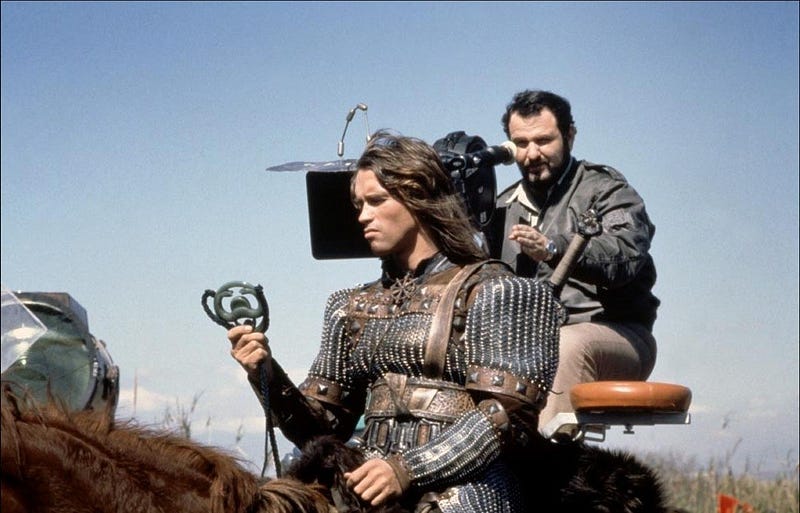
John Milius was a man’s man in Hollywood. Or at least, he postured to be. And that bluster and bravado made him fascinating. ESQUIRE featured him in their June 1973 issue — photographed looking distinctly Hemingway-like, with shotgun and beard — where they dubbed him “Mr. Macho.” He had wanted to see combat in Vietnam but was turned away due to his chronic asthma. Gutted, he kicked around until he ended up at the USC School of Cinematic Arts.
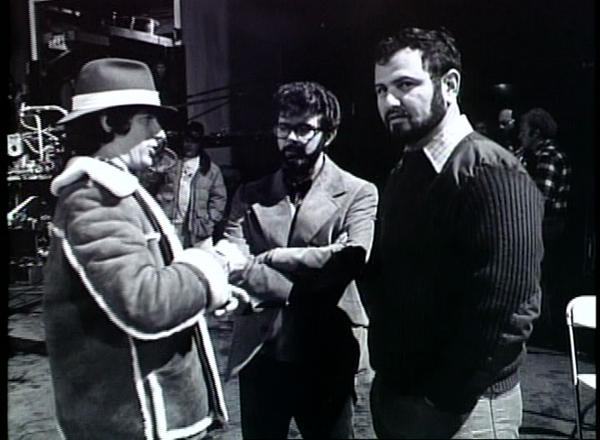
The early 70s saw Milius write the hard-boiled box office hits Dirty Harry and Magnum Force, as well as the Western The Life and Times of Judge Roy Bean. He could be found surfing at Margot Kidder’s hippie beach house in Malibu, chumming with New Hollywood liberals like George Lucas, Steven Spielberg, and Francis Coppola. He wrote most of Quint’s famous USS Indianapolis speech from Jaws, and much of Apocalypse Now. “I love the smell of napalm in the morning, it smells like victory” came out of his typewriter. He’d also successfully moved into the director’s chair with Dillinger, The Wind and The Lion, and his autobiographical surfing movie, the cult favorite Big Wednesday. Then, in 1979, producer Edward R. Pressman asked him if he wanted to direct Conan the Barbarian.
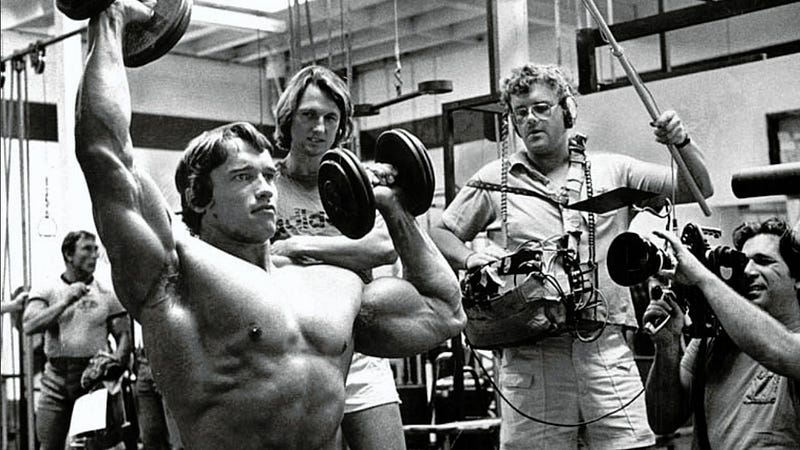
Only a few years earlier, Ed Pressman hadn’t even heard of Conan. Jerome Gary invited Pressman to a screening of Pumping Iron, a docudrama he was producing about the world of professional bodybuilding. The film followed two of the biggest biggies of the bodybuilding world — Lou Ferigno (the future Incredible Hulk) and Arnold Schwarzenegger — as they went head-to-head in the 11th Mr. Olympia competition in Pretoria, South Africa, in 1975. Later, when the film became a surprise hit, Gary Arnold wrote in The Washington Post, “Schwarzenegger is the first personality since Bruce Lee who might become a unique and credible physical star, idolized in particular by kids but enjoyed and admired by a vast cross-section of the public.” Pressman, watching the rough cut, had the very same idea. He leaned over to his friend, producer Ed Summer, and said, “There must be something that would be right for him.” “Well Conan, of course!” Summer replied, and then promptly took Pressman to his comic book store, Supersnipe Comic Art Emporium, where he introduced him to the barbarian. The material’s cinematic potential was clear to Pressman, and that Schwarzenegger was perfect for the role was obvious.
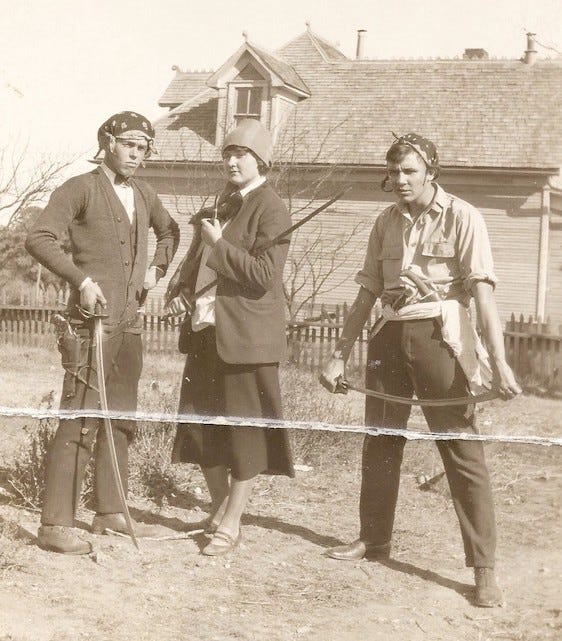
Conan the Barbarian was the invention of writer Robert E. Howard. Born in 1906 in Peaster, Texas, he’d begun writing adventure stories at the age of nine. At nineteen, he had his first story published in Weird Tales, a fantasy and horror pulp magazine. Before comic books, WWII paper shortages, and easy access to television put an end to the pulp era, these magazines (printed on cheap wood-pulp paper) ruled the newsstands. During the Great Depression, titles like Jungle Stories, Strange Detective Mysteries, Wild West Weekly, and Terror Tales sold for 5 to 10 cents apiece and sometimes sold as many as 300,000 copies. “Girlie” pulp, such as Broadway Nights and Spicy Stories, was often written and edited by women for women — no doubt with a good number of male readers peeking in through the windows.
Howard had witnessed the decadence, violence, and corruption that the oil boom had brought to the Texas towns he’d grown up in. It had shaped his world view — along with the bullying he’d received as a “mama’s boy.” He once wrote to a friend, “Life is chaotic, unjust and apparently blinded without reason or direction anyone can see; if the universe leans either way it is toward evil rather than good, as regards life and humanity. That there is any eventual goal for the human race rather than extinction, I do not believe nor do I have any faith in the eventual Superman.” Unsurprisingly, he was most certainly a depressive. “With one of these moods riding me, I can see neither good nor hope in anything, and my main sensation is a blind, brooding rage directed at anything that may cross my path,” he wrote. As it turned out, the thing that most often crossed his path was his typewriter. By the time he died of suicide at age 30, Howard had written as many as 300 stories and 700 poems.
Howard’s greatest invention by far was the warrior, adventurer, and king, Conan the Cimmerian, born to a blacksmith some 15,000 years ago in a mythological time that he called the Hyborian Age. This setting — after the fall of Atlantis but before the time of recorded history — was a stroke of storytelling genius. Howard could make full use of his knowledge of history and mythology without being chained to real-world historical timelines or accuracy. Like Conan, he was free to roam his ancient world, with only his wits, will, and whims to guide him through its decadence and barbarity. The first published Conan story was The Phoenix on the Sword, and after the success of The Tower of the Elephant Howard went on to write 19 more Conan stories. Trying to pin down the secret to Conan’s popularity, Howard said, “Deep inside every man there was something of the barbarian, something civilization could not destroy.”
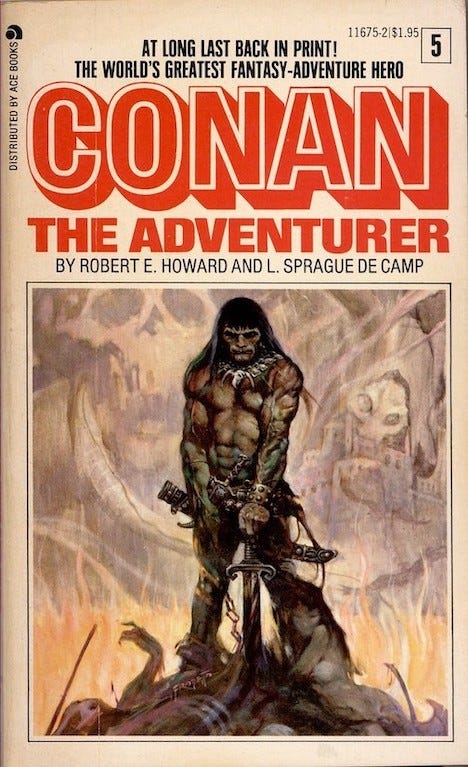
Robert E. Howard’s Conan works might have fallen into obscurity if it weren’t for Lancer Books’s 1967 publication of the mass market paperback collection of seven of his stories entitled Conan the Adventurer. When Lancer folded, Ace Books took over and published eleven more collections through 1977. Unquestionably, a major contributing factor to these paperbacks’ success was their cover art, painted by artist Frank Frazetta. Previously, Conan stories had graced the cover of Weird Tales nine times but only three of those had depicted the barbarian himself. Those three times, illustrator Margaret Brundage had painted him as a worried-looking Douglas Fairbanks or a lean Errol Flynn type. Frazetta’s portrayal couldn’t have been more different. For Lancer’s Conan the Adventurer, he painted Conan standing victorious over a battlefield, heavily muscled, with the hardened face of a brawler. When Marvel began publishing Conan the Barbarian comics in 1970 (and their hugely successful B&W magazine-sized Savage Sword of Conan) it was Frazetta’s brooding depiction of the character that defined their look.
Though Pressman had no script, he went to see Schwarzenegger armed with a stack of Conan comic books and paperbacks. He also brought along an amazing pitch — Conan as a James Bond–like franchise, with a new movie coming out every two years. Coincidentally, a sword-and-sandal movie had played a significant role in Schwarzenegger’s bodybuilding journey. In 1961, he’d been awed by Hercules and the Captive Women, which starred champion bodybuilder Reg Park. Reg the Leg (short for “Legend”) had won the Mr. Universe title in 1951, 1958, and 1965, and in the early 60s he’d starred in five films, four of them as Hercules. Watching Park embody Hercules, the 14-year-old Schwarzenegger had had a realization — he wanted to be strong and muscular like Park. In 1970, he too would be crowned Mr. Universe (at 23 years of age). Now, in 1977, he was signing a deal with Pressman to play Conan in five films — $250,000 for the first, $1M for the second, $2M for the third, and so on — plus 5% of the profits.
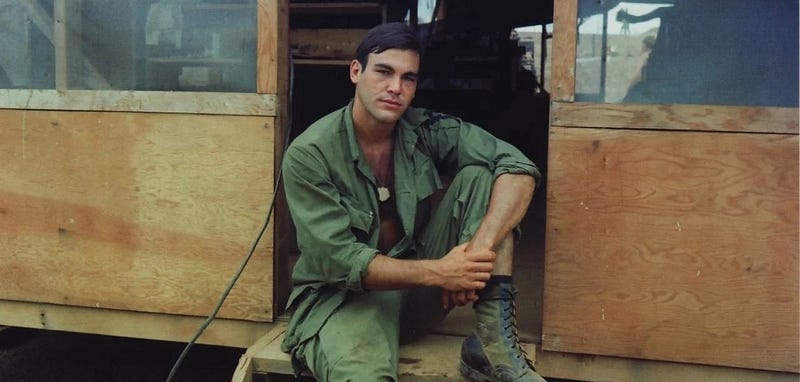
With the bodybuilder signed on, Paramount Pictures became interested in the project, but wanted a known screenwriter attached. Pressman had read “a remarkable script” that was circulating called Platoon, by Oliver Stone, whose script for the movie Midnight Express was soon to win the Academy Award for Best Adapted Screenplay, 1979. Stone was a 33-year-old veteran — he’d earned a Bronze Star and a pair of Purple Hearts in Vietnam. And he was a comic book fan. Like Pressman, Stone imagined a franchise of 10 or more films, which would follow Conan from birth, through his slave years, to thief, mercenary, and finally, a king by his own hand. Pressman hired Stone to write the script.
While Stone drew on several of Howard’s stories when writing his screenplay, his vision was informed by a bit of a cocaine addiction. His script moved Conan from the ancient Hyborian past to the post-apocalyptic future. It called for a battle between armies consisting of tens of thousands of warriors — Pig Mutants with Nazi-style helmets; Insect Mutants with beaks, tails, and goggly eyes; and the naked, saddle-less cavalry, the Hyena Heads! Pressman said it was “like Dante’s Inferno, it was hell on earth.” But it was also 140 pages, 4 hours long, and — pre-digital effects — almost unfilmable. Though Paramount wanted a smash like Star Wars, they weren’t willing to spend $50M+ to get one. They backed out of the project.
Pressman and Stone approached Ridley Scott about directing in order to interest another studio in financing, but he turned them down to focus on Blade Runner, his follow-up to Alien. By now, Pressman’s production company was in trouble — he had spent a lot of money on the rights, script development, and pre-production artwork by Ron Cobb. Fearing that the project was all but cold and dead, he and Stone met with Dino De Laurentiis, the legendary Italian film producer who they knew had pursued the rights to Conan previously. De Laurentiis had produced the early Federico Fellini films La Strada and Nights of Cabiria, both Academy Award winners for Best Foreign Language Film. After coming to America, he’d had critical and box-office successes with Serpico, Three Days of the Condor, and King Kong.
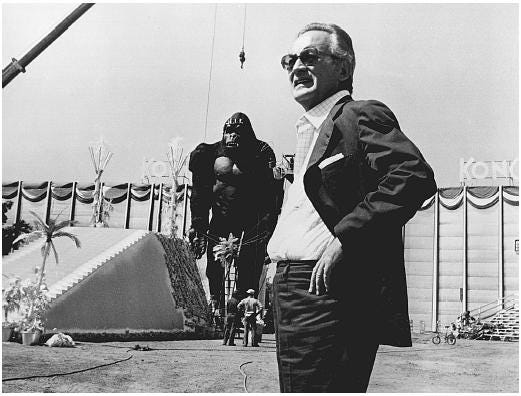
Though De Laurentiis thought Stone’s script was great, he also thought it was too violent. And he very much disliked Schwarzenegger. A few years prior, they had met in the producer’s office to talk about casting him in the title role in Flash Gordon. The small Italian’s desk was an ornate monstrosity and the large Austrian had quipped, “Why does a little guy like you need such a big desk?” De Laurentiis, whose own accent made his English nearly unintelligible, dismissed Schwarzenegger because apparently his accent was too thick — meeting over. Still, De Laurentiis and Pressman managed to make a deal. He’d take on John Milius as director, Schwarzenegger as Conan, and Stone’s script, but Pressman would have to give up his profit points on the movie. Ned Tanen, the president of Universal’s film division, gave De Laurentiis the go-ahead, and the Italian promised Milius a kingly bonus if he directed a hit — “Bulgari make you a golden Conan sword!”
Milius’s deal allowed him to do rewrites on Stone’s script. The two met and, despite their political differences, got along. Stone considered Milius a “likeable egomaniac,” while Milius liked him back for having been “in the shit,” as the soldiers say. But Stone soon realized that Milius was making the script his own, and that he “had no real interest in collaboration.” Milius kept some of the less-expensive aspects of Stone’s script — the crucifixion from Howard’s story A Witch Shall Be Born, the tower burglary from The Tower of the Elephant, the opening sequence depicting Conan’s childhood — but he abandoned Stone’s apocalyptic vision altogether. He chose to bring the story “back to a certain historical grounding,” set “in a history, as if it really did happen.” He replaced the massive mutant battle with the Battle of the Mounds — a few-against-many lift from Akira Kurosawa’s The Seven Samurai. Drawing on his obsession with Genghis Khan, the Japanese Code of the Bushido, and other warrior cultures, Milius came up with The Riddle of Steel, which acted as a thematic throughline for Conan’s journey. And he threw in a dash of Nietzsche to kick off the movie: “Whatever doesn’t kill us, makes us stronger.”
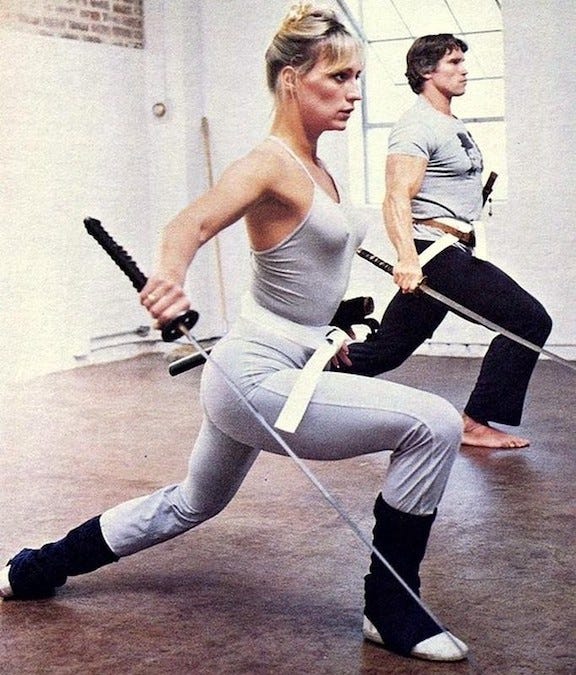
In addition to Schwarzenegger in the title role, Milius added Sandahl Bergman as Valeria, Conan’s love — her dancing in Bob Fosse’s All That Jazz had sold Milius. As he put it, “if ever there’s been a Valkyrie on earth it is that woman!” Subotai — Conan’s partner in crime — would be played by Gerry Lopez, one of Milius’s champion surfer friends. Bergman christened the leads “the three stooges: a body builder, a dancer, and a surfer.” Milius wasn’t concerned. The big acting would be taken care of by Max Von Sydow as King Osric, Mako as Akiro the Wizard, and James Earl Jones as the villain, Thulsa Doom. He was planning a visually operatic film with little dialogue. What mattered was that his leads were athletic and moved well. He had Schwarzenegger, Lopez, and Bergman undergo extensive weight lifting, riding lessons, and months of battle-axe and sword training with martial arts expert Kiyoshi Yamakazi. To expand his acting experience, Schwarzenegger took small roles in the spoof Western The Villain and a made-for-TV biopic about Jayne Mansfield. And he set about taming his accent with Robert Easton, an esteemed Hollywood vocal coach.
After a planned 1980 shoot in Yugoslavia was cancelled when the country’s dictator died leaving behind a rocky political situation, De Laurentiis moved the shoot to Spain. The country came with a variety of visually striking terrain — forests, beaches, mountains, deserts — and usable Roman and Moorish ruins and architecture. The physically demanding shoot finally began in January of 1981.
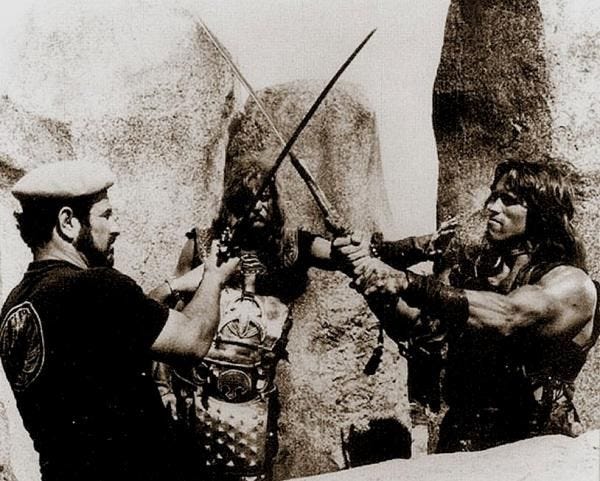
Since no suitable doubles could be found for Bergman or Schwarzenegger, they had to do all of their own stunts. First day, first scene, Conan was to be chased by wolves and scramble up some stones to escape, only to tumble into a tomb where he would discover his signature Atlantean sword. But the stunt dogs were let loose too soon and, ripping into Schwarzenegger’s bearskins, they pulled him off the stones. He fell into a growth of thorns and gashed his back. Come the second day of shooting, Schwarzenegger would need another round of stitches, this time on his forehead. Bergman almost lost a finger while filming a sword fight with an extra. Stunt coordinator Terry Leonard broke his leg performing a sixty-foot fall. Though Milius himself was suffering from his chronic asthma, his reaction was simple — “Pain is only temporary, but the film is eternal.”
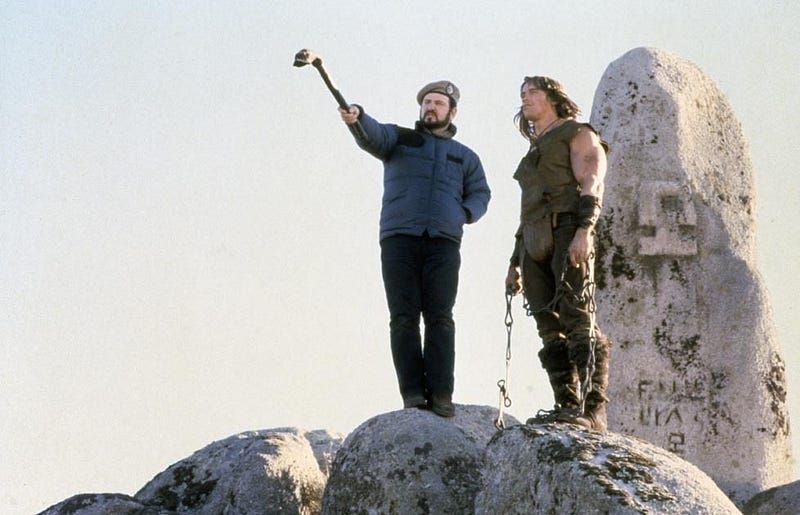
James Earl Jones, seeing that Schwarzenegger was continuing to rehearse his lines with Milius on set, offered to coach him. Jones, the voice of Darth Vader, who played such Shakespearean mega roles as Othello and King Lear, had grown up with a stutter so severe that he’d spent many years essentially mute. With the encouragement of English teacher Donald Crouch, he’d been able to overcome it by reciting poetry. (Thank you, Mr. Crouch.) In Jones’s trailer, the bodybuilder exchanged fitness tips for acting notes from the theater giant. To break up Schwarzenegger’s stagnant line phrasing, Jones had him relearn the lines from different pages with them typed out in varied configurations. They discussed each line in depth: “Normally after a sentence like this, you would pause, because that’s a pretty heavy thought.”
When De Laurentiis joined the shoot (he’d assigned the day-to-day producing duties to his daughter Raffaella), they were filming the heroes’ attack on Thulsa Doom’s orgy chamber. He saw Schwarzenegger, his face, muscled chest, and arms covered in jagged black-and-white war paint. The producer, dressed in an immaculate suit, overcoat caped over his shoulders, approached the actor. “Schwarzenegger,” he said, “you are Conan.”
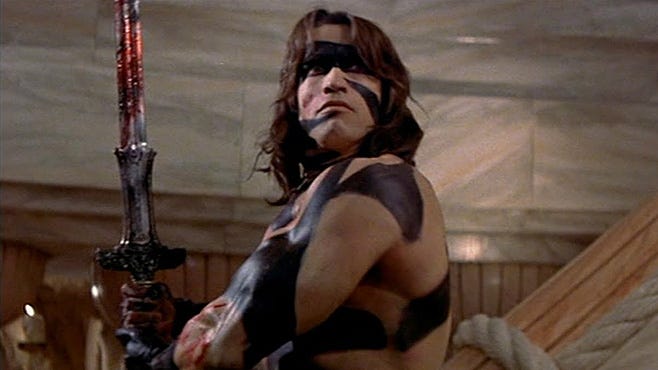
But his opinion of Milius wasn’t quite so golden. Raffaella watched the two fight every day. It was, as she described it, the “typical ‘who’s got the bigger dick?’ thing.” Relative penis size aside, Milius shot a sequence showing the heroes reveling in drunken excess after their successful theft of the Eye of the Serpent. De Laurentiis demanded it cut, claiming that it made Conan look “undignified.” Milius said, “Who cares?” De Laurentiis threatened to fire Milius. Milius bought antique toy soldiers of Hitler and Mussolini and would leave them on the producer’s desk. By June of 1981, Milius had gotten his movie wrapped without being axed. He and Lopez then went surfing in Maui with Schwarzenegger gamely tagging along.
De Laurentiis had wanted a rock/pop score for the film, while Milius had his sights set on using Carl Orff’s Carmina Burana. When John Boorman got to the piece first — using it so gloriously in 1981’s Excalibur — Milius turned to Basil Poledouris, a USC film school friend who’d scored Big Wednesday. They discussed ancient and medieval music, drums and gongs, chants and choirs, all of it primitive, powerful, and operatic. Early in the storyboarding phase, Milius was already using Poledouris’s sketched-out melodies to visually sculpt each of the chapters of Conan’s life. When he had a rough cut, Milius sent it to the composer with temp tracks by Prokofiev, Stravinsky, Ravel, and Wagner to further illustrate his intentions. Poledouris was intimidated by the sheer amount of music Milius wanted, but in the end he managed to deliver nearly two hours of score. Using Musync (a new hardware and software system) for the first time, Poledouris and Milius fine-tuned the tempo to dramatically sync with the shifts in screen action, setting, and mood. As Milius had always intended, dialogue wouldn’t drive the film, the score would.
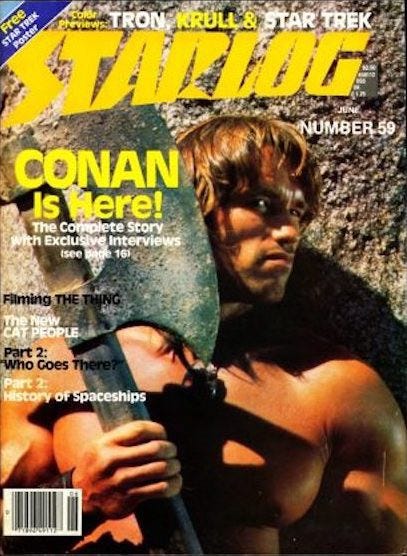
De Laurentiis wanted Conan the Barbarian in theaters that Christmas but the President of Universal got up halfway through a studio screening, said “Merry Christmas, guys,” and walked out. The movie was much too violent for a holiday release. Milius and editor Carroll Timothy O’Meara worked to get it below the “X” rating. Gone were close ups of Conan’s mother’s severed head and a scene where Conan lops off a pickpocket’s arm. Meanwhile, De Laurentiis pushed to have both Schwarzenegger’s and Lopez’s performances dubbed over with the voices of other, better actors, just as he’d done to Sam J. Jones in Flash Gordon. “This was more of Dino’s bullshit,” said Milius. “He stirred up the guys at Universal.” In the end, Milius did have to have Lopez’s performance dubbed, but he fought back by choosing an actor whose voice was as close to Lopez’s as he could find. Conan was supposed to narrate his own story, but instead, this voiceover was done by Mako. Milius won on Schwarzenegger’s on-camera performance, though — Dino agreed to leave it alone until after the first public screenings.
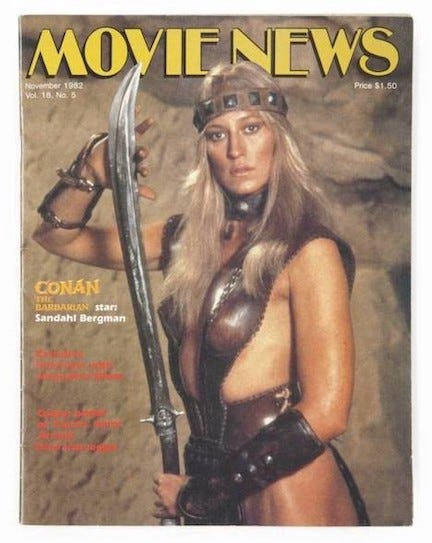
The success of test screenings in Houston and Las Vegas put an end to the debate. Queues wrapped around the block, so extra showings had to be added. In May of 1982, Conan the Barbarian launched a legendary summer for moviegoers — among others, Blade Runner, Poltergeist, The Thing, Star Trek II: The Wrath of Khan, and E.T. also hit the screens that season. Predictably, reviews for Conan were mixed. Roger Ebert called it “a perfect fantasy for the alienated preadolescent.” The LA Times said that it “does for the heroic epic what Star Wars does for space fantasy,” while TIME Magazine also likened it to Star Wars, although a decidedly “psychopathic” one. The San Francisco Chronicle was shocked by the 50+ bodycount while The New York Times didn’t think it was violent enough given Howard’s source material. The reviews made little difference. Conan the Barbarian made $100M in theaters worldwide, and those teens who couldn’t sneak past the “R” rating simply rented it on home video. Billboard listed the movie in their Videocassette Top 40 (Sales and Rentals) list for 23 weeks straight.
Some critics accused the film of promoting the right-wing conservative values of rugged individualism, and even downright fascism. These criticisms seem a reach, failing to note that Conan (like Captain Willard in Apocalypse Now) refuses the mantle of Il Duce when it is offered to him. After killing Thulsa Doom, the cult leader’s followers kneel to Conan. He replies by hurling a flaming brazier to burn the whole fascist/religious edifice to the ground. He frees them and frees himself. And perhaps there is more pretense to Milius’s rugged individualism than is generally believed. His Conan decidedly does not succeed solo. Even with his hard-won brawn, willpower, and battle skills — he winds up crucified to the Tree of Woe when he goes it alone. Individualism fails. It’s only through the love and help of his friends that he even survives, let alone achieves any of his goals. It may be true that Milius believes that civilization is corrupt, decadent, and savage, but the big-hearted softy still posits that it is survivable with the flame of friendship, grit, loyalty, and courage to light the darkness.
The Conan franchise was off to a great start but Schwarzenegger’s agents were finding De Laurentiis’s 10-year exclusive contract a little too confining. A script called The Terminator was being waved about and the guy waving it was James Cameron. De Laurentiis agreed to let Schwarzenegger go out and play with the others, but first, he had to do Conan II. Milius was busy with other projects (or De Laurentiis wouldn’t have him back?) so the experienced and skilled Richard Fleischer directed 1984’s Conan the Destroyer. He gave De Laurentiis and Universal exactly what they asked for — “your friendly neighborhood barbarian,” according to Roger Ebert. Despite Schwarzenegger’s objections — “you are wimping out” — the PG sequel managed to outgross its predecessor, but tellingly, it made 23% less in the US. The hardcore fans had lost interest and, as it turns out, so had Schwarzenegger and De Laurentiis. No plans were made for more sequels. Without Milius, the franchise died.
By 2007 VHS and DVD sales and rentals of Conan the Barbarian had pushed its hoard past the $300M mark but even back in 1982, Milius could see that his battles had paid off. He’d delivered a big hit, and so he went to De Laurentiis to get what he’d been promised.
“Dino, where’s my golden sword?” he asked.
The producer replied with the classic Italian salute — the gesto dell’ombrello — the old go fuck yourself. “There’s your golden sword!”
Raffealla De Laurentiis says that her father never liked Conan the Barbarian. “He never understood it. He never, never, never got it.” The film is decidedly not everyone’s goblet of tea, but compare it to the cheapness of its own sequel, or the slough of campy imitators such as GOR, Deathstalker, and Red Sonja, and the difference is obvious. The film’s cinematography and production design are transporting. The score is one of the best ever composed. Schwarzenegger is no Olivier, yet his brooding performance has a compelling charm to it.
Milius doesn’t treat the genre, nor his audience, trivially. Like Conan’s creator, Robert E. Howard, he understands the sense of alienation that modernity brings. King Arthur, Theseus, Superman, and Luke Skywalker also got their stories told (or retold) onscreen around the same time as Conan. But while these heroes discovered that they were born of fated and great lineages, Conan was as common as they come — the trash of the Hyborean Age. This resonated with viewers, and still does, somewhere beyond such categories as liberal or conservative, somewhere at the primal level — we all know what it’s like to be nobody. And we all want to be somebody, don’t we?