
STAY RELAXED!!!

I can hear my breath coming in sharp gasps. My lungs feel like they’re on fire. My heart seems like it’s going to explode. My skull is pounding. My head is starting to lean off to one side. My brain is a jumble of pain signals firing constantly and telling me to STOP what I’m doing RIGHT NOW.
I’m running my first high school cross country meet. It feels like impending doom each passing second.
My coach appears on the sidelines and I hear him scream something at me. I think he says:
STAY RELAXED, TIM. STAY RELAXED!!!!
Oh sure. I’m so relaxed when I feel like I’m going to die.
Relaxation isn’t exactly what’s on my mind. Especially when someone is yelling at me.
Fast forward 20 years, and today I hear the words of my different cross country and track coaches in my head as I’m running.
Stay relaxed… Stay relaxed… Stay relaxed.
It took me a lifetime to internalize and learn what those words mean when you’re in pain and under pressure and relaxation seems a distant memory.
Over the years, I learned there are actual techniques to relax when you’re under stress.
Breathing
When your flight or fight response kicks in, your body takes quick, shallow breaths. Your heart beats faster and you’re ready for quick movement.
This is helpful for activation energy, but it’s not a good long-term strategy. Over time it wears you out and makes you panic.
Shallow breathing might work for sprinting away from something unknown moving in the bush, but not for running long distance, sitting at your desk all day or giving a presentation.
To get yourself back to normal, focus on mindfully breathing. One easy technique is called box breathing, which centers on the count of four:
Breath in for four seconds, hold for four seconds, exhale for four seconds, hold four seconds, repeat.
Do this for four minutes, or until you feel calm, level-headed and back to normal.
If you’re doing something physically active you may not have the luxury of sitting down and practicing deliberate box breathing, but you can still listen to and engage with your breath. Which brings us to the next step.
Use a mantra
When you’re under stress, your brain is an idiot. It’s telling you to quickly do something — ANYTHING! — but it doesn’t think through the long-term consequences. It just wants to act now.
As a result, you get an internal monologue that’s often negative, counter-productive and anything but constructive if you’re trying to deliberately accomplish something.
That’s when it’s helpful to fall back on a manta to drown out your internal monologue. A manta around breathing is one of the most basic and helpful.
Inhale-exhale… inhale-exhale… inhale-exhale…
I’ve never been in the military, but I imagine that the marching cadence chants (left right left… hup two three four) are used for a similar effect. They drown out the part of your brain that’s constantly chattering and draining your energy.
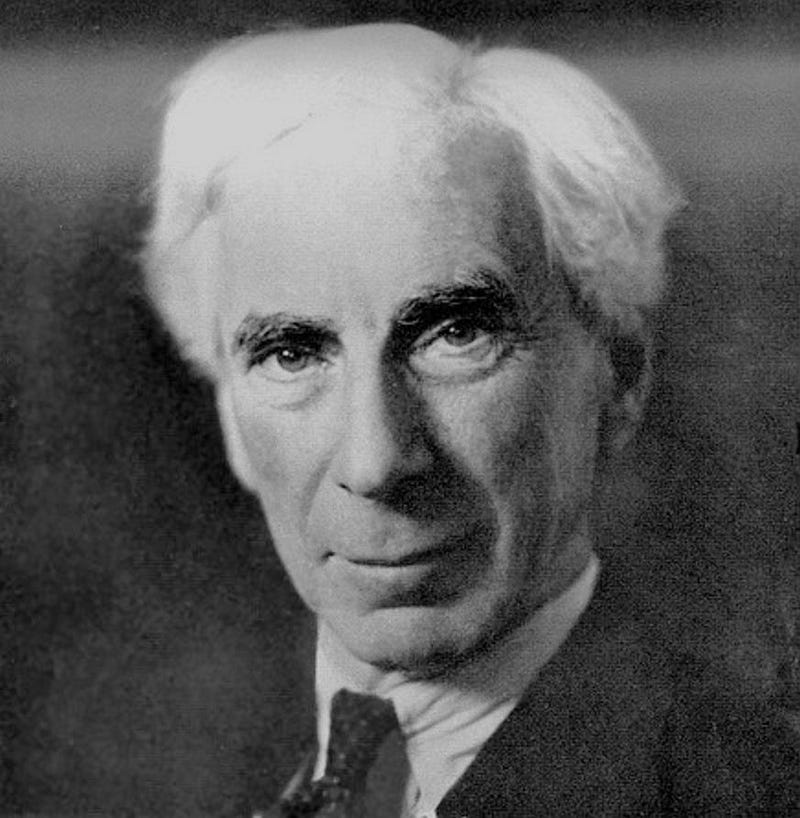
In The Conquest of Happiness, British Nobel laureate Bertrand Russell wrote that self-absorption leads to unhappiness. He contended that the narcissist, the megalomaniac and the person obsessed with their shortcomings (aka “sins”) as the most common types of “interest in oneself” that leads to “no activity of a progressive kind.”
When you get stuck in your own head, in other words, you can’t get anything done.
The antidote to this self-absorption, Russell wrote, was finding something outside of yourself to focus on.
“The monk will not be happy until the routine of the monastery has made him forget his own soul,” he wrote. “The happiness which he attributes to religion he could have obtained from becoming a crossing-sweeper, provided he were compelled to remain one.”
So pick your own mantra. Set an intention. Pick a phrase. Repeat.
It doesn’t even have to be real words. You can make a noise or sound effect. Say ommmmmm.
Soon enough, your idiot brain will fade into the background.
Loosen your muscles
If you watch Olympic sprinters in slow motion, you notice that their faces flop around in the wind.
They are pushing their muscle fibers to the pinnacle of human performance, and yet they are staying relaxed enough to have their faces be completely at ease.
Being tense is inefficient. When we tighten up under stress, it constricts blood, breath and oxygen flow. It pulls us inward into a protective ball but doesn’t help to expend our energy outward.
One helpful analogy I’ve read compares pouring syrup on a day-old bagel versus pouring syrup on a light and fluffy stack of pancakes. When we’re tense, our muscles are that stale old bagel. But when we’re relaxed, we’re like that stack of pancakes. Our muscles open up and can soak up much-needed blood and oxygen so we can perform.
It’s easy to fall back into the bad habits of tensing up when you’re tired, in pain and under stress. When I’m running, I have a mental checklist.
Temples… jaw… shoulders… torso… arms… fists…. calves…arches… toes
I think of each of these body parts one by one and relax it. Then when I reach my feet, I start from there and reverse the process.
Toes… arches… calves… fists… arms… torso… shoulders… jaw… temples
It’s helpful for me to complete this checklist every 10 minutes or so on a long run.
If you’re not moving, you can be aware of your tension points and do the same checklist, but add clenching. Try to actively tense up each of these areas for a few seconds, and then let go. The contraction will bring attention to where you are holding stress, and then release it away.
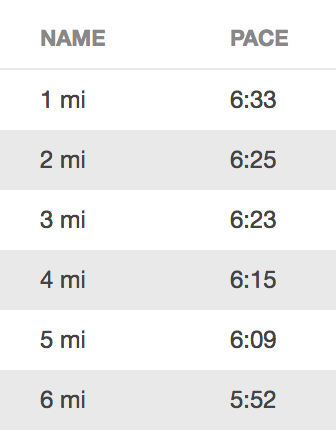
I’m doing a 6-mile training run. It starts off at a conversational pace and progressively builds faster and faster as I run with two others who are faster than me.
I start to feel those familiar feelings. Lungs burning. Heart beating faster. A jumble of pain in my temples.
I’m used to it. It’s not easy, but it’s familiar and I know what to do.
I steady my breathing, lower my shoulders, try to stride rather than strain.
I hear those familiar words of every coach I’ve had.
Stay relaxed… Stay relaxed… Stay relaxed.
The more I relax, the faster I run.
I finish 6 miles at a 6:15 pace.
Each mile gets progressively faster, ending with a 5:52 mile.
STAY RELAXED!!!
Even if you’re not a runner, this advice is helpful for anyone in any stressful situation. Especially now with so much noise and political turmoil and fear.
Being relaxed doesn’t mean you don’t care. Being relaxed means you can calm down, quiet your idiot brain and focus on what matters. You can use your energy to move purposefully forward, rather than wasting it by flailing.
Being relaxed means you are being the most efficient and effective version of yourself, rather than letting panic consume you.
Feel the distress. Feel the fear. But don’t let it take over.
Stay relaxed.


