
State of the Airline Industry
4/19/2020
These last several months have been a tumultuous time for the world, as people, countries, and companies have been battling to keep COVID-19 in check. In an effort to mitigate the damage from this virus, companies have had shut down, people have been layed off or furloughed, and countries have had to place restriction on how people move and interact. Almost every industry has been impacted in some way or another. Today, we are going to take a look at the current state of the Airline Industry, particularly in the United States.
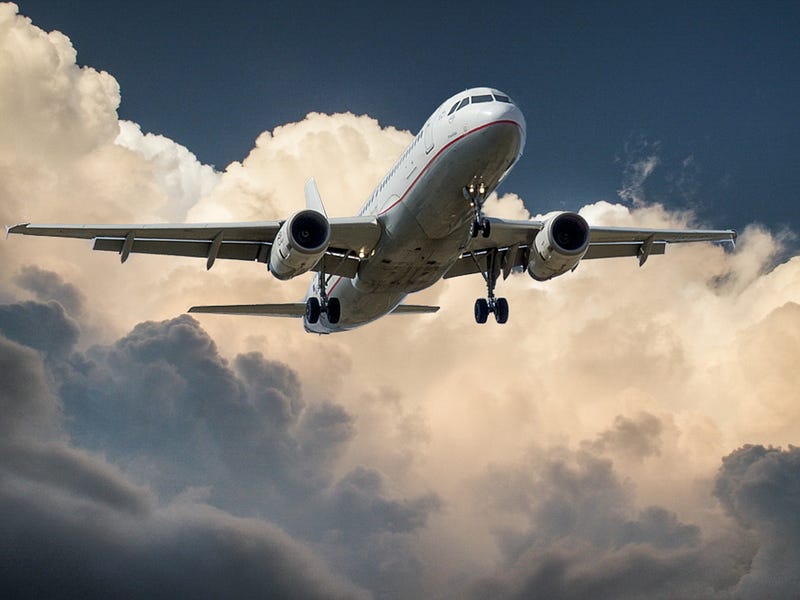
One of the first industries to slow down, and in some cases halt is the Airline Industry. To prevent the spread the novell coronavirus from country to country, region to region, travel was restricted and limited. Since the start of this pandemic, CNN has reported that the airlines’s passenger count has dropped 96%.¹ Since revenue disappeared so rapidly and there is not a definitive return to normalcy currently scheduled, their only options to not fall into a deep financial hole seems to be to control costs and to get a bailout. (And also pivot to cargo)
Controlling Costs
To look at the controlling costs first, many of these airlines have reduced the flights they are servicing dramatically. According to CNBC, American Airlines has reduced their flight capacity by 60% in April and looks to reduce it by 80% in May.² And many of the other airlines are following suite. (Although there are some flights they will be required to keep open. We will dive into that when we talk about the bailout). When it comes to reducing flights, this also means that the workforce is going to be heavily affected by the reduced work requirments. Delta, for example, is estimating reducing payroll by 25%, this includes reducing the workweek for 40k+ employees and 21k+ employees volunteering for unpaid leave.²
Pricing
But it has not all been about saving costs only. Changes in revenue are also playing an important part in how the airlines are living through this crisis. From some prelimary research from Ben Schlappig and reader of his, Ethan, Delta and American have taken two different approaches, when it comes to pricing. Delta has kept much of it pricing the same pre to post corona. American, on the other hand, seems to have reduced its pricing dramacticly. Why?
My read on it is that Delta and American are actually doing something very similar. Both are still flying out of their hubs. And to look at Delta first, Delta has offered free trips to qualified medical personnel to some of the hot zones, New York, Georgia, etc. With the number of seats that would be avaible due to social distancing protocols, this could be a significant chunk of the revenue of a given flight. American, on the otherhand may be trying to provide a similar service, but spreading the cost across all of the passengers, since (hopefully) they are all flying for a legitimate reason.
Cargo
In addition to this, many of the airlines have waived changes fees unitl September 30th. And several of the airlines have started incorporating more cargo only flights/routes. This is the first time American has done this since 1984.³ Delta is also setting up daily cargo flights from the United States to Asia, and back. The purpose of these flights is to connect the suppliers in the China to the hospitals in the United States, to get them masks, gloves, gowns, etc.⁴
Bailouts
However, this is probably not coming close to their projected revenue from before the coronavirus. This brings us to the bailouts. In the last month, Chamath Palihapitiya has argued to not bail out the airlines,⁵ and Mark Cuban has argued to use the bail out to limit the ability of the company to reward the executives disportionately to the rest of the work force and limit buybacks heavily.⁶ And now the agreements have been reached between the US Government and Delta, Southwest, American, and United. In exchange for grant money, and low-interest forgivable loans, the government has limits on stockbuy backs (not to the degree Mark Cuban was advocating for). This makes sense as the “US Airlines have spent 96% of free cash flow last decade on buying back their own shares”⁷ Other restriction include limits on layoffs and furloughs and limits on executive compensation. Also, they are required to fly some flights daily, and some flights weekly depending on the past frequency of the route. Agreeing to these terms resulted in Southwest recieving $3.2 Billion (including $1 Billion as a loan). And American receiving $5.8 Billion ($1.7 Billion as a loan).⁸
And that is summary of where we are at currently.
Thank you,
— Zain Kinnare
Sources
1 https://www.cnn.com/2020/04/14/politics/airlines-payroll-aid/index.html
3 https://www.popsci.com/story/technology/american-airlines-cargo-only-flights-covid-19/
4 https://news.delta.com/delta-expands-daily-cargo-only-flights-between-us-and-asia
5 https://www.youtube.com/watch?v=qAt7Rg1u2l8
8 https://www.cnn.com/2020/04/14/politics/airlines-payroll-aid/index.html