
Starr Andrews -Trials to Triumph
How a heart condition did not stop a long desired dream.
Everyone has a dream of some sort. Some unearth their dreams and pursue them, while others allow their dreams to die within buried under tons of hope and when tomorrow comes.
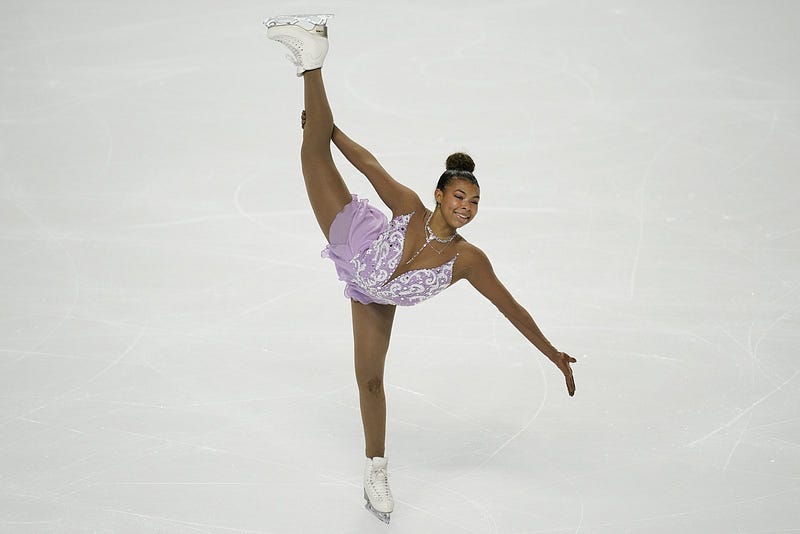
Starr Andrews (21) defies the odds and exudes star power as she pursues her dream of free-skating. She overcame a serious heart issue and reached the road to fulfilling her Olympic dream. She performed in the free-skate program at the U.S. Figure Skating Championships in 2021 becoming the first Black American to win a medal in the annual Grand Prix competition series.
Nothing can compare to a mother’s dream for her child and there is no better cheerleader than a mother. Starr’s mother, Toshawa, had a dream for her daughter and is now seeing that dream manifest. She wanted the best for her second child, her baby girl. She wanted to give her a name that would fit the destiny she envisioned for her. She named her Kennedy Starr and ended up calling her Starr as she had big hopes to see her manifest greatness in some field, even though she was not sure which field would be the defining field.
As fate would have it, Starr Andrews has lived up to her mother’s expectations by becoming a bright, shining light in the figure skating world. She overcame a long undiagnosed heart issue becoming the first Black American to win a medal in the annual Grand Prix competition series.
Starr landed six triple jumps in her free skate program at Skate Canada last month, which earned her an exhilarating and historic second-place finish. All this in the face of having undergone surgery last spring to burn off an extra nerve in her heart which affected her momentum. Supraventricular tachycardia caused her heart to beat alarmingly fast and made her feel faint.
Her health issues began when she was 13 and would cause her to have to sit down and take a break until it all subsided. Since the surgery, she does not have to worry about these moments that would beset her. Even though she trained hard for Skate Canada, she was surprised that she earned personal-best scores for her routine to Lara Fabian’s “Je Suis Malade” and her overall performance. When her scores were announced, she did a double take and was met with much gratitude because she placed in a sport that has few Black competitors. This fact not only made her a role model but a history-maker as a Black figure skater.
Mabel Fairbanks who faced racism that prevented her from competing regardless of how talented she was at the U.S. or Olympic titles in the 1930s became a role model for Starr. Fairbanks became a coach in Los Angeles and was elected to the U.S. Figure Skating Hall of Fame. A notable testament to her talent was coaching Atoy Wilson, the first Black skater to compete at the national championships in 1965. Also, she paired Tai Babilonia and Randy Gardner, and they qualified for two Olympics and won the 1979 world pairs title.
Mabel Fairbanks Skatingly Yours Fund provided a financial grant to talented skaters and Andrews was the first recipient which afforded her the opportunity to compete on national and Olympic levels. Many are following in Fairbanks’s footsteps and she was amazing and known for her prettiest split jump. This grant helped Andrews to keep going in a costly sport.
Many skaters, however, few they are, are following in the footsteps of Fairbanks and looking from afar as Starr leads the way in the present day overcoming obstacles to stardom as her mother predicted. She has become a role model for others who faced various types of difficulties. Fairbanks and Starr paved the way for upcoming skaters with one less battle to fight in a sport that comprises few Black skaters. Starr’s light is shining so bright that other skaters are glowing with hope in the background.
As she prepared to compete at the NHK Trophy Grand Prix in Sapporo, Japan, she did so by standing on Fairbanks’ shoulder and remembering not only her talent but how strong Fairbanks was, and most memorable was her split jump.
In the face of racism, Starr pursued as she did with her health issues. She wanted to skate and that was all that mattered even when there were no Blacks in the rink beside her and her mother.
It does take a village, due to Andrew’s mother’s health issue, they were financially trapped but the community, GoFundMe, and U.S. Figure Skating stepped in making Starr achieve her dream along with the many sacrifices her mother made to help her move forward.
At the age of 9, Andrews hit the scene performing her routine to “Whip My Hair” by Willow Smith which got 57 million views on YouTube. Disappointments followed, she missed the 2018 Olympic team because it was her first year at the senior level, and her standard was not of the needed standard. She finished ninth at this year’s U.S. championships and missed a berth at the Beijing Games. Nevertheless, Andrews has her sight set on making the U.S. team for the 2026 Milano Cortina Games.
Preparation meets opportunity when Andrew’s youtube performance caught the eye of Babilonia, a staunch guardian of Fairbank’s legacy, they met and Babilonia instructed her on the etiquette rules of the game from start to finish, from her entrance to her complete exit. Babilonia contiuned the rules learned from Faribanks.
In conclusion, Starr’s mother had a dream and that dream was passed on to her daughter as she saw her talent. The rest is history and now all else is HerStory as a role model and trailblazer.
For additional reads: