
Starlink and the New Space Race: The Role of Satellite Technology in Modern Warfare
Examining the Geopolitical Ramifications of Satellite Communication Systems in Shaping Future Conflicts, with a Focus on China, Russia, & the West
The emergence of new technologies has always played a transformative role in the strategies of modern warfare, reshaping the battlegrounds in unimaginable ways.
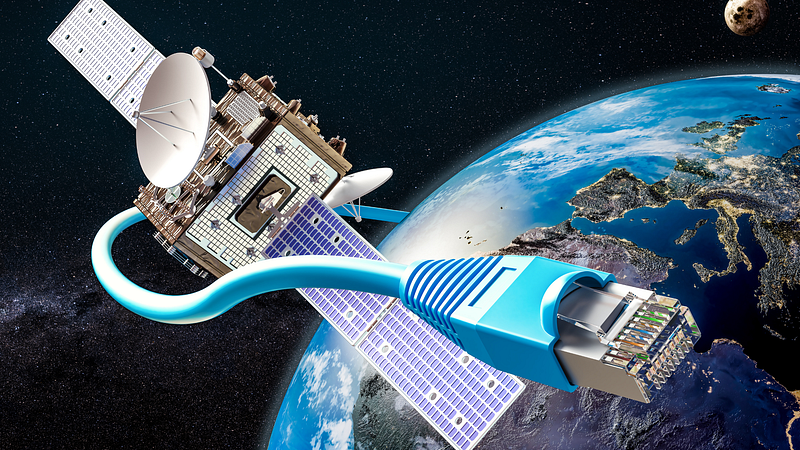
One such recent game-changing innovation is SpaceX’s Starlink — a satellite internet constellation being constructed by Elon Musk’s corporation. This network is designed to provide satellite Internet connectivity across the globe, and it is rapidly demonstrating its strategic relevance in modern warfare.
The advent of Starlink and it’s impressive capabilities have taken centre stage in recent conflicts. This novel technology has been indispensable to Ukraine’s war efforts against Russian invasion, demonstrating the growing importance of satellite communication technology in contemporary military operations.
Ukraine’s soldiers, despite being engaged in a gruelling, asymmetrical conflict, have found a powerful ally in Starlink. The satellite network has enabled robust communication, allowing the Ukrainian forces to identify targets, coordinate operations, and share real-time updates with the world, despite efforts to jam or disable their communications infrastructure.
The implications of this, however, reach far beyond Ukraine, setting the stage for a new era where space-based assets could significantly influence geopolitical dynamics and warfare strategies on a global scale.
This development has not only reshaped the power dynamics in the conflict-ridden European region, but also presented new challenges and strategic considerations for global powers like China and the United States.
As we look further into the strategic implications of Starlink, it is worth examining how this space-bound network could redefine the concept of warfare, affecting global security, diplomacy, and the very essence of power projection in the years to come.
Starlink: An Asset and a Threat
Starlink’s role in supporting Ukraine’s war efforts has prompted a shift in military thinking, with the satellite system being perceived as both an asset and a potential threat by different players on the global stage.
The effectiveness of Starlink in the Ukraine conflict has undoubtedly put Russia on the back-foot.
Traditionally, one of the earliest moves in modern warfare is the disruption of the enemy’s communication channels, a strategy that Russia has frequently employed. However, Starlink’s resilience in maintaining operational communication links despite attempts at jamming has significantly undermined this tactic.
The ability to effectively communicate, even in the face of aggressive attempts to disable terrestrial communication infrastructure, has bolstered Ukraine’s defensive capabilities and resilience.
The satellite network’s decentralised structure and extensive coverage have transformed it into a formidable tool in asymmetric warfare, demanding a reassessment of war strategies.
China, naturally, views Starlink through a different lens, in relation to its Taiwan aspirations — the worry for China is that Starlink could be leveraged by Taiwan, making any potential Chinese invasion considerably more challenging.
China’s apprehensions extend to the broader control and influence the US could wield through Starlink as well. This advanced satellite network could arguably give the US a significant edge in the rapidly escalating competition for supremacy in Low Earth Orbit (LEO).
The notion that America could monopolise this strategic vantage point has fuelled unease and a heightened sense of urgency within China’s leadership to develop their own satellite internet systems.
The implications of Starlink’s technology are therefore twofold. While providing a strategic advantage in ensuring communication during times of conflict, it simultaneously accentuates geopolitical tensions, particularly concerning Taiwan’s status and the broader struggle for dominance in the space-based domain.
China’s Aspirations in Low-Earth Orbit
China’s ambitions to establish itself as a major space power necessitate its engagement in Low-Earth Orbit (LEO), with the rapid development of Starlink and its potential implications only serving to expedite China’s endeavours in this domain.
While Starlink’s capabilities pose immediate challenges in the context of potential regional conflicts, such as that involving Taiwan, they also represent a broader threat to China’s aspirations in space.
China fears that the US, through Starlink, is extending its control into the largely uncharted territory of LEO, an area China also aims to influence.
The strategic importance of LEO in terms of global communication and surveillance networks cannot be overstated. China perceives the rapid expansion and technological supremacy of Starlink as an attempt to monopolise these rare strategic resources.
In response to the perceived threat and the strategic advantages offered by systems like Starlink, China has begun working on a similar network of its own.
It made a significant move in 2020 by filing documents with the International Telecommunication Union for a constellation of nearly 13,000 satellites, thereby showcasing its intent to develop its own global satellite internet system.
This ambitious plan has taken a more concrete shape with the government’s establishment of China Satellite Networks Group Limited in 2021, tasked explicitly with developing satellite internet.
To realise its grand vision, China is investing heavily in building its domestic satellite manufacturing capabilities. At least seven state-owned and private Chinese companies are in the process of constructing satellite factories.
These facilities are expected to churn out several hundred small communication satellites annually in the near future.
This proactive approach reflects the urgency with which China is pursuing its space objectives. High-ranking officials, including the chairman of China’s primary space contractor and the Prime Minister, have emphasised the importance of accelerating the country’s progress towards becoming a ‘space power.’
China’s extensive plans reveal a strategic mindset that goes beyond simply matching the capabilities of systems like Starlink. As the country’s leaders envisage a highly “informatised” force capable of joint operations across multiple domains, they are keenly aware that future battles may be won or lost in the depths of space.
This concerted effort reflects China’s strategic shift towards a space-race mentality. Being a “space power” is now a priority for the country, with government officials, including the prime minister and main space contractor, emphasising the need for speed in their pursuit of space dominance.
The intention is clear — to parallel, and potentially surpass, the communication and surveillance capabilities of systems like Starlink.
Taiwan’s Dependence and its Efforts to Secure Communication
The delicate geopolitical situation concerning Taiwan has brought the country’s communication infrastructure under close scrutiny. Its reliance on undersea cables for connectivity and the potential threats this presents have forced Taiwan to seek more resilient alternatives.
Taiwan’s connection to the global digital grid primarily relies on a network of 14 undersea cables. These crucial lifelines are susceptible to sabotage, particularly in a situation of escalating conflict.
Analysts suggest that in the event of an invasion, China could choose to cut these cables, effectively isolating the island from the rest of the world. While Taiwan is taking measures to expand and defend its cable infrastructure, the inherent vulnerabilities of these systems remain a grave concern.
Given the potential threats to its undersea cables, Taiwan is naturally turning to the stars. The government is testing antennas at hundreds of locations, both inside and outside Taiwan.
These devices are designed to communicate with low-orbit satellites, like those used by Starlink, thus forming a kind of communication backup system that’s much more resilient to disruption.
Crucially, Taiwan’s goal is to make these antennas as mobile as possible to ensure survivability during an attack. This initiative is part of a broader strategy to reduce dependence on others for communication security.
Taiwan’s space agency is even working on the development of its own low-orbit communication satellites, with the first expected to be launched in 2025.
Such efforts reveal Taiwan’s determination to safeguard its connectivity and, in the process, bolster its defences against potential external threats.
The Intensifying Space Race: China vs. the West
Control over specific orbits and radio frequencies has emerged as a major point of contention in this new space race. These are perceived as “rare strategic resources”, the control over which can drastically tip the scales in a conflict scenario.
The recent warning from China’s Liberation Army Daily about Starlink’s attempts to monopolise these resources underlines the gravity of the situation. This signifies a transformation in the strategic landscape, with control over terrestrial territories being supplemented by dominance in the ether of space.
The space race is central to China’s supreme leader, Xi Jinping’s vision to modernise the People’s Liberation Army (PLA). His generals have studied the manner in which the United States employs communication and information tools to move faster and achieve superior situational awareness on the battlefield.
Emulating and surpassing these capabilities forms the cornerstone of Xi’s drive to create an ‘informatised’ force that can conduct joint operations across ground, air, sea, space, and cyberspace.
This modernisation is not merely a response to the threats posed by the West though. Rather, it is an integral part of China’s grand strategy to become a dominant player in the rapidly evolving domain of space.
The pursuit of this goal is likely to shape the dynamics of international conflict and cooperation in the years to come.
The past few years have witnessed the transformation of warfare as the world transitions into the digital age. From the gritty trenches of the past to the increasingly intricate webs of cyber and satellite infrastructure, modern conflict has changed drastically.
This metamorphosis has been epitomised by the rise of satellite communication technology, like SpaceX’s Starlink.
As demonstrated in recent geopolitical situations, notably Ukraine, satellite technology is no longer a supplement but a critical backbone for communication, logistics, and intelligence. This escalating reliance on low-Earth orbit systems signals a new chapter in modern warfare where connectivity and information reign supreme.
These emerging satellite technologies, again exemplified by Starlink, carry profound geopolitical implications. Their influence stretches far beyond their technical capabilities, reshaping international relations and altering the balance of power.
Starlink’s role in Ukraine has demonstrated the substantial strategic advantage such systems can offer, placing significant pressure on nations like Russia and China.
For China, the emergence of these satellite systems represents both a threat and an opportunity. The strategic edge provided by Starlink’s resilient communication network raises concerns over Taiwan’s defence capabilities and China’s territorial claims.
Yet, it also catalyses China’s ambitious drive to develop its own robust low-Earth orbit infrastructure.
Simultaneously, Taiwan’s efforts to reduce dependence on vulnerable undersea cables and invest in satellite technologies reveal a broader trend among nations striving for enhanced security and autonomy.
Such developments underline the growing significance of space as the next frontier of international rivalry, intensifying the new ‘space race’ between the West and the East.
As we move forward, it becomes increasingly clear that these advanced technologies and the control over low-Earth orbit space are central to the narrative of global power dynamics.
The lessons drawn from Starlink’s influence underline the vital role of space in shaping the future of international conflict, security, and diplomacy.
As nations race to secure their positions in the heavens, we are reminded that the landscape of warfare and geopolitics is continually evolving, bearing testament to the ancient adage — the only constant is change.