
Why Stargazers Need to Leave Elon Musk and Starlink Alone
Are they complaining about a minor inconvenience?
Elon Musk is an extraordinary human being who’s changing the world for the best. I might be biased because I admire the man and follow all his inventions, but I stand by my opinion. His list of accomplishments include launching a revolutionary Tesla, creating SpaceX, founding The Boring Company, introducing SolarCity and many others.
But this week, the South African businessman came under fire due to stargazers being unable to see the night sky because of his Starlink Internet satellites. I, personally, am quite upset and unease about this complaint. But let’s break this down and get to the bottom of this.
What is Starlink and Why Musk Launched Satellites into Space?
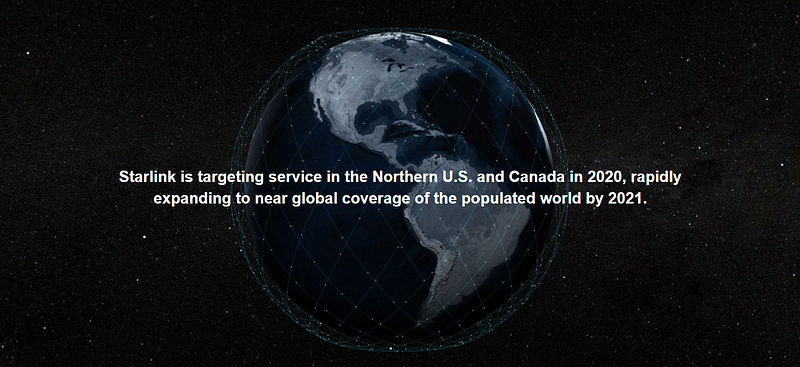
Starlink is owned by SpaceX, one of Elon Musk’s companies. The grand idea of Starlink is to provide cheap high-speed Internet connection available from any point of the planet. Are you in rural Argentina looking after the crops? You get an Internet connection. Are you in Barcelona sipping cocktails on the beach? You get an Internet connection. Are you visiting the Neuschwanstein castle in Germany? You get an Internet connection. Everyone gets an Internet connection! All you must do is to point a receiver at the sky — and you have access to the world web, regardless of where you are.
Despite being a genius, Elon Musk can’t just snap his fingers and miraculously gift the Internet to the entire world. There is a lot of work, manufacturing, calculations, creative process and sweat invested in this project. In order to make this dream a reality, the entire planet has to be “covered” with special Starlink satellites. They need to be placed in a low-Earth orbit and be less than 2,000 kilometres above our planet (read more about it here). But to make this happen, the company needs to launch a large number of satellites — as of right now, Starlink received permission from authorities to go as high as 40,000, but the company plans to cap this number at 12,000 in the foreseeable future (source). According to BBC News, there are approximately 300 satellites circling around the globe, as of April 20, 2020.
You get an Internet connection. Everyone gets an Internet connection! All you must do is to point a receiver at the sky — and you have access to the world web, regardless of where you are.
Did I lose you yet? Let me recap:
- Elon Musk comes up with a brilliant idea to give everyone on the planet access to the Internet whenever they are.
- His company, Starlink, will eventually send 12,000 satellites into orbit. For now, they only launched around 300, and the government capped the maximum at 40,000.
What is the Issue with Stargazers? Is Anyone Else Upset?
There are currently two groups of people who are unhappy about this project: stargazers and astronomers. The complaints that astounded me this week was coming from stargazers, but let’s review both claims.
Team Stargazers vs Team Starlink
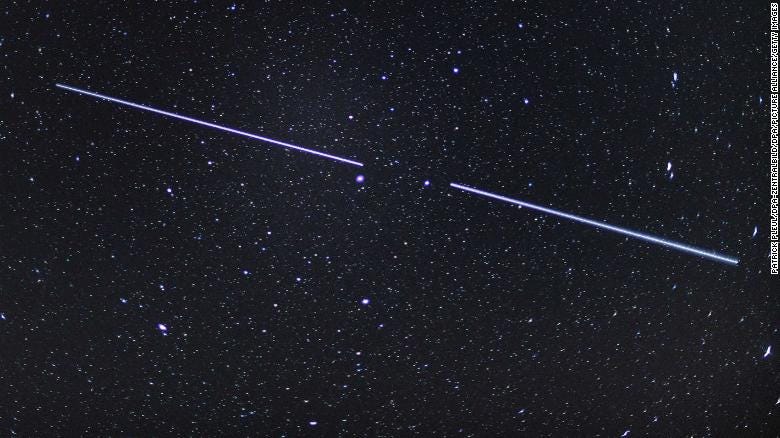
The satellites were visible from United Kingdon earlier this week, which caused heartbreak among the community of stargazers. Since Starlinks’ satellites are visible from the Earth, the hobby of watching the night sky is facing the issue of being interrupted.
Here is an example of how the satellites look like at night (from Germany):
Irish comedian Dara O’Briain took to Twitter to express his concerns about the night sky being affected:
The United Kingdom is currently under quarantine due to the coronavirus pandemic, similar to many other countries. People might be upset as they are forced to stay indoors, and gazing at the night sky could be their only entertainment.
Team Astronomers vs Team Starlink
Upon the announcement of the Starlink launch in 2019, the astronomers expressed their concern about not being able to observe the sky and conduct research. Their worry is not being able to take pictures using optical telescopes, and interference with the radio signals. Space debris was also listed as a potential problem.
Elon Musk took to Twitter last November to comfort the astronomical community indicating that Starlink’s satellites shouldn’t be seen from the ground, just like the other 4,900 satellites currently cruising the orbit:
Despite that, the American Astronomical Society conducted it’s 235th meeting in January 2020, discussing the potential threat to their work and research. This week, as mentioned above, they were expressing their worry about the future of astronomy again.
What Was Musk’s Response?
Shortly after both stargazers and astronomers made a complaint, Elon Musk responded by saying they will be making adjustments and fixing the brightness.
Dr. Jonathan McDowell, an astronomer at the Centre for Astrophysics, a research centre at Harvard University, responded to the news:
“I applaud the fact that [SpaceX] has really been trying to find ways to make them less bright,”
The scientist also mentioned they might be facing another problem: a sudden increase in traffic.
My Take on This Situation

I don’t think there is a wrong or right party — everyone is speaking their truth. However, I truly believe that Starlink is on a crucial mission to provide the entire Earth with easily accessible and affordable Internet. This is an extremely important goal that can change the lives of many people, including those in third-world countries who have limited access to information.
I am not a stargazer or an astronomer. My work doesn’t revolve around the sky, nor am I fascinated about the starts on a daily basis. I acknowledge everyone’s feelings, and I know they need to be validated. But don’t you think there is an easy solution to this problem?
Maybe stargazers can overlook the satellites and switch their attention to another patch of sky? Or give it a little bit of time for the satellites to pass by? The stars will still be there in an hour. As for astronomers, isn’t there a way to adjust to the changing circumstances and account for the new object in the sky? There are thousands of satellites around the planet already, and scientists found a way to continue their research. Shouldn’t there be a compromise or an adjustment plan in place?
I don’t want to sound like I’m prioritizing, but the Internet changed the lives of billions of people, and it keeps improving the world every day. It completely revolutionized the way we live, do business, communicate, learn and advance. The Internet is one of the most important tools we have and debatably the best invention in human history. If we know a way to make it better, shouldn’t we leap at that chance?
Other Sources You Might Enjoy Checking Out
Check out the latest Starlink launch on April 22nd, 2020:
The new batch of 60 satellites being deployed that day:
I’m expecting to have access to Starlink’s Internet this summer. The company is testing out the connection in Canada and Northern USA in 2020, and as a Canadian, I’m extremely excited. According to Elon Musk, the private beta version should be available in 3 months, and the public one — in 6 months. I’m not particularly sure when I will be able to sign up or how to do it, but I’m motivated to figure it out. I’m looking forward to the announcement of Starlink going live where I live.


