
🕐 1–2 hours, ✋3-7 participants.
Stakeholder Tycoon!
A fun and interactive collaborative game that demonstrates the complexities of Product Ownership and Stakeholder representation.
Introduction.
This game is useful to introduce and experience the (value of the) role of Product Owner to those new to it.
This game simulates a commercial political landscape in a single hour and touches various concepts like
- Stakeholder negotiation
- Negotiating value and priority
- Determining complexity
- Incremental development
The optional extension illustrates that the ‘order of value’ doesn’t have to be the same as the ‘order of production’. It also demonstrates that when new insights come to light during incremental development, this may be taking into account during production.
Disclaimer: This game is not meant to promote Product Backlog ordering or estimation practices. The practises used in this game is simply to enable fast and fun play.
Download the canvasses here (PDF)
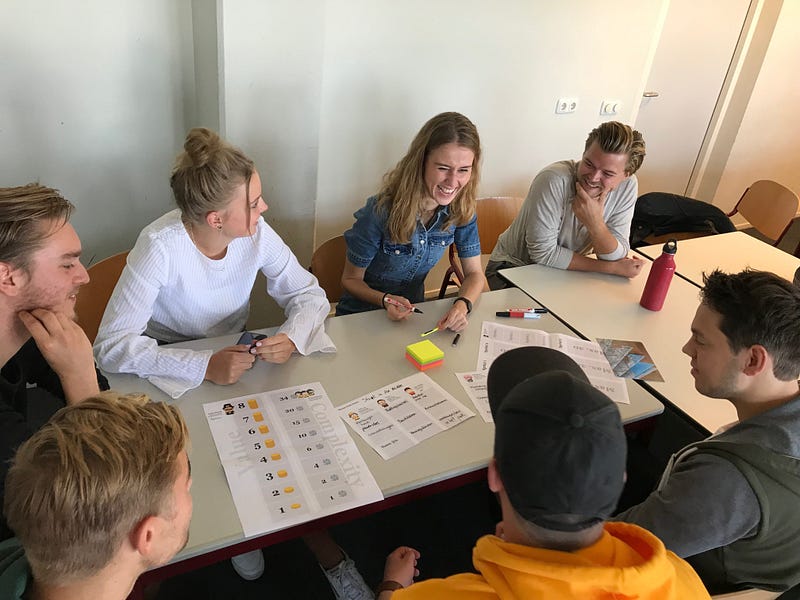
The Scenario
There is an approval for the development of a new theme park. Rollin’ Ronnie, has been assigned as Product Owner by Rollercoaster Inc.
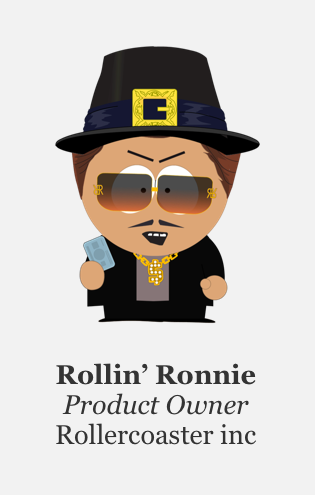
Ronnie invites several Stakeholders so he can learn about their interests and determine if they may be of value to the park.
Winning the game.
The Stakeholders will try to get their interests represented. Stakeholders will score points through the number of interests that will be represented and the higher those interests will be ranked. The Stakeholder with the highest score wins Stakeholder Tycoon.
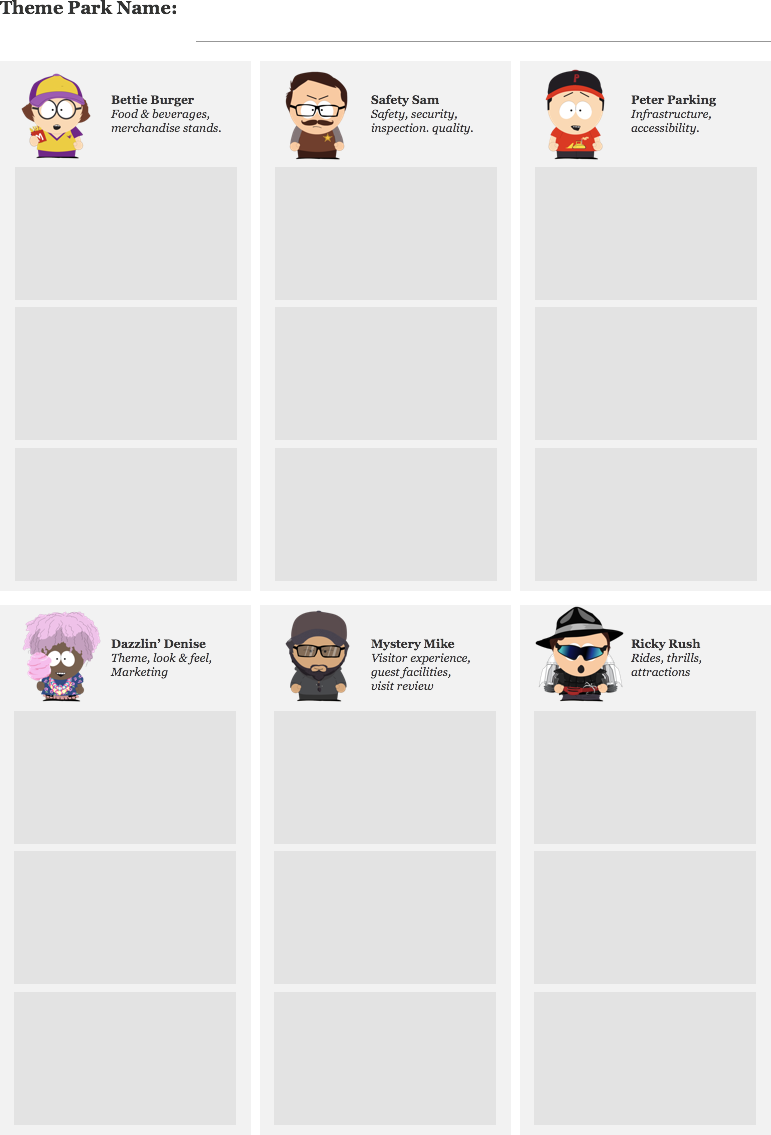
The Stakeholders.
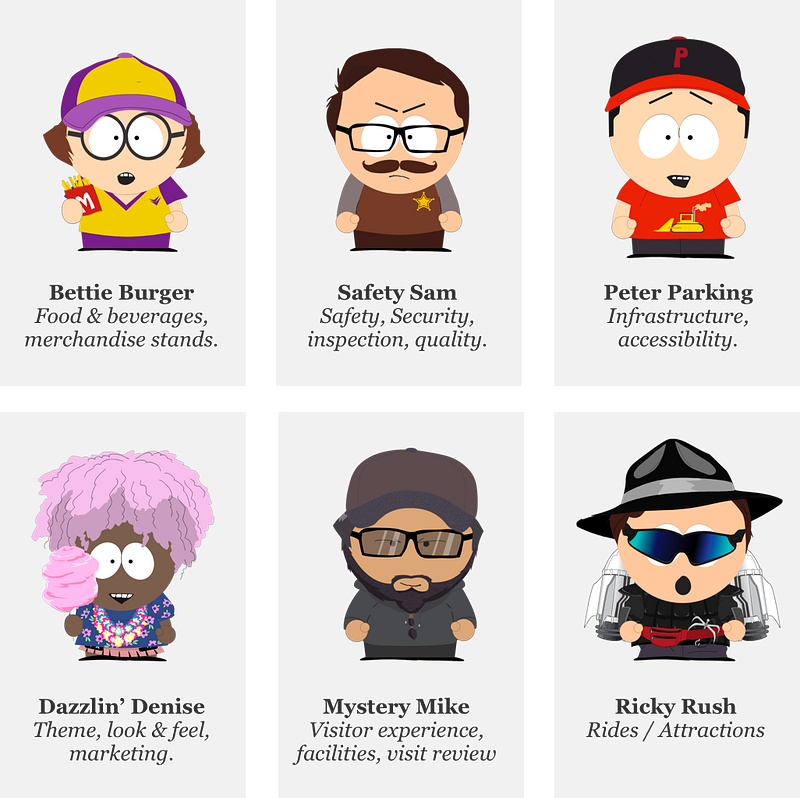
The order of play.
- Determine who will act on behalf of Rollin’ Ronnie, the Product Owner.
- Divide the Stakeholders amongst the other participants. - 2 remaining participants = 3 Stakeholders per participant. - 3 remaining participants = 2 Stakeholders per participant. - 4–6 remaining participants = 1 Stakeholders per participant.
- Rollin’ Ronnie will shortly pitch his vision for the theme park.
- The remaining participants will write 3 interests (stories) per Stakeholder they need to have represented in the park. For example, Peter Parking might opt for fun trains and boats that will take people on a tour through the park. Mystery Mike might opt for benches near attractions for those who wait or desire a rest. 🕐 15 minutes.
- In turns, each participant will pitch their interest to Rollin’ Ronnie per Stakeholder. Explain why your Stakeholder’s interest should be represented. 🕐 3 minutes per Stakeholder.
- Rollin’ Ronnie will select only 8 interests. Rollin’ Ronnie explains his choices. Participants may try to influence this decision making. 🕐 5 minutes.
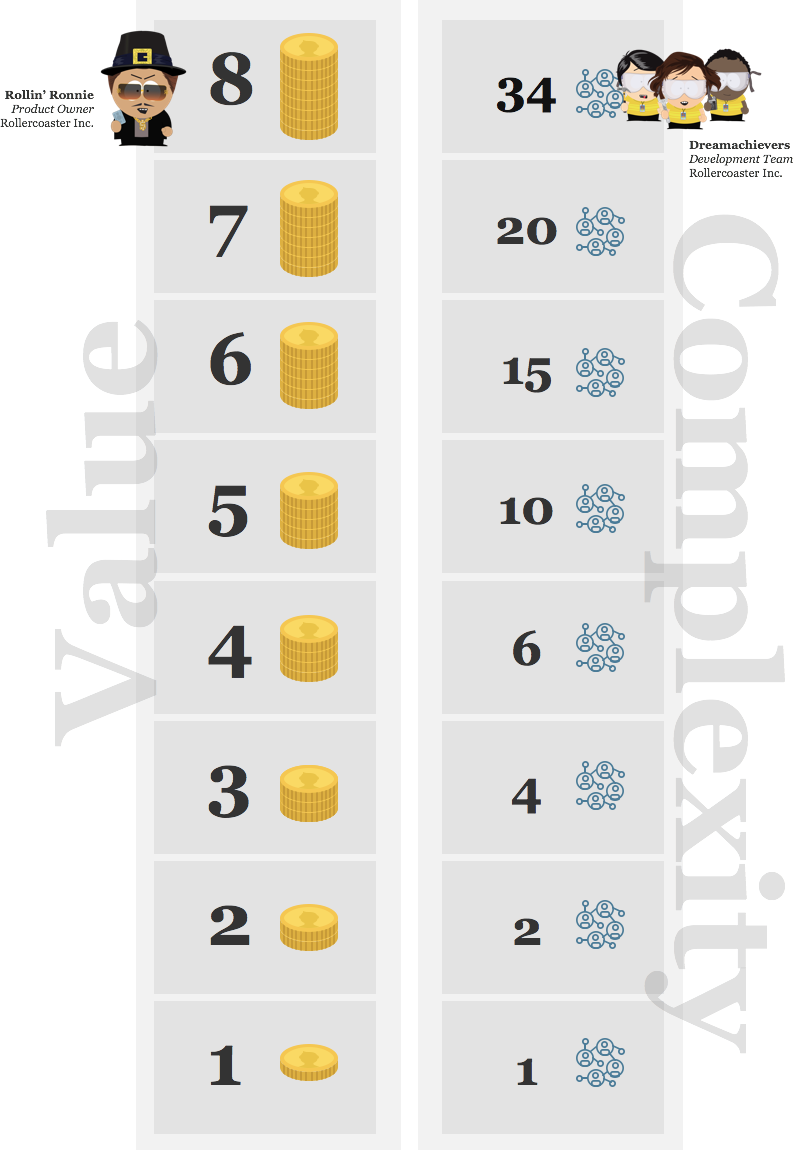
- Rollin’ Ronnie will divide and order all selected interests from highest to least valuable; the most valuable gets 8 points, the second 7, etcetera, till 1 for the lowest. Rollin’ Ronnie motivates his choices. Participants my try to influence this decision making. 🕐 15 minutes.
- The participant with the highest score wins Stakeholder Tycoon.
Extension.
- All participants will now take on the role of Development Team (no longer representing their Stakeholders).
- Together, they will re-order the list from most to least complex. They will divide the following scores: 1 (being the least complex), 2, 4, 6, 10, 15, 20, 34. 🕐 10 minutes.
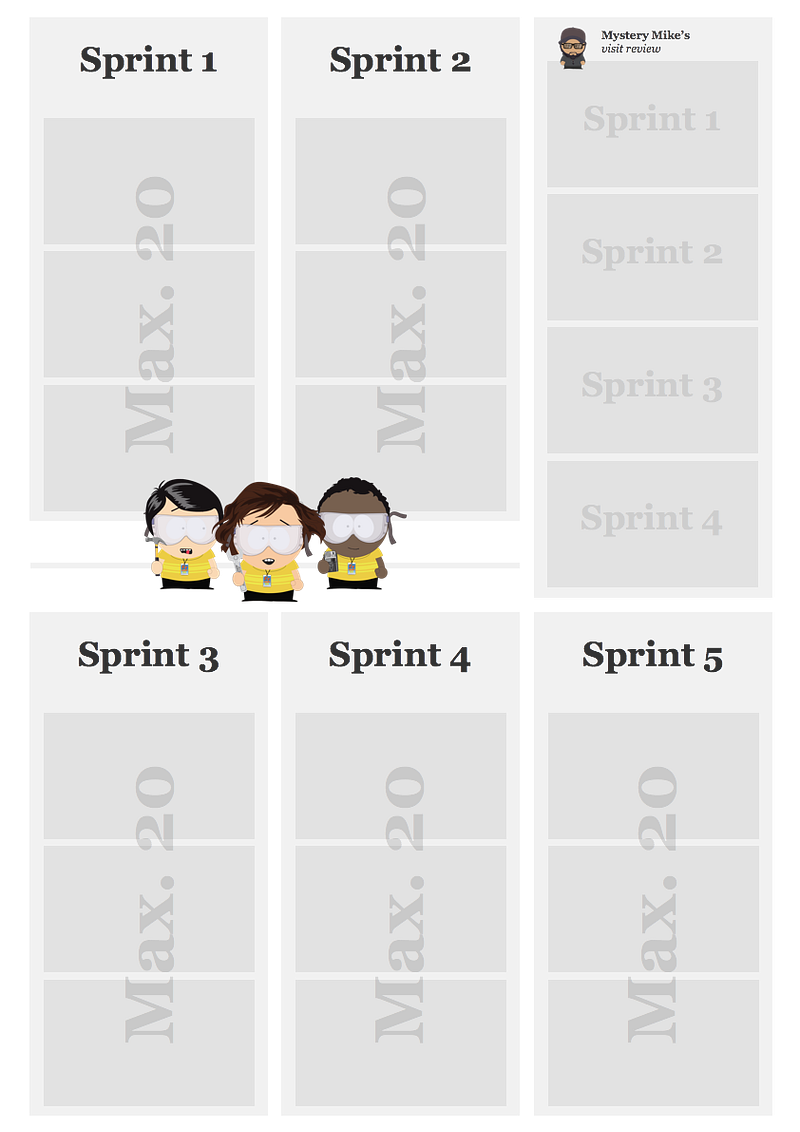
- From experience, the Development Team knows it can only deliver approximately 20 complexity points per Sprint. Some will be too large to complete in one Sprint, so they will have to be developed incrementally in fully working iterations. Rollercoaster Inc. intends to open up the park already after a single Sprint. Rollercoaster Inc. doesn’t want any semi-finished elements in the park to be released each Sprint. Work together as to determine a plan that enables this. Complex interests may be broken down by dividing its score over smaller, independent interests. 🕐 30–45 minutes.
- The participant who represented Mystery Mike provides a mystery visit review every Sprint that could influence development. If no one represented Mystery Mike, choose who will. The remaining participants, on behalf of the Development Team and Product Owner, will choose which other interests is of equal complexity, and adjust the plan, until 5 Sprints have been completed. 🕐 5 minutes per Sprint.
- At the end, give everyone a chance to share their experience of the overall game (both positives and negatives). 🕐 15 minutes.
Conclusion.
Stakeholder Tycoon should demonstrate the complexities and dynamics involved in Stakeholder representation and the tough job of making hard and at times unpopular choices.
The optional extension illustrates that the ‘order of value’ doesn’t have to be the same as the ‘order of production’. It also demonstrates that new insights that come to light during incremental development, may be of more value than planned work, and may influence production.
Product Owners learn to explain why it makes certain choices and that, as development progresses and more is learned, it will influence those choices.
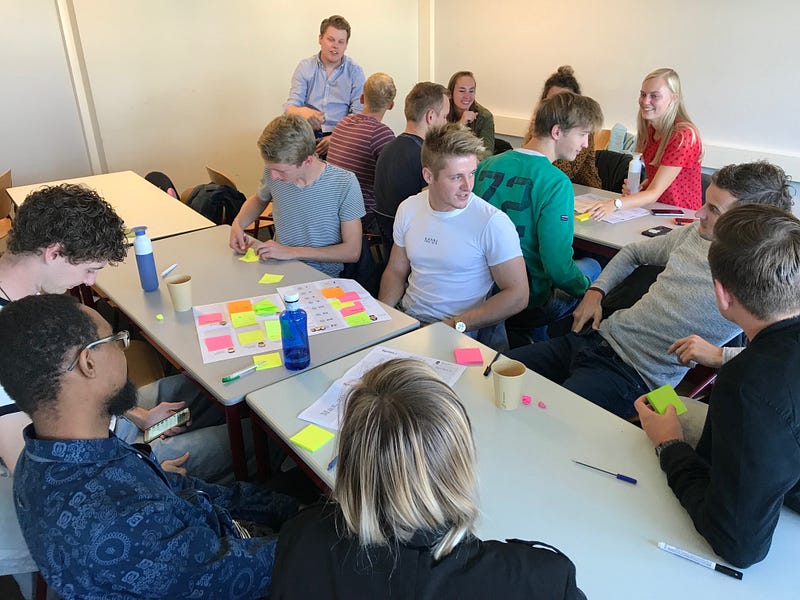
I hope that those who participated in this game will get a better understanding of the challenges a Product Owner faces. I hope they will experience why it is important to respect the Product Owner and honour the choices he or she makes. I too hope that players will learn the value of exchanging interests, motives and the reasoning behind decision making through direct interaction/communication.
Canvasses.
These (A3) canvasses could be used. Download them as PDF.
Please let me know how you experienced this game. Please share your feedback and ways to improve.

Do you want to share an article in Serious Scrum? Connect with us and make it happen!

Also, you’re all invited to the Serious Scrum Slack workspace. Come join the conversation!


