
Stable Diffusion Finally Released To The Public

Stability AI has announced the public release of its open source Artificial Intelligence text-to-image model called Stable Diffusion.
This is huge.
Yesterday, the CEO and founder of the company, Emad Mostaque, made a public announcement on Twitter.
“Proud of everyone involved in releasing this tech that is the first of a series of models to activate the creative potential of humanity,” he said
Why should you care?
It’s open source.
It means you can get it from the internet for free — weights and all.
You can use your local GPU to run it. This means that whether you like it or not, the latest trends in text-to-art AI models are both more available and more transparent.
Today we all made the World a more creative, happier and communicative place. More to come in the next few days but I for one can’t wait to see what you all create. Let’s activate humanity’s potential. — Emad
Publicly Accessible Web Tool
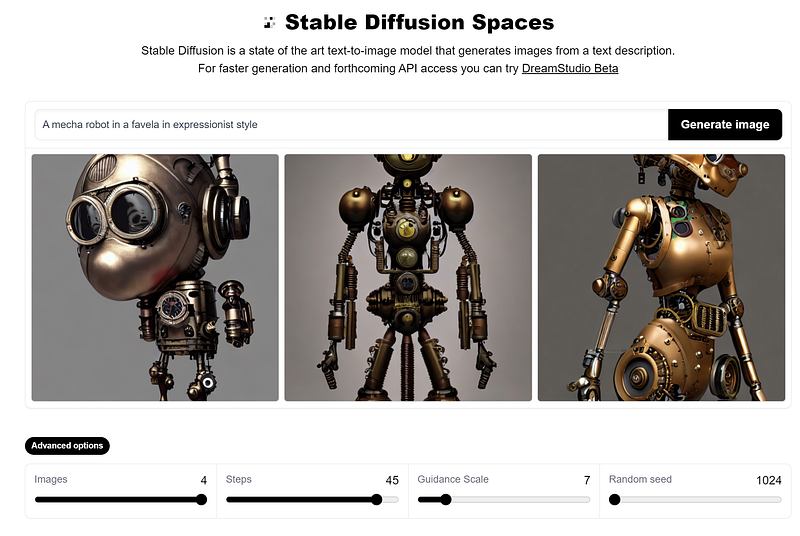
The public can access a demo tool in this hugging faces space.
It can be very slow though since you have to wait in the queue along with other users using the tool.
Google Colab Tool
If you don’t want to wait too long in the queue, use the Colab Notebook instead.
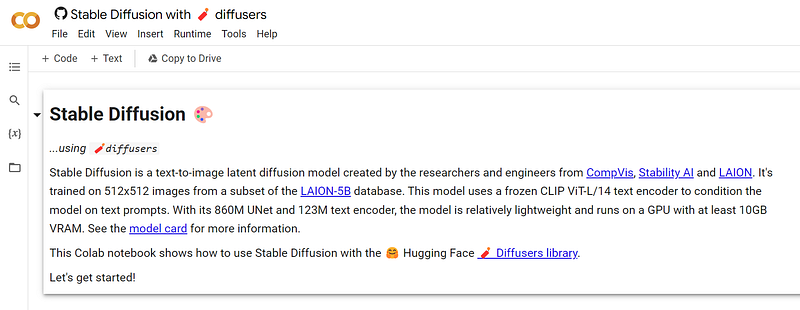
In terms of UI, it’s a little less user-friendly compared to Hugging Faces but is still completely free, and it’s faster since the computing resource is not shared with anyone else.
Now if you want an even more user-friendly UI that also gives you more control over the parameters, use Dream Studio.
Dream Studio
Dream Studio is the paid version of Stable Diffusion that can be accessed here.
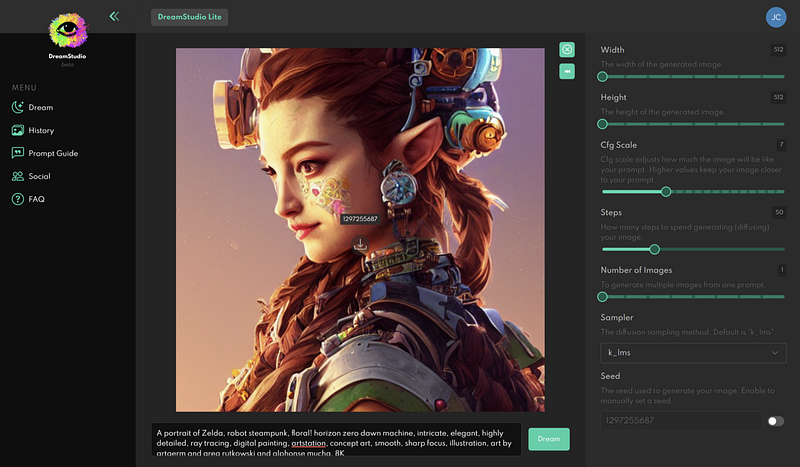
When users sign up, they will be given 200 credits for free. But after that, they need to buy credits which costs £1 ($1.18) for every 100 generations. £100 ($117.76) will buy 10,000 generations.
Read my initial tests and thoughts about Dream Studio here.
License
The model has been released under a Creative ML OpenRAIL-M license.
It’s a permissive license that allows for commercial and non-commercial usage. It focuses on “ethical and legal use of the model as your responsibility and must accompany any distribution of the model.”
Okay, that’s all the exciting news for today. To keep yourself up to date with the latest on Stable Diffusion, join the Discord community here.
If you like to read more stuff like this in Medium, consider supporting me and thousands of other writers by signing up for a membership.