
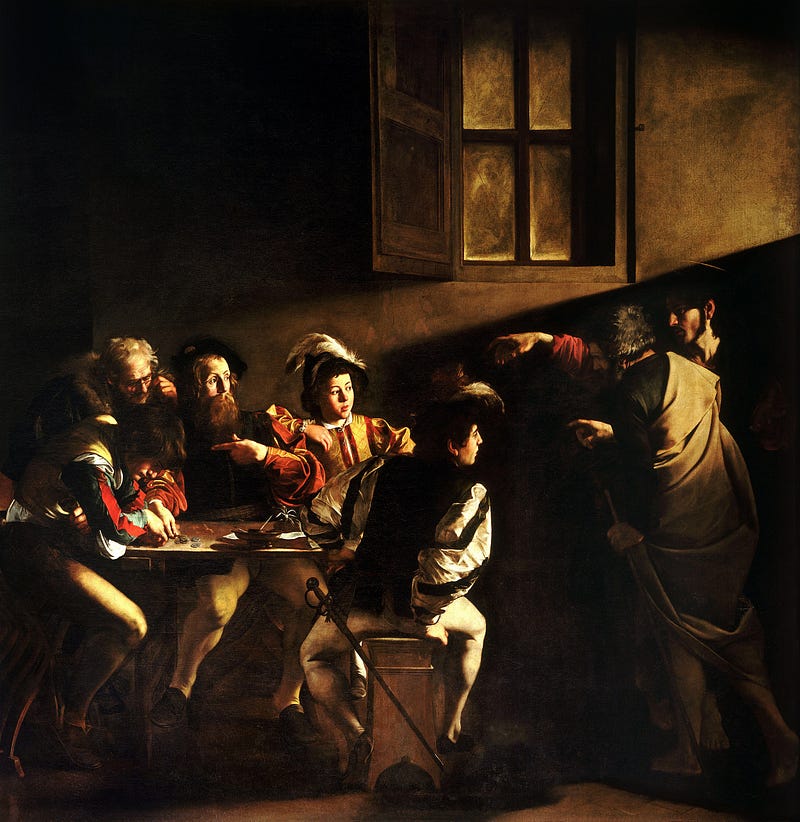
St. Matthew, Jesus and Racists
Imagine CNN covering a story about Pope Francis, Barack Obama and Donald Trump sitting down for dinner with the world’s most reviled deplorable racist.
Worst insult. Today, the absolute worst insult is to call someone a racist (just ask Justin Trudeau or the governor of Virginia). In the Jewish culture of 2,000 years ago, the absolute worst insult you could call someone was a tax collector and sinner.
Tax collectors were the “reviled racists’’ of ancient Israel, the most universally hated and for good reason. When you hear the word “collusion,’’ remember that tax collectors colluded with the enemy. They collected taxes for Rome (reminding the Jews they were slaves to the Empire). The self-centered greed and evil of the tax collectors was infamous.
Tax collectors were considered to be traitors to their people and evil thieves, known to collect way more than Rome asked for (so the tax collectors could enrich themselves at the expense of their own people). They were the most corrupt and hated people of that world.
No respectable Jew wanted anything to do with a tax collector. The Bible is filled with details. Then along came St. Matthew, a tax collector sitting at the tax collector’s booth. Jesus saw Matthew raking in the money and said “Follow me’’ so Matthew followed (Matthew, 9:9).
Heads exploded among the collective Establishment when they saw Jesus dining with the most hated tax collectors and sinners. Imagine a cable news debate on any leader of today sitting down for dinner with the most reviled and universally loathed people of our time.
The Feast of St. Matthew is a “feast of grace,’’ Father Mathias Thelen says.
Would Jesus point to a racist today and say “Follow me?’’
“Something we need to remember every time we celebrate the life of a saint is that Jesus draws near to that saint when they were sinners, when they were broken, when they were wounded, when they were self-centered, when they were ugly, when their life was a mess,’’ Thelen said. “He eats dinner with tax collectors and sinners and the religious of the world could not stand that.’’
Thankfully, Jesus does come to us in our sinfulness, when we are at our worst.
“He comes near to save us,’’ Thelen said. “Unfortunately there are some in the Church who have this eye of judgement toward eveyone who disagrees with them, this eye of self righteousness, this air of ‘I’m going to condemn you because you disagree with my politics, you disagree with the way I’m living.’’’
New Pharisees. From the old Pharisees to the new Pharisees of today, our culture is great at pointing fingers, condemning and calling out others for deplorable behavior. We are great at rejecting what we don’t like. But what’s the next step?
Would you eat with them? Do we demand the deplorable leave, as so many pundits and politicians do? But what about a cup of coffee and a chat?
Sitting down with — and hugging — your enemies
John Paul sat with his enemies. In the new film, The Divine Plan, we learn about St. John Paul the Great and Ronald Reagan being shot six weeks apart and how they prayed for the men who filled them full of bullets. John Paul sat down with and forgave the man who shot him.
An October 2017 minor miracle chipping away at hate? After two years of often violent political conflicts on college campuses across the United States, Aaron Alex Courtney, a 31-year-old African American, was ready to punch American Nazi Randy Furniss in the face.
But instead, he looked him in his eyes and calmly asked “Why do you hate me? What is it about me? Is it my skin color? My history? My dreadlocks?”
The young Nazi looked down and answered, “I don’t know.’’
Alex Courtney reached over and hugged Randy, offering the perfect Christian explanation: “I reached over and the third time, he wrapped his arms around me, and I heard God whisper in my ear, ‘You changed his life.’
What if we all became a little more like Jesus, a little more like Aaron Alex Courtney? A little more like John Paul?
What if we found the Matthew’s around us and tried to start a conversation before we attacked? What if we called them to follow Him?


