
St. George’s Day
Reflections on Englishness

23 April is not only St. George’s Day, but the anniversary of Shakespeare’s birth and death. So, it seems a very appropriate day for me to reflect on that strange condition: being English.

Like most national identities, it is a mass of contradictions. St. George embodies this well; precisely because what we know about him for certain is that he was not English. He was born in Cappadocia, which would be in modern-day Turkey. He died in Lydda in Palestine, having never come near the British Isles. Since his life was at the end of the third century CE, he was not the knight that he is commonly depicted to be, and the dragon story was tacked on much later; at least 500 years later. So, he’s an amalgam. Put it together, and George symbolises the reality that England created its national culture largely by appropriating the creations of others. George himself has an international following. He is also the patron saint of Ethiopia, Catalonia, and Genoa. There’s a good chance that English merchant ships flew the flag of St. George initially as an attempt to pass as Genoese since at the time they had a bigger and more formidable navy.
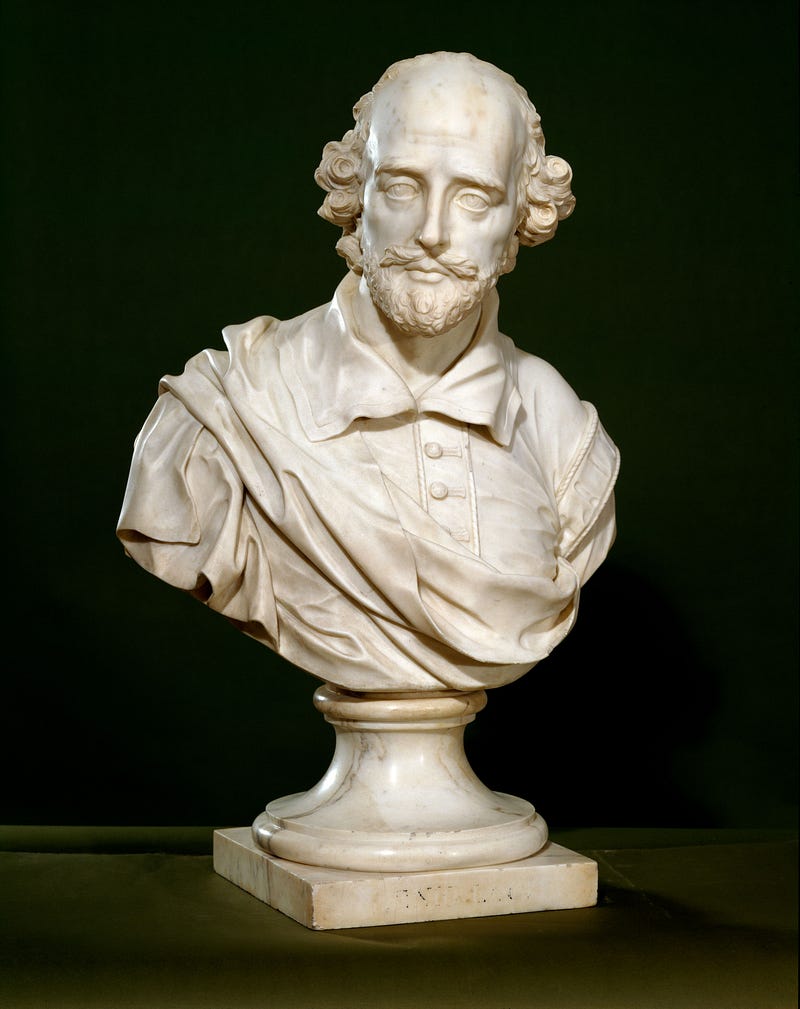
Shakespeare is only slightly better than St. George. We don’t actually know that he was born on April 23; that’s a calculation based on his baptism, which is recorded on April 26. There is also an extensive scholarly debate about who actually wrote the works that are grouped as Shakespearean with some arguing that Will of Stratford was not the only writer on the team. More symptomatic of his Englishness is the undeniable fact that his plays include many plots taken from others and set in other lands. The Bard certainly knew how to turn a phrase and is generally acclaimed as the writer who established lots of new words within the still evolving English language of Elizabethan England. There are even suggestions that this reflects his own fluency in other languages. Thus, Shakespeare, too, underlines the hybrid essence of English culture.
This aspect of national identity appears particularly paradoxical in view of the fact that the flag of St. George has been appropriated in its turn largely by the ultras of English nationalism, including the race-haters. You can wave the flag of St. Andrew for Scotland and it does not carry the same racist undercurrent as the flag of St. George.

I spent my academic career at least partly reflecting on the complexities of American culture. But along the way, inevitably, that invited me to think about English culture as well. In my life-time, America has operated as England’s principal foil. Recall if you like, award ceremonies where the relentlessly emotional “thank yous” of American recipients have been punctuated by an English celebrity self-deprecatingly accepting an award with a speech intent on inviting laughter rather than tears. The English are supposed to be modest. In movies, they stand in front of a display case, which discreetly contains a variety of medals including Olympic gold, and murmur: “Yes, I did a bit of running when I was in college.” But in the age of Tik-Tok and self-promotion, this is a faltering practice.

After visiting England in the early sixteenth century, the Dutch humanist Erasmus declared he would miss two things: the taste of the pies and the kisses of the women. I cannot speak to the quality of the pies, but the women of England are bastions of tradition.
Similarly, I once saw an interview in which the actress Zsa Zsa Gabor was asked which nation in her experience produced the best lovers. She said the English — because it was all so wonderfully unexpected. Of course, this was on an English chat show, and Ms. Gabor knew well that flattery gets you everywhere. But it underlines the idea that English self-deprecation is a rhetorical move that allows us to exceed expectations.
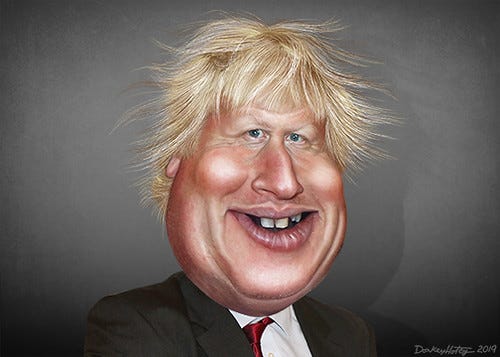
To brag is not the done thing in England. Far better for others to learn and sing your praises. But as soon as one defines something as English, contradictions loom. Pomposity, for instance. Spend any time observing English public life, not least its politics, and you will find that our gift for being pompous is alive and well. Can a nation be self-deprecatingly pompous? Apparently — yes. Boris Johnson is exhibit A.
Even before Boris, there was an English type in government that delighted in its own cleverness. Consider the civil servant who decided that the words to be stamped in the passport of a foreigner permitted to stay indefinitely in England should read: You have leave to remain. One can almost see the smirk.
There is an uneasy relationship between being English and being British. To the irritation of the other constituent nations of the United Kingdom, the two are regularly conflated, and not just by foreign commentators, but by the English. Team GB competes and somehow the English bask disproportionately in its successes. A similar, though less irksome phenomenon affects all the many provinces of England. To be English internationally means to be from London, and to speak either in the archaic styling of the upper classes or in some quaint or roguish dialect that no one else can replicate. Of course, things have changed and popular culture has permeated English youth culture with lots of phrases taken from America and the black diaspora. Hybridity lives.
I will always be English, and sometimes, it makes me squirm with embarrassment in a way, I suspect, only a minority of Americans ever know. Certainly, it makes me reluctant to wave the St. George flag, although I have been known to quote Shakespeare. Lately, the line “sleep which knits up the unravelled sleeve of care” has become a special favourite. But Shakespeare’s words now transcend national boundaries and so, I celebrate them. Tea and scones, perhaps? Let’s see if Jeeves has replenished the Darjeeling and the strawberry preserve…