
Sri Lanka’s Money Has Birds All Over It
And that’s way better than old dead white men
I like a lot of things about Sri Lanka. Actually, it’s slowly becoming my favorite destination—and not just for the normal reasons.
Sure, the Sri Lankan people are almost comically warm and welcoming (best homestays ever). The food is fresh, delicious, and affordable. And the list of things to see and do in Sri Lanka is off the charts.
Do you want to hike to an abandoned temple, stand under a 100m waterfall, climb a hill fort, see an elephant, yell at monkeys, marvel at the oldest tree in the world, and finish it off with a quick surf in tropical waves? You can do all of that in Sri Lanka. In the same day.
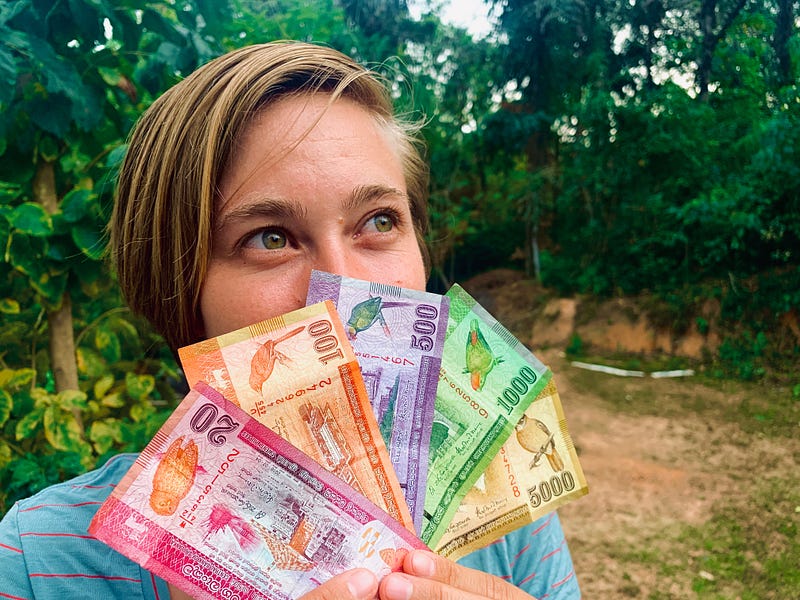
And while those are just a few of the reasons I can’t get enough of Sri Lanka—and why I rented a tuk tuk in Sri Lanka for a month—I stumbled across one more reason when I took a closer look at the money in my wallet. Because guess what, travelers—Sri Lanka might just have the coolest paper money in the world.
Put a bird on it
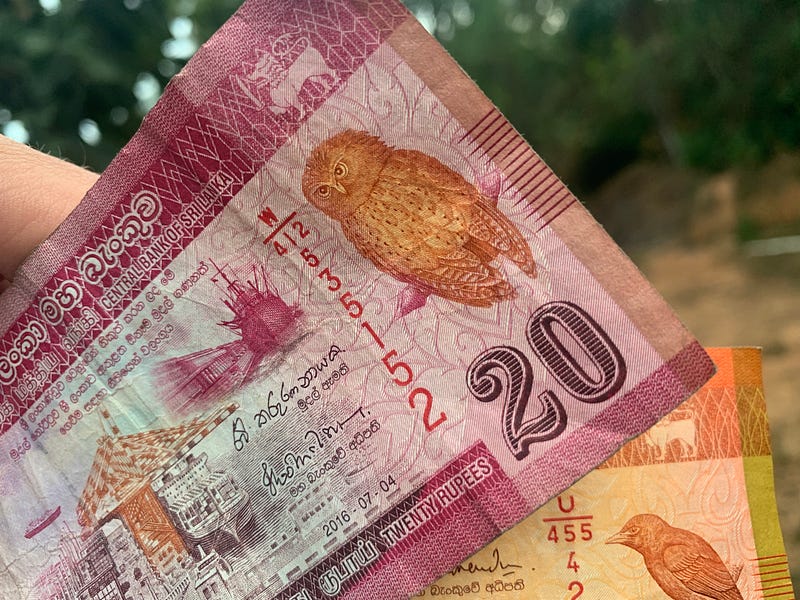
In 2011, Sri Lanka changed their paper money. But instead of going with the classic route of slapping a few national heroes, politicians, and religious figures (almost always old dead men) on their currency, Sri Lanka opted for a different approach.
They put a bird on it.
Or to be more precise, they put six birds on it. That’s right, each Sri Lankan note doesn’t feature a president or general or humanitarian. They each feature a different local bird. And they’re all awesome.
In ascending order, Sri Lanka’s currency features:
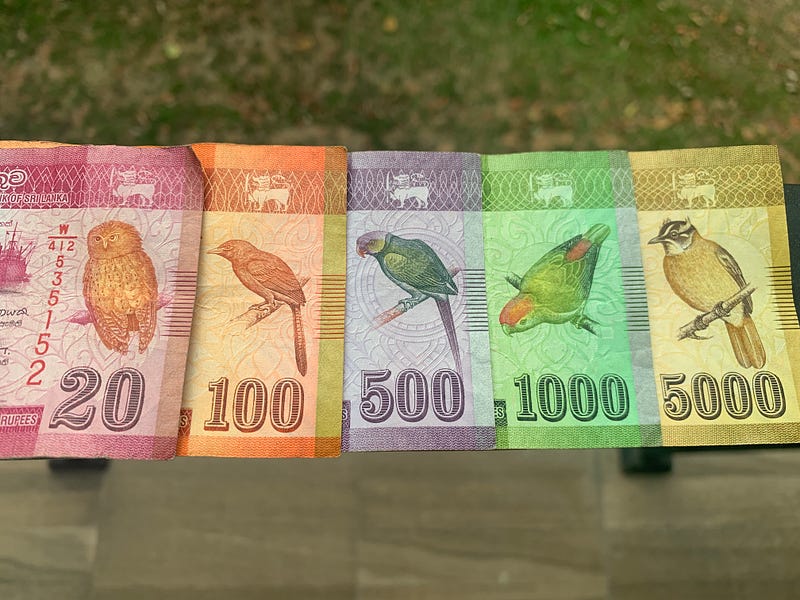
- 20 rupee note: Sri Lanka Serendib Scops Owl (newly discovered!)
- 50 rupee note: Sri Lanka Dull Blue Flycatcher
- 100 rupee note: Sri Lanka Orange Billed Babbler
- 500 rupee note: Sri Lanka Emerald Collared Parakeet
- 1000 rupee note: Sri Lanka Hanging Parrot
- 5000 rupee note: Sri Lanka Yellow Eared Bulbul
Sri Lanka doesn’t have a 10,000 note, but if they did it would probably have something awesome on it—like a pterodactyl. Or a bumblebee.
Currency represents what people value
The reason I’m geeking out about currency is because of how money literally epitomizes what a society values. It’s easy to see what the U.S. values with our “dead presidents.” Actually, most countries around the world opt to glorify past leaders on their money, including local animals as an afterthought (if at all).
Sri Lanka chose to put birds on the money—not as an addition to generals and presidents—but alone to celebrate the rich wildlife of Sri Lanka. The money in Sri Lanka says loudly and clearly, “Sri Lanka isn’t just about us. There are other more precious things here than just our past leaders.
And that inclusive attitude is reflected in their numerous protected national parks, preserves, and protected wildlife.
To be clear, Sri Lanka has its problems protecting its endangered wildlife. But putting animals front and center on the currency instead of politicians reflects the pride and growing awareness Sri Lankans have for their unique wildlife.
These animals aren’t just worth protecting—they’re worth celebrating.
More than a mascot
Plenty of other countries feature animals on their money. Heck, the U.S. slaps a bald eagle wherever it’ll fit. But when you look at the birds on Sri Lanka’s money it’s different from the way animals—particularly birds—are usually used as mascots of power, truth, virtue or some other allegory for human traits.
The bald eagle on an American dollar bill clutches arrows in one talon—a symbol of strength (and war). The dove carries an olive branch in its beak to symbolize peace. Owls often wear glasses or even a graduation cap to signify wisdom. The list of metaphorical fauna goes on.
But that’s not what Sri Lanka did.
Natural worth
The birds on Sri Lanka’s currency feature natural, realistic depictions of each bird species that would do the Audubon society proud. Looking at each one makes me want to learn more about them.
Perched on a branch, each bird appears lovingly rendered to suit the color of the bill (the blue flycatcher is on a blue 50 rupee note, for example). They look like birds, not human virtues wrapped in feathers. It’s a small thing, hardly worth noticing really, but Sri Lanka’s rupee notes and those birds are just another reason why I love Sri Lanka.
It’s impossible to sum up the culture and character of an entire country in one (or even a thousand) articles, but if you want to get a glimpse of Sri Lanka’s national pride and spirit, take a closer look at their money. They place the spotlight, not on famous human heroes of the past, but on a few of their most beautiful, and often overlooked birds.
It’s a nice reminder that while the borders on a map, religious past, and laws and customs define a country, it’s the land — complete with the local plants and animals — that make a place truly one of a kind.
Oh, and guess what’s on the left side of every Sri Lankan banknote?
A different butterfly.
Sri Lanka is just the best.


