
Spray Away What’s Been Bugging Your Fruit Trees
Treat pest and disease problems early with a dormant tree spray
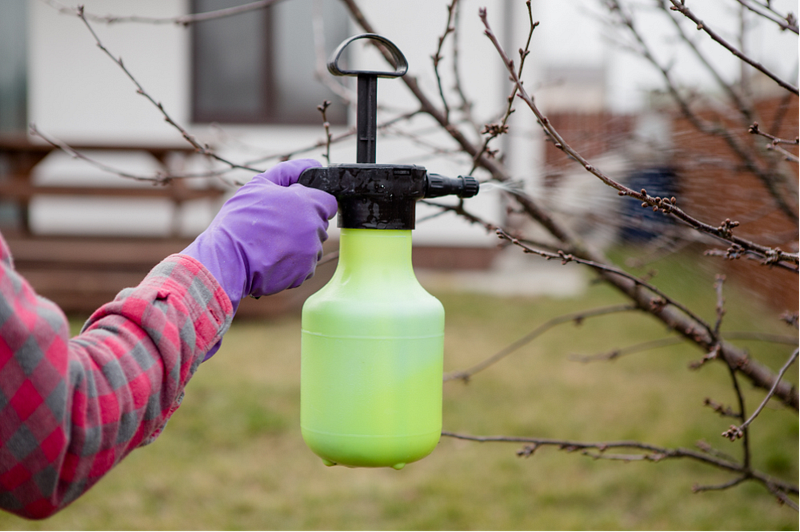
Leaf curl. Fireblight. Rust. Aphids. Mites. If you’ve had a serious problem with these or other diseases or pests on any of your deciduous fruit trees, the best remedy is often to spray the tree while it is in its dormant state.
What to spray
Dormant sprays can be fungicides, horticultural oils, or a combination of an oil and a pesticide. They should be applied when the tree is dormant because the active ingredients in the sprays can damage foliage and blossoms, and could be deadly to bees and other pollinators if applied when trees are in bloom.
What kind of spray you use depends on which problem you’re dealing with. Do some online research to clearly identify the problem and its appropriate remedy. Your local Master Gardeners can be extremely helpful in guiding you to the right control for each disease or pest. Oil sprays can control over-wintering pests like scale, European red and brown mite eggs, blister mites, pear psylla, and aphid eggs. For diseases like leaf curl, shot hole, powdery mildew, and scab, sprays of copper, lime sulfur, Bordeaux mixtures, or a synthetic fungicide provide some control.
When and how to spray
Spraying is best done after winter pruning so that the tree can be covered more completely and during a stretch of dry weather. How well the spray works depends to a large extent on how well you spray.
Follow these steps for the most effective dormant spraying:
1. Choose a day that is dry with temperatures above freezing and no rain forecast for at least the next 36 hours.
2. Prune out dead and damaged branches and remove any fruit or foliage that may still be on the tree.
3. Cover nearby evergreens or perennials with a tarp so they won’t be damaged by the spray.
4. Prepare the spray according to the directions on the package and put on protective eye gear and gloves. (Even though the spray may be organic, you don’t want to get it on your skin or in your eyes.) Fill your pump sprayer with the mixture.
5. Begin spraying at the top and middle of the tree and move toward the outer branches. Cover the branches thoroughly so that they are dripping with the spray solution. Once the branches are covered completely, spray the entire trunk down to the ground. Let the solution dry on the tree before removing the coverings on the nearby plants.
6. If you feel the need to treat a tree with both an oil spray and a fungicidal spray, allow at least 30 days to pass between each spray.
If you liked this article, check out these other stories:
Claire Splan is the author of California Fruit & Vegetable Gardening and California Month-by-Month Gardening.
Become a member of Medium.com and you’ll get full access to every story on Medium while your membership fee directly supports Claire Splan and thousands of other writers creating fresh stories you’ll want to read.


