
Splunk: Setting up a SOC Lab | Tryhackme Walkthrough
Explore Splunk beyond basics.
Introduction
We need your help!

A few weeks ago, Jasmine, the owner of Coffely, had reported a potential data breach resulting in her secret recipe getting stolen by James from the IT department. Before the recipe could get into the hands of the competitors, he was apprehended after finding undeniable evidence in his laptop, thanks to our Forensics team’s quick investigation.
Now, Jasmine wants to develop an in-house SOC capability for continuously monitoring the critical logs and events to keep an eye on all the activities within the network. She has contacted our team to provide an on-prem resource who can set up a SIEM locally and ingest necessary logs from the different log sources.
Our choice of SIEM is Splunk for this activity. You are tasked with installing and configuring Splunk and integrating the log sources on Linux and Windows OS.
Prerequisite
This room expects the users to have completed the following rooms:
About the Lab
In this room, you will be handed over two VMs, Linux and Windows, and your task will be to install Splunk on both Machines and integrate important log sources on each server either through listening ports or by installing forwarders.
Learning Objectives
This room covers the following learning objectives:
- Dive deep into the Splunk installation process.
- How to install and configure Splunk in Linux and Windows Environments.
- How to integrate different log sources into Splunk.
Splunk: Setting up a Lab
As explained in the Splunk Basics room, Splunk is a SIEM solution that allows us to collect, analyze, and correlate logs in a centralized server in real-time. This room will cover installing Splunk on Linux/Windows and configuring different log sources from both OS into Splunk. Each lab covers the following topics:
Linux Lab
- Install Splunk on Ubuntu Server
- Install and integrate Universal Forwarder
- Collecting Logs from important logs sources/files like syslog, auth.log, audited, etc
Windows Lab
- Install Splunk on Windows Machine
- Install and Integrate the Universal Forwarder
- Integrating and monitoring Coffely.THM’s weblogs
- Integrating Windows Event Logs
Splunk: Deployment on Linux Server
Splunk supports all major OS versions, has very straightforward steps to install, and can be up and running in less than 10 minutes on any platform. In this task, we will only focus on installing Splunk Enterprise on the Linux host. Typically, we would create an account on splunk.com and go to this Splunk Enterprise download link to select the installation package for the latest version. As of the time of writing, 9.0.3 is the newest version available on its website.
Note: Users are not expected to create an account and download the Splunk Enterprise during this activity. All required executables are already downloaded in relevant paths.
Connect with the Lab
This task will explore installing and configuring Splunk on a Linux machine. Connect with the lab by pressing the Start Machine button at the top of this task, and it will start in Split Screen View on the right side of the screen. In case the VM is not visible, use the blue Show Split View button at the top-right of the page. It will take around 3–5 minutes to load fully.
For the sake of simplicity, the Splunk installer is already downloaded at the location ~/Downloads/splunk
Splunk setup
ubuntu@coffely:~/Downloads/splunk/$ ls
splunk_installer.tgz splunkforwarder.tgz
Note: Make sure, to run sudo su to change to the root user before applying commands.
ubuntu@coffely:~/Downloads/splunk/$ sudo su
root@coffely:~/Downloads/splunk/
Splunk Installation
Splunk installation is as simple as running a command. You will need to uncompress Splunk by running the following command.
Splunk Installation
root@coffely:~/Downloads/splunk/$ tar xvzf splunk_installer.tgz
splunk/
splunk/splunk-9.0.3-dd0128b1f8cd-linux-2.6-x86_64-manifest
splunk/swidtag/
splunk/swidtag/splunk-Splunk-Enterprise-primary.swidtag
splunk/ftr
splunk/openssl/
....
....
....
splunk/etc/splunk-enttrial.lic
splunk/etc/splunk-launch.conf.default
splunk/etc/findlogs.ini
splunk/etc/log-cmdline.cfg
splunk/etc/deployment-apps/
splunk/etc/deployment-apps/README
splunk/etc/searchLanguage.xml
splunk/etc/log-debug.cfg
splunksetup
After the installation is complete, a new folder named splunk will be created, as shown below. Let's now move this folder to the /opt/ directory and start working on Splunk from there.
Splunk setup
root@coffely:~/Downloads/splunk/$ ls
splunk splunk_installer.tgz splunkforwarder.tgz
root@coffely:~/Downloads/splunk/$ mv splunk /opt/
Starting Splunk
The above step unzips the Splunk installer and installs all the necessary binaries and files on the system. Once installed, go to the directory /opt/splunk/bin and run the following command to start Splunk ./splunk start --accept-license. As it is the first time we are starting the Splunk instance, it will ask the user for admin credentials. Create a user account and proceed.
Splunk Installation
root@coffely:~/Downloads/splunk/# cd /opt/splunk/bin
root@coffely:/opt/splunk/bin#./splunk start --accept-license
This appears to be your first time running this version of Splunk.
Splunk software must create an administrator account during startup. Otherwise, you cannot log in.
Create credentials for the administrator account.
Characters do not appear on the screen when you type in credentials.Please enter an administrator username: splunkadmin
Password must contain at least:
* 8 total printable ASCII character(s).
Please enter a new password:
Please confirm new password:
....
....
....
Waiting for web server at http://127.0.0.1:8000 to be available............... Done
If you get stuck, we're here to help.
Look for answers here: http://docs.splunk.com
The Splunk web interface is at http://coffely:8000Accessing Splunk
Congrats! — We successfully installed Splunk on our Linux machine, which took us less than 10 minutes. To access Splunk, open the browser within the VM and go to the address http://coffely:8000. If you are connected to the VPN, you can access Splunk right in your browser by going to the address. http://MACHINE_IP:8e>000.
Use the credentials you created during the installation to access the Splunk dashboard.

Explore the different Splunk apps on the left panel. We will explore them further in the coming tasks.
Ques 1: What is the default port for Splunk? Ans 1: 8000
Splunk: Interacting with CLI
Now that we have installed Splunk, it’s important to learn some key commands while interacting with Splunk instances through CLI. These commands are run from the /opt/splunk/ directory. It is important to note that we can use the same commands on different platforms.
Some important and commonly used commands are shown below:
Command: splunk start
The splunk start command is used to start the Splunk server. This command starts all the necessary Splunk processes and enables the server to accept incoming data. If the server is already running, this command will have no effect.
Splunk start
root@coffely:/opt/splunk#./bin/splunk start
Splunk> Finding your faults, just like mom.
....
Checking prerequisites...
	Checking http port [8000]: open
	Checking mgmt port [8089]: open
	Checking appserver port [127.0.0.1:8065]: open
	Checking kvstore port [8191]: open
	Checking configuration... Done.
....
....
The Splunk web interface is at http://coffely:8000
As mentioned in the output, the Splunk dashboard will be accessible within the VM at HTTP://coffely:8000
Command: splunk stop
The splunk stop command is used to stop the Splunk server. This command stops all the running Splunk processes and disables the server from accepting incoming data. If the server is not running, this command will have no effect.
Splunk stop
root@tryhackme:/opt/splunk#./bin/splunk stop
 ...some output ommitted ...
Command: splunk restart
The splunk restart command is used to restart the Splunk server. This command stops all the running Splunk processes and then starts them again. This is useful when changes have been made to the Splunk configuration files or when the server needs to be restarted for any other reason.
splunk: restart
root@tryhackme:/opt/splunk#./bin/splunk restart
...some output ommitted ...
Command: splunk status
The splunk status command is used to check the status of the Splunk server. This command will display information about the current state of the server, including whether it is running or not, and any errors that may be occurring.
Splunk: Start
root@coffely:/opt/splunk#./bin/splunk status
splunkd is running (PID: 2158).
splunk helpers are running (PIDs: 2159 2301 2351 2437).
Command: splunk add oneshot
The splunk add oneshot command is used to add a single event to the Splunk index. This is useful for testing purposes or for adding individual events that may not be part of a larger data stream.
splunk: add oneshot
root@coffely:/opt/splunk#./bin/splunk add oneshot
...some output ommitted ...
Command: splunk search
The splunk search command is used to search for data in the Splunk index. This command can be used to search for specific events, as well as to perform more complex searches using Splunk's search language.
Splunk: search
root@coffely:/opt/splunk#./bin/splunk search coffely
WARNING: Server Certificate Hostname Validation is disabled. Please see server.conf/[sslConfig]/cliVerifyServerName for details.
Feb 18 21:09:04 coffley ubuntu: coffely-has-the-best-coffee-in-town
Feb 18 13:48:17 coffely ubuntu: COFFELY
Feb 18 13:48:17 coffely ubuntu: COFFELY
Command: splunk help
The most important command is the help command which provides all the help options.
root@tryhackme:/opt/splunk#./bin/splunk help
Welcome to Splunk's Command Line Interface (CLI).
Type these commands for more help: help [command] type a command name to access its help page
help [object] type an object name to access its help page
help [topic] type a topic keyword to get help on a topic
help commands display a full list of CLI commands
help clustering commands that can be used to configure the clustering setup
help shclustering commands that can be used to configure the Search Head Cluster setup
help control, controls tools to start, stop, manage Splunk processes
help datastore manage Splunk's local filesystem use
help distributed manage distributed configurations such as
data cloning, routing, and distributed search
help forwarding manage deployments
help input, inputs manage data inputs
help licensing manage licenses for your Splunk server
help settings manage settings for your Splunk server
help simple, cheatsheet display a list of common commands with syntax
help tools tools to help your Splunk server
help search help with Splunk searches
....
....These are just a few of the many CLI commands available in Splunk. Administrators can use the CLI to manage and configure their Splunk servers more efficiently and effectively.
Ques 2: In Splunk, what is the command to search for the term coffely in the logs? Ans 2: ./bin/splunk search coffely
Splunk: Data Ingestion
Configuring data ingestion is an important part of Splunk. This allows for the data to be indexed and searchable for the analysts. Splunk accepts data from various log sources like Operating System logs, Web Applications, Intrusion Detection logs, Osquery logs, etc. In this task, we will use Splunk Forwarder to ingest the Linux logs into our Splunk instance.
Splunk Forwarders
Splunk has two primary types of forwarders that can be used in different use cases. They are explained below:
Heavy Forwarders
Heavy forwarders are used when we need to apply a filter, analyze or make changes to the logs at the source before forwarding it to the destination. In this task, we will be installing and configuring Universal forwarders.
Universal Forwarders
It is a lightweight agent that gets installed on the target host, and its main purpose is to get the logs and send them to the Splunk instance or another forwarder without applying any filters or indexing. It has to be downloaded separately and has to be enabled before use. In our case, we will use a universal forwarder to ingest logs.
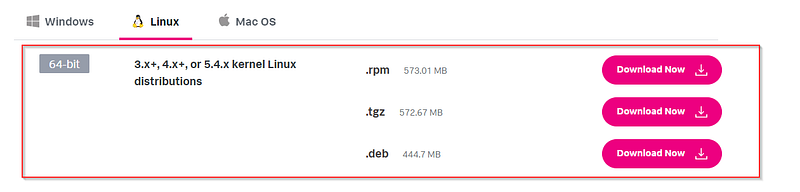
Universal forwarders can be downloaded from the official Splunk website. It supports various OS, as shown below:
Note: As of writing this, 9.0.3 is the latest version available on the Splunk site.

For this task, the 64-bit version of Linux Forwarder is already downloaded in the folder ~/Downloads/splunk.
splunk: Forwarder
ubuntu@coffely:~/Downloads/splunk# ls
splunk_installer.tgz splunkforwarder.tgz
Install Forwarder
Change the user to sudo, unpack, and install the forwarder with the following command.
splunk: Forwarder
ubuntu@coffely:~/Downloads/splunk# sudo su
root@coffely:/home/ubuntu/Downloads/splunk# tar xvzf splunkforwarder.tgz
splunkforwarder/
splunkforwarder/swidtag/
splunkforwarder/swidtag/splunk-UniversalForwarder-primary.swidtag
splunkforwarder/ftr
splunkforwarder/openssl/
...
...
splunkforwarder/etc/deployment-apps/
splunkforwarder/etc/deployment-apps/README
splunkforwarder/etc/log-debug.cfg
The above command will install all required files in the folder splunkforwarder. Next, we will move this folder to /opt/ path with the command mv splunkforwarder /opt/.
We will run the Splunk forwarder instance now and provide it with the new credentials as shown below:
Splunk Installation
root@coffey:~/Downloads/splunk# mv splunkforwarder /opt/
root@coffey:~/Downloads/splunk# cd /opt/splunkforwarder
root@coffey:/opt/splunkforwarder# ./bin/splunk start --accept-license
This appears to be your first time running this version of Splunk.
...
...
Please enter an administrator username: splunkadmin
Password must contain at least:
   * 8 total printable ASCII character(s).
Please enter a new password:
Please confirm new password:
Creating unit file...
Failed to auto-set default user.
...
...
Checking prerequisites...
	Checking mgmt port [8089]: not available
ERROR: mgmt port [8089] - port is already bound.  Splunk needs to use this port.
Would you like to change ports? [y/n]: y
Enter a new mgmt port: 8090
Setting mgmt to port: 8090
The server's splunkd port has been changed.
	Checking mgmt port [8090]: open
Starting splunk server daemon (splunkd)...
Done
By default, Splunk forwarder runs on port 8089. If the system finds the port unavailable, it will ask the user for the custom port. In this example, we are using 8090 for the forwarder.
Splunk Forwarder is up and running but does not know what data to send and where. This is what we are going to configure next.
Ques 3: What is the default port, on which Splunk Forwarder runs on? Ans 3: 8089
Configuring Forwarder on Linux
Now that we have installed the forwarder, it needs to know where to send the data. So we will configure it on the host end to send the data and configure Splunk so that it knows from where it is receiving the data. Splunk Configuration Log into Splunk and Go to Settings -> Forward and receiving tab as shown below:

It will show multiple options to configure both forwarding and receiving. As we want to receive data from the Linux endpoint, we will click on Configure receiving and then proceed by configuring a new receiving port.
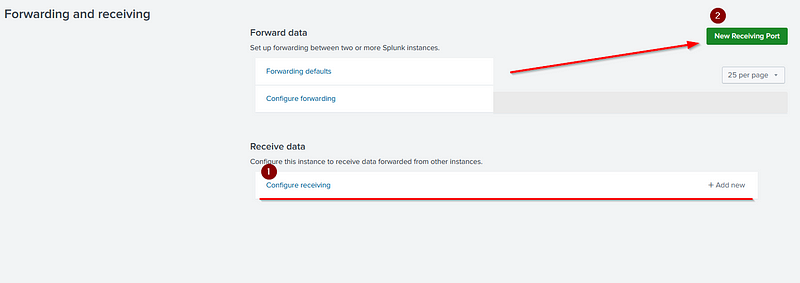
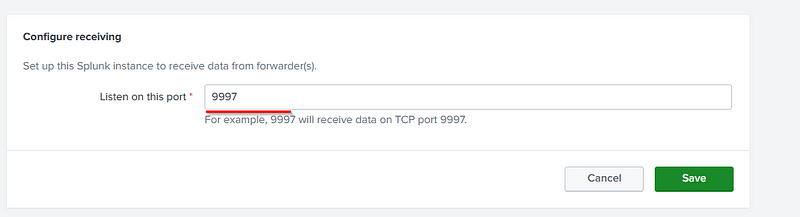
By default, the Splunk instance receives data from the forwarder on the port 9997. It's up to us to use this port or change it. For now, we will configure our Splunk to start listening on port 9997 and Save, as shown below:
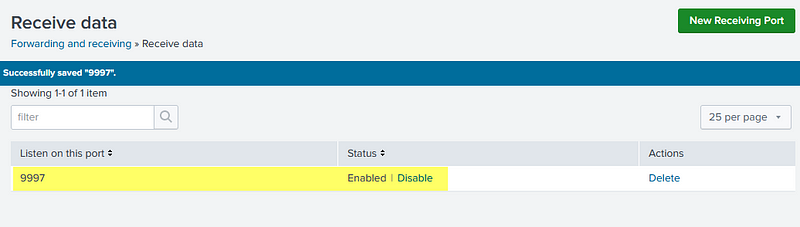
Our listening port 9997 is now enabled and waiting for the data. If we want, we can delete this entry by clicking on the Delete option under the Actions column.
Creating Index
Now that we have enabled a listening port, the important next step is to create an index that will store all the receiving data. If we do not specify an index, it will start storing received data in the default index, which is called the main index.

The indexes tab contains all the indexes created by the user or by default. This shows some important metadata about the indexes like Size, Event Count, Home Path, Status, etc.

Click the New Index button, fill out the form, and click Save to create the index. Here we have created an index called Linux_host as shown below:

Configuring Forwarder
It’s time to configure the forwarder to ensure it sends the data to the right destination. Back in the Linux host terminal, go to the /opt/splunkforwarder/bin directory:
Splunk: Forwarder
root@coffely:/opt/splunkforwarder/bin# ./splunk add forward-server MACHINE_IP:9997
WARNING: Server Certificate Hostname Validation is disabled. Please see server.conf/[sslConfig]/cliVerifyServerName for details.
Splunk username: splunkadmin
Password:
Added forwarding to: MACHINE_IP:9997.
This command will add the forwarder server, which listens to port 9997.
Linux Log Sources
Linux stores all its important logs into the /var/log file, as shown below. In our case, we will ingest syslog into Splunk. All other logs can be ingested using the same method.

Next, we will tell Splunk forwarder which logs files to monitor. Here, we tell Splunk Forwarder to monitor the /var/log/syslog file.
Ingest syslog file
root@coffely:/opt/splunkforwarder/bin# ./splunk add monitor /var/log/syslog -index Linux_host
WARNING: Server Certificate Hostname Validation is disabled. Please see server.conf/[sslConfig]/cliVerifyServerName for details.
Added monitor of '/var/log/syslog'.
Exploring Inputs.conf
We can also open the inputs.conf file located in /opt/splunkforwarder/etc/apps/search/local, and look at the configuration added after the commands we used above.
Inputs.conf
root@coffely:/opt/splunkforwarder/etc/apps/search/local# ls
inputs.conf
We can view the content of the input.conf using the cat command.
Inputs.conf
root@coffely:/opt/splunkforwarder/etc/apps/search/local# cat inputs.conf
[monitor:///var/log/syslog]
disabled = false
index = Linux_host
Utilizing Logger Utility
Logger is a built-in command line tool to create test logs added to the syslog file. As we are already monitoring the syslog file and sending all logs to the Splunk, the log we generate in the next step can be found with Splunk logs. To run the command, use the following command.
Logger: syslog
tryhackme@coffely:/opt/splunkforwarder/bin# logger "coffely-has-the-best-coffee-in-town"Logger: syslog
tryhackme@coffely:/tryhackme@coffleylab:/opt/splunkforwarder/bin# tail -1 /var/log/syslog
Great, We have successfully installed and configured Splunk Forwarder to get the logs fom the syslog file into Splunk.
Ques 4: Follow the same steps and ingest /var/log/auth.log file into Splunk index Linux_logs. What is the value in the sourcetype field?
Ans 4: syslog
Ques 5: Create a new user named analyst using the command adduser analyst. Once created, look at the events generated in Splunk related to the user creation activity. How many events are returned as a result of user creation?
Ans 5: 6
Ques 6: What is the path of the group the user is added after creation? Ans 6: /etc/group
Splunk: Installing on Windows
Installing Splunk on a Windows platform is relatively simple with just running the installer. Connect with the Windows Machine by clicking the Start Machine button on the right. It will take around 3-5 minutes to boot completely and will start in Split-Screen View on the right side of the screen. In case the VM is not visible, use the blue Show Split View button at the top-right of the page.
On the Windows machine, we will first install Splunk, configure a forwarder to capture Windows Event logs, and integrate Coffely weblogs to collect all requests and responses into Splunk Instance.
Downloading Splunk Enterprise
The first step would be to log in to the Splunk portal and download the Splunk Enterprise instance from the website, as shown below:

The installer Splunk-Instance is already been downloaded and placed in the Downloads folder to speed up the process.
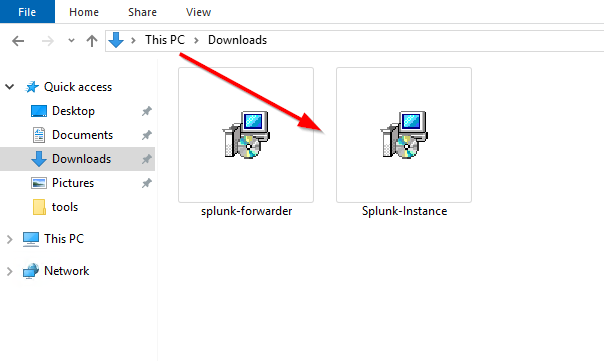
Run the Splunk-Instance installer. By default, it will install Splunk in the folder C:\Program Files\Splunk. This will check the system for dependencies and will take 5-8 minutes to install the Splunk instance.
First, click the Check this box to accept the License Agreement and click Next.

Create Administration Account
The important step during installation is creating an administrator account, as shown below. This account will have high privileges, create and manage other accounts, and control all administrative roles.

It will look for the system requirement for compatibility and other checks.
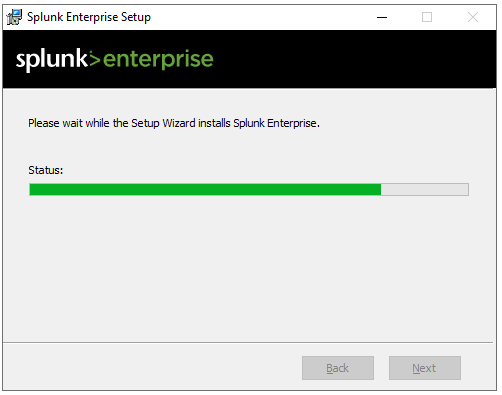
We will get the following message if all system requirements are met, and installation is complete.

Accessing Splunk Instance
Splunk is installed on port 8000 by default. We can change the port during the installation process as well. Now open the browser in the lab and go to the URL HTTP://127.0.0.1:8000. If you are connected with the VPN, then you can also access the newly installed Splunk Instance in your browser by going to HTTP://MACHINE_IP:8e>000.

Use the credentials created during the installation process to get the Splunk dashboard.

Great. We have successfully installed Splunk on a Windows OS. In the next task, we will follow similar steps we did during Linux Lab to install Splunk Forwarder.
Ques 7: What is the default port Splunk runs on? Ans 7: 8000
Ques 8: Click on the Add Data tab; how many methods are available for data ingestion? Ans 8: 3
Ques 9: Click on the Monitor option; what is the first option shown in the monitoring list? Ans 9: local event logs
Installing and Configuring Forwarder
First, we will configure the receiver on Splunk so the forwarder knows where to send the data.
Configure Receiving
Log into Splunk and Go to Settings -> Forward and receiving tab as shown below:

It will show multiple options to configure both forwarding and receiving. As we want to receive data from the Windows Endpoint, we will click on Configure receiving and then proceed by configuring a new receiving port.
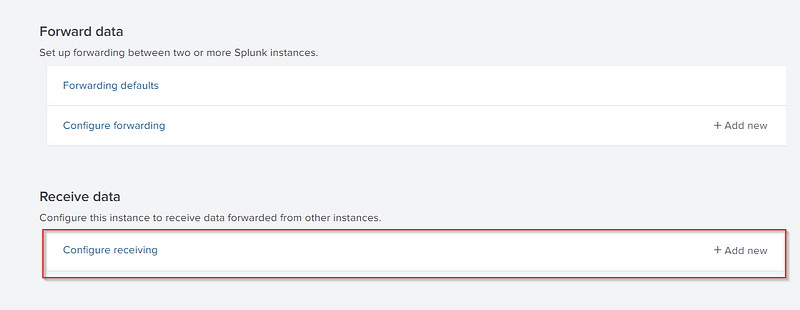
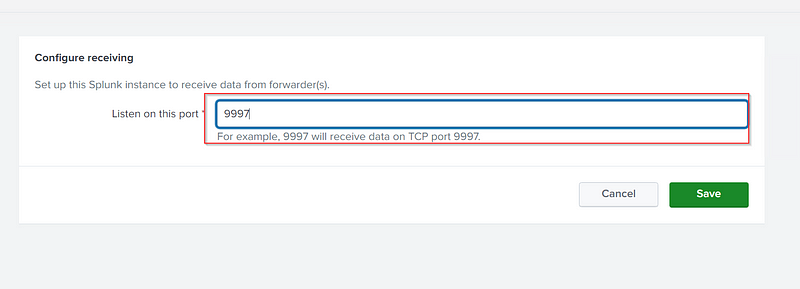
By default, the Splunk instance receives data from the forwarder on port 9997. It's up to us to use this port or change it. For now, we will configure our Splunk to start listening on port 9997 and Save, as shown below:
Installing Splunk Forwarder
Installing Splunk Forwarder is very straightforward. First, we will download the latest forwarder from the official website here. As of writing this, Splunk Forwarder 9.0.4 is the newest version available on the site.

For this lab, the forwarder is already downloaded and placed in the Downloads folder, as shown below:
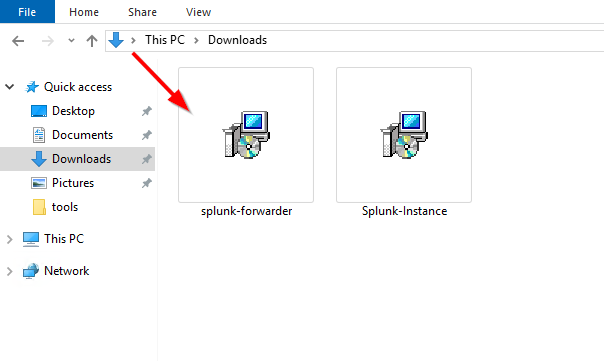
Installation Process
Click on the installer and begin installing Splunk Forwarder, as shown below. Don’t forget to click the Check this box to accept the License Agreement. Select the Select the On-Premises Option as we are installing it on an on-premises appliance.

Create an account for Splunk Forwarder. This will be used when connecting the Splunk forwarder to the Splunk Indexer.

Setting up Deployment Server
This configuration is important if we install Splunk forwarder on multiple hosts. We can skip this step as this step is optional.

Setting Up Listener
We must specify the server’s IP address and port number to ensure that our Splunk instance gets the logs from this host. By default, Splunk listens on port 9997 for any incoming traffic.

Installing the forwarder on a Windows endpoint will take 3–5 minutes.


If we had provided the information about the deployment server during the installation phase, our host details would be available in the Settings -> Forwarder Management tab, as shown below:

Now that Splunk forwarder is installed, we will now configure our forwarder to send logs to our Splunk instance in the upcoming tasks.
Ques 10: What is the full path in the C:\Program Files where Splunk forwarder is installed? Ans 10: C:\Program Files\SplunkUniversalForwarder
Ques 11: What is the default port on which Splunk configures the forwarder? Ans 11: 9997
Splunk: Ingesting Windows Logs
We have installed the forwarder and set up the listener on Splunk. It’s time to configure Splunk to receive Event Logs from this host and configure the forwarder to collect Event Logs from the host and send them to the Splunk Indexer. Let’s go through this step by step.
Check Forwarder Management
The Forwarder Management tab views and configures the deployment of servers/hosts.

Go to settings -> Forwarder Management tab to get the details of all deployment hosts. In an actual network, this tab will be filled with all the hosts and servers configured to send logs to Splunk Indexer.

It will appear here if we have properly configured the forwarder on the host. Now it’s time to configure Splunk to receive the Event Logs.
Select Forwarder
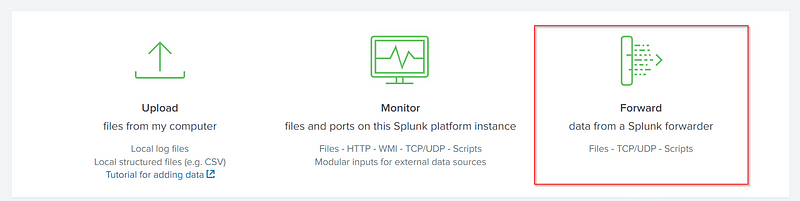
Click on Settings -> Add data. It shows all the options to add data from different sources.

It provides us with three options for selecting how to ingest our data. We will choose the Forward option to get the data from Splunk Forwarder.
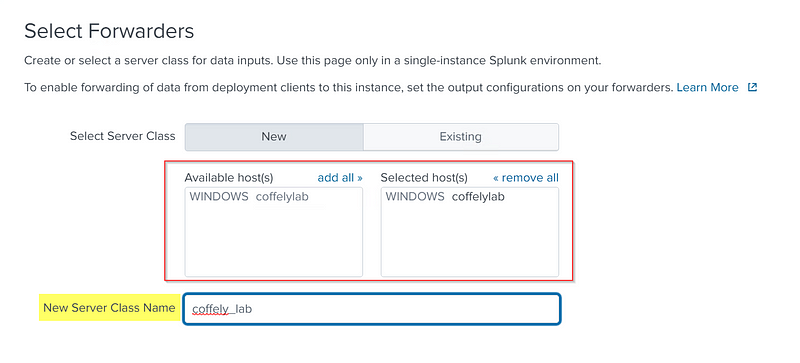
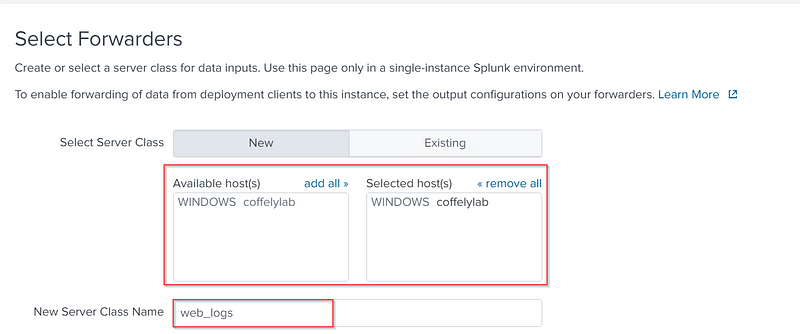
In the Select Forwarders section, Click on the host coffelylab shown in the Available host(s) tab, and it will be moved to the Selected host(s) tab. Then, click Next.
Select Source
It’s time to select the log source that we need to ingest. The list shows many log sources to choose from. Click on Local Event Logs to configure receiving Event Logs from the host. Different Event Logs will appear in the list to choose from. As we know, various Event Logs are generated by default on the Windows host. More about Event Logs can be learned in this Windows Event Logs room. Let’s select a few of those and move to the next step.

Creating Index
Create an index that will store the incoming Event logs. Once created, select the Index from the list and move to the next step.
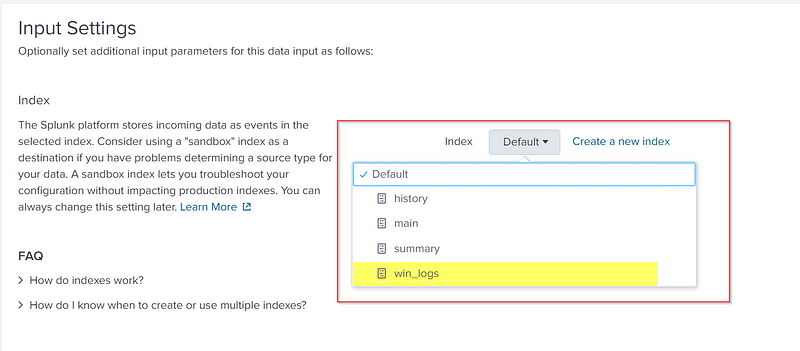
Review
The review tab summarizes the settings we just did to configure Splunk. Move to the next step.

Click on the Start Searching tab. It will take us to the Search App. If everything goes smoothly, we will receive the Event Logs immediately.

Great. We have successfully configured Splunk to receive Event Logs from the Windows host. Let’s move on to the next task, where we will look at the steps to ingest weblogs.
Ques 12: While selecting Local Event Logs to monitor, how many Event Logs are available to select from the list to monitor? Ans 12: 5
Ques 13: Search for the events with EventCode=4624. What is the value of the field Message? Ans 13: An account was successfully logged on.
Ingesting Coffely Web Logs
The Windows host we connected to Splunk Instance also hosts a local copy of their website, which can be accessed via http://coffely.thm from the VM and is in the development phase. You are asked to configure Splunk to receive the weblogs from this website to trace the orders and improve coffee sales.
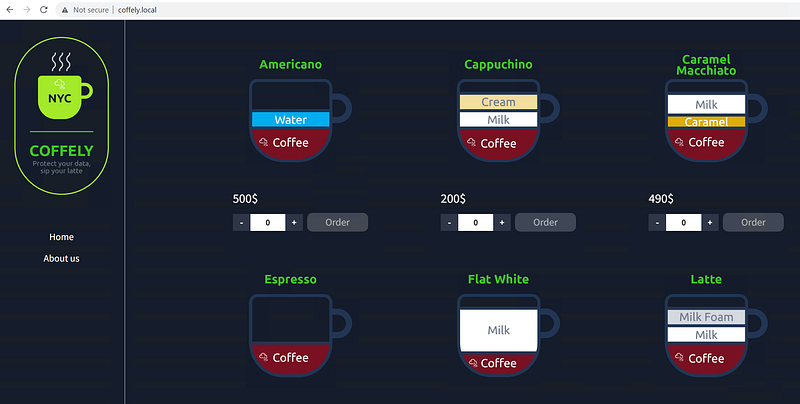
This site will allow users to order coffee online. In the backend, it will keep track of all the requests and responses and the orders placed. Now let’s follow the next steps to ingest web logs into Splunk.
Add Data
Go to settings -> Add Data and select Forward from the list, as shown below:

Select the Forwarder option:
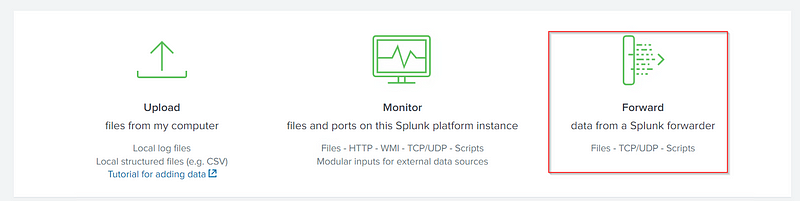
Select Forwarder
Here we will select the Web host where the website is being hosted.
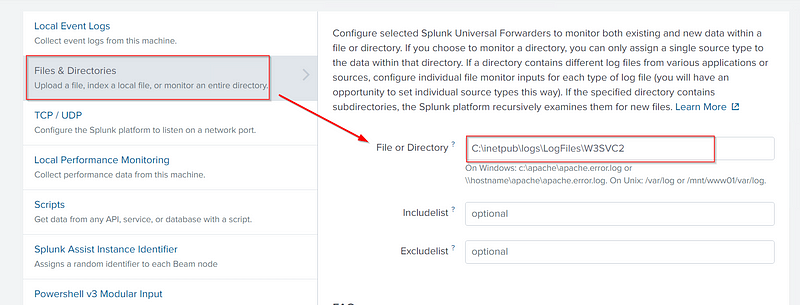
Web logs are placed in the directory C:\inetpub\logs\LogFiles\W3SVC*. The directory may contain one or more log files which will be continuously updated with the logs. We will be configuring Splunk to monitor and receive logs from this directory.
Setting up Source Type
Next, we will select the source type for our logs. As our web is hosted on an IIS server, we will choose this option and create an appropriate index for these logs.

We can look at the summary to see if all settings are fine.
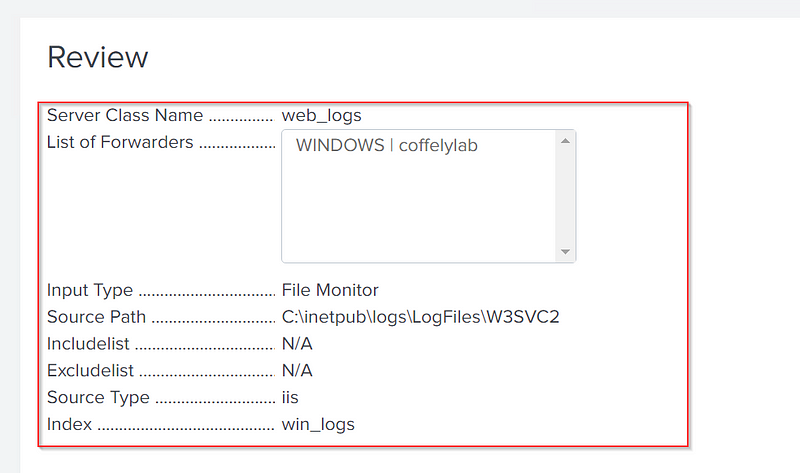
Now everything is done. It’s time to see if we get the weblogs in our newly created index. Let’s visit the website coffely.thm and generate some logs. The logs should start propagating in about 4-5 minutes in the search tab, as shown below:

Excellent. It looks like we were successful in getting the weblogs ingested into Splunk. However, the logs may need proper parsing and normalizing, which is something to be discussed in upcoming rooms.
Ques 14: In the lab, visit http://coffely.thm/secret-flag.html; it will display the history logs of the orders made so far. Find the flag in one of the logs. Ans 14: {COffely_Is_Best_iN_TOwn}
Conclusion
This is it! Understanding the process of installation and configuration of any SIEM solution and then ingesting logs from various sources is a very important concept for a SOC analyst. In this room, we learned how to:
- Install Splunk both on Linux and Windows Host.
- Install Splunk Forwarder on Linux and Windows Host.
- Configure Splunk to receive OS-based and Web logs.
More advanced topics will be covered in future rooms.
References: https://tryhackme.com/room/splunklab


