
To Be Spiritual, But Not Religious
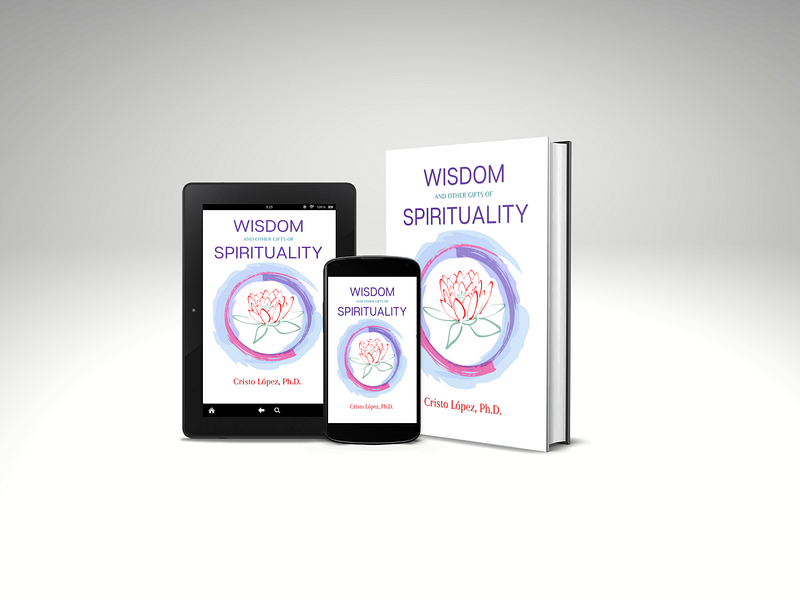
An excerpt from my book, “Wisdom and Other Gifts of Spirituality.”

I have long been interested in the ways those of us who shy away from formal, organized religions may still grow spiritually. I identify as a “secular Buddhist,” which I guess affords me the right to claim that I am a seeker of spiritual insight, even if I recoil against the dogma and strictures of organized faith. I have spent many years thinking about what informs a spiritual life. Early on, I realized that there are foundational truths in everyone’s spiritual life, regardless of their religious origins. I’ve concluded that for me — and I think many others — these truths are what matter, however they come to be known and experienced.
After many years of thinking about these matters, I decided to finally put my thoughts down in a book, which will be available on Amazon and other retailers in March 2022.
The following is an excerpt (the first chapter) from my book Wisdom and Other Gifts of Spirituality. The book explores nine “gifts” of spirituality: Self-knowledge, Self-awareness, Self-love, Self-compassion, Mindfulness, Kindness, Forgiveness, and Gratitude, which all come together and lead to the final gift, The Gift of Wisdom. The book concludes with a chapter on Living With Gifts of Spirituality.
I hope you enjoy this excerpt. Please let me know.
If you would like to read the third chapter, The Gift of Self-Love, it is available as a free download by clicking the link below:
Excerpt: The Gift of Self-Love, from Wisdom and Other Gifts of Spirituality
The Gift of Self-Awareness
“The only religious opinion I feel sure of is this: self-awareness is not just a bunch of amino acids bumping together.” - Robert A. Heinlein
Whereas self-knowledge comes from a deeper understanding of ourselves at every level (physical, emotional, mental, and spiritual), self-awareness is the ability to be present in your experiences, thoughts and emotions without judgment or attachment. Self-awareness is an important part of self-knowledge because it allows us to see ourselves as we truly are, without any illusions or false beliefs. When we can see ourselves clearly, it becomes easier to make changes in our lives that are based on our authentic values and desires.
If you sit down and type self-awareness into Google, the highest ranked definitions are self-help articles telling people to “be self-aware” or helping them learn how. This is because self-help psychology has latched onto self-awareness as a catchphrase of sorts, an easy way to give new knowledge to others.
What I mean by spiritual self-awareness is awareness of oneself on a spiritual level — thoughts, feelings, desires, belief systems, dreams.
Spiritual self-awareness is self-knowledge in its most raw form; it’s not self-knowledge that has been interpreted by others or knowledge that has been chosen for yourself to serve a purpose — those types of self-knowledge have already been altered from their original state. Spiritual self-awareness is knowing something about oneself without subjective memory attached to it because nothing else can be said about it other than what you know. When you know something immediately with no time gap between the fact and your awareness of it, that’s self-awareness on a spiritual level.
This sentiment is echoed by spiritual thinkers such as the late Vietnamese Buddhist monk Thich Nhat Hanh, who wrote:
“To be in touch with the earth, to be in touch with each other, to be in touch with ourselves — that is a simple and wonderful thing.”
It’s only when we become aware of our own thoughts and feelings that we can start to understand ourselves on a deeper level. We can begin to see the patterns of our thoughts and behaviors, and how they influence our lives. We can also start to become more accepting of ourselves, warts and all.

When we know ourselves well, it becomes easier to be kinder and more compassionate towards others. We can see that everyone is on their own journey and that nobody is perfect. We can forgive others for their mistakes, as we understand that we too are fallible.
Self-awareness can also help us recognize when our ego may be clouding our vision, preventing us from making decisions based on our own inner wisdom. When we become more aware of how our ego operates, we can let go of the need for approval from others and learn to trust our intuition more.
Self-awareness is one of the most important aspects of a spiritual life. Spiritual leaders throughout history have praised its importance, and it’s cited in many religious and philosophical texts as a keystone to living a meaningful existence.
As Siddhartha Gautama (the Buddha) said,
“We are shaped by our thoughts; we become what we think. When the mind is pure, joy follows like a shadow that never leaves.”
So, how do we develop self-awareness? Being aware of what we think and feel is the foundation of self-awareness. Without knowing what we’re thinking and feeling, it’s impossible to understand why we behave in certain ways.
We can start by focusing on how different feelings manifest in our bodies; for example, anger might make us clench our fists or tighten our jaws; sadness might make us sigh frequently and lose concentration. Understanding how our minds and bodies react to different situations helps us recognize how we actually feel about a situation when we aren’t sure if we like it or not.
We may also work to develop an awareness of how we react to life events. Reflecting on how we think and behave in response to what happens around us is powerful. We can become more sensitive to and aware of our reactions, both physical and emotional, to external stimuli, such as stressful situations or difficult people.
For example, if someone cuts us off while driving, do we get angry? Or do we let it go because it wasn’t a big deal? If someone says something unkind about us behind our back, do we cry for days about it? Or do we realize they don’t know the full story and ignore their negative comment?
Noticing how different stimuli affect our thoughts and feelings helps us understand ourselves better. The more we know about ourselves, the better equipped we are to deal with difficult situations.

Another area to focus on is our core values and why we choose certain actions over others. If we don’t know what motivates us to act in certain ways, how can we expect ourselves to live life authentically or meet our full potential? We can start by asking ourselves some thought-provoking questions such as: What do I value most in life? Why do I behave in certain ways rather than others? How do my thoughts influence my feelings about something? How do my feelings influence my behavior?
Asking ourselves these kinds of questions helps us get in touch with our deepest desires and motivations. It also helps us recognize when we’re acting out of line with our values and gives us the chance to make positive changes.
Our actions towards other people are another area for self-exploration. How do we behave in public? At work? With our partners, children, family and friends? Do we criticize others behind their backs or gossip about them when they’re not around? Or do we always show respect and kindness because we realize that everyone has a story just like ours?
Becoming more aware of how we interact with other people helps us check our behavior and brings into focus what kind of person we want to be. It also teaches us how to cope more effectively with conflict, helping us remain calm under pressure.
Self-awareness is knowing who you are and how your thoughts, emotions, beliefs, values and behaviors influence your life. Spiritual self-awareness is self-knowledge applied to spiritual growth. When self-knowledge is combined with selflessness, wisdom forms.
People who have attained self-realization are aware of their ego. They know that every thought, word, or action that comes from an ego state can lead to suffering. Therefore, they release negative feelings as soon as possible rather than harboring them inside, where their subconscious mind will manifest them into reality at some point in time during the future. Living aware of one’s own spirituality allows for people to live their lives with self-awareness, selflessness and wisdom.
In the realm of self-knowledge, the Buddha taught that wisdom results from our search for self-awareness. By looking at how we can gain insight into our spiritual being and life's purpose through the humble art of introspection, we can explore how wisdom comes from self-awareness. For without a strong grasp of who we are, what our purpose is in this world, and why we inhabit it, none of us can possibly experience great insight into our own selves and the universe around us. No amount of outer searching will ever replace the value of learning to take an inner journey towards clarity about these important existential questions.
The vast majority of people do not go on an inner quest to find wisdom; instead, they seek it by carrying out outer-directed tasks that seem logical (or even necessary) in achieving certain goals. Yet perusing this route will never enable us to achieve the profound revelations about ourselves and our world that are possible through direct introspection. What’s more, without knowing how to make use of the valuable knowledge we come across along this path, most of what is learned will be rendered useless or even harmful to one’s personal development. We all know individuals with remarkable levels of education who cannot hold down a job. Rather than recognizing these as signs that their approach is misguided, they feel confused and frustrated by why life — with its abundant opportunities — is not working out for them. And if their pursuit of further education does not remedy the situation, they may just give up altogether, thinking that success will always elude them.
Wisdom doesn’t arrive in this way; it unfolds through self-awareness, which cannot possibly come about at all unless we are aware of what our true self really is. That’s because wisdom has everything to do with our inner world and everything else (including all forms of learning) with our outer existence. This means that wisdom isn’t something you can gain from other people or schooling — no matter how much there may be — but only through gaining awareness into your own being so as to understand the meaning of life.
It is worth repeating that there is no way to find the inner knowledge we are after without self-awareness. To know wisdom, you need to be wise. And to acquire that level of self-knowledge requires that you become aware of your own existence at deeper and more meaningful levels than just knowing who you are.
Knowing ‘who’ we are isn’t enough for us to be content with our lives. We must also discover ‘why.’ If all our doing is motivated purely by self-interest, without any consideration for why we are here on earth and what the purpose of our existence is, then we are bound to be frustrated. No matter how high on the material ladder we may rise, it won’t ease our longing for something more meaningful in life. On the other hand, if our motives are grounded in a higher good — in some transcendental meaning of life that has nothing to do with self-interest or personal gain — then their fulfillment will truly nurture us beyond words.
Finding out why you are here and how your existence relates to everything else in creation can only happen through an inward journey into your psyche. The route you take matters less than finding the way yourself. This means that no one else can tell you why you came into this world or what it all means for who you are. You alone must figure it out for yourself, because only you know what your nature is and how it feels from the inside.

And this knowledge of your own being doesn’t come about just through thinking or reasoning but through a combination of intuitive insight and pertinent information that give rise to a more profound understanding of life which goes beyond mere words and concepts.
That’s because self-awareness lies at a deeper level than any form of self-expression, including wisdom itself. If we did not reside in a world composed of thoughts, feelings, images, intuitions, symbols and dreams — with all their subtle nuances that defy description — then there would be no need for an inner journey into our psyche. In fact, there would be nothing to journey into, and none of us would be able to say who we really are, let alone why we came into this world.
Just as nature can give us clues to what makes up inner nature through self-awareness in the natural world around us, so too does spirituality help us explore what comprises our deeper reality. By becoming intimately familiar with spiritual teachings and ways of living and seeing things — such as using meditation — we begin to appreciate hidden facets in our own makeup that can then help us connect with life’s deeper meanings.
The Buddha, for instance, spent years trying to figure out why human beings acted as they did — which is what led him to be enlightened about the nature of suffering and its causes. Jesus took time off from his busy ministry to travel into the desert where he engaged in a unique form of solitary reflection that gave rise to deep insights concerning what it meant to be God’s son and to do God’s will. And Mohammed too went into retreat in order to achieve a profound insight into what his unique vocation was all about.
Wisdom isn’t a matter of knowing things but a capacity to know ourselves. And it doesn’t come overnight either, no matter how much we may want it to happen quickly. It takes time to learn lessons concerning our true nature and purpose in life, and our relationship to the world around us. That’s because these lessons are not just intellectual or theoretical; they are also experiential.
As the contemporary German spiritual teacher Eckhart Tolle said,
“Wisdom comes with the ability to be still. Just look and just listen. No more is needed. Being still, looking, and listening activates the non-conceptual intelligence within you. Let stillness direct your words and actions.”

Here are some suggestions for developing and experiencing spiritual self-awareness in your own life:
-Reflect on your thoughts and feelings throughout your day — jot them down if you like or just ask yourself “What did I think about that?” Or “How did I feel about that?”
-Don’t judge your thoughts and feelings, just become aware of them.
-Reflect on your reactions to different stimuli (stressful situations/people) how do you react? Do you get anxious or angry or upset? Plan to deal with these people or stressful situations in the future so that they don’t have such a negative impact on you.
-Reflect on your core values and motivations asking yourself, “What motivates me to behave this way?” and “Why did I choose this action over another?” Begin living life more authentically by making choices that reflect who you truly are rather than what you think you should be doing.
-Reflect on the ways you treat other people asking yourself “How would others describe my behavior towards them?” “Do I show kindness at all times?” Plan to treat other people with more respect and kindness as we realize that everyone is fighting their own battles.
-Reflect on your actions towards yourself asking yourself, “How do I behave when nobody else is around?” If you find it hard to be kind and thoughtful towards yourself, perhaps try writing a letter as if you were your own best friend. Read it every night before bed and see how you feel about yourself in the morning.
The key is to become aware of who we are, what motivates us, how we react to different stimuli/people, and our core values so that we can learn from these areas rather than always playing catch up. Understanding is the first step to change, and we can only make positive changes in our lives when we know where we’ve been going wrong.
Thank you so much for reading this chapter. I would love to have your reaction — please leave a comment; I promise to respond.
Would you enjoy reading the next chapter, The Gift of Self-Love? It is available for free as a PDF download by clicking this link:
Excerpt: The Gift of Self-Love, from Wisdom and Other Gifts of Spirituality
Thanks again for reading this excerpt — I hope you enjoyed it. Here’s wishing you peace and love, and a meaningful search for your own spiritual self.
If you would like to read the whole book, you’ll find it on Amazon.