
Spirituality: Cornerstone of African American Education — Chapter 2
Spirituality in African Society
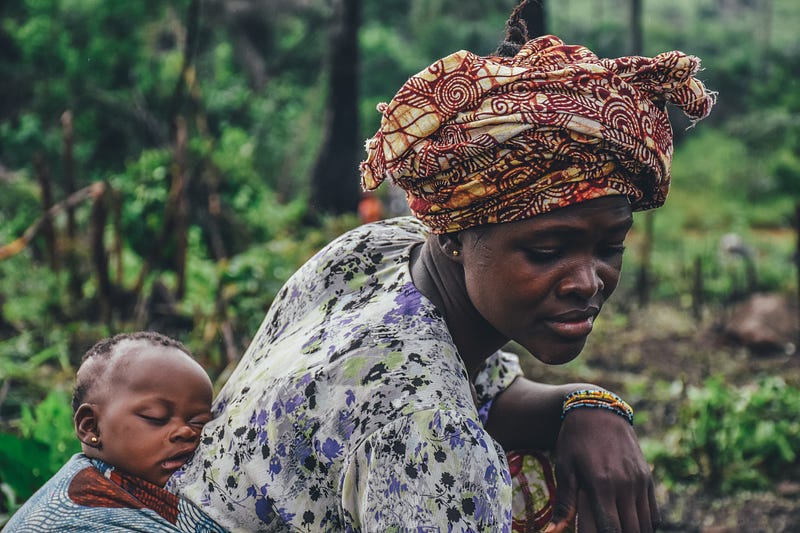
To better understand the role of spirituality in African society, one needs to understand the relationship between the individual and his community. Having established this, an investigation into the role of spirituality in the community, the influence of community on individuals and the importance of a spiritual presence in the lives of individuals becomes clearer. Christopher Agulanna undertook the study of the relationship between the individual and community among the Igbo People of Nigeria. Although his study is particular to Igbo people, he argues that there are “cultural universals” that are present in all African cultures thus making his argument germane to our topic.
His study pointed out that there is a close relationship between the individual and the community to which he belongs. In fact he says that human well-being, peace and order are only achieved in a community or social setting. In a given community the beliefs, values, norms and ways of understanding are defined from the perspective of what is best for the community as a whole. Individuals internalize these cultural patterns and they become part of their self-definition. Such a person would never intentionally violate these cultural patterns for fear of being ostracized from his tribe.
Agulanna points out that in the Igbo study there is a shared belief that the meaning of life only takes place in a community setting. This point is riveted into the reader’s mind by way of the example of the bamboo or “iroko’ trees that are able to withstand strong rain and wind storms when they grow in clusters but are easily destroyed if there are in a single stand. An individual is never as strong as the total community to which he belongs.
Agulanna’s argument makes it clear that among the Igbo in particular and African people in general there is a symbiotic relationship between an individual and his community. Further, without a societal connection man’s behavior resembles that of an animal.
Benson Igboin’s argument is a bit more forceful. He establishes the existence of a supreme God among African people and asserts that morality is determined by obeying God-Given law. He contrasts this to the humanist philosophy that values are completely independent of religion and he rejects this notion. To him values among African people are generally universal and remain in place because of individual reverence of the Almighty. He identifies several common values; among them are the sacredness of human life, the importance of community life and its close relationship with the individual and the importance of family life. The symbiotic relationship between community and individual cannot be over- emphasized. Igboin argues that the communal values provide support for the development of the individual and that the individual, having internalized these values, strengthens the collective whole of the community.
Summarizing spirituality and the resulting moral values of pre-colonial African people we find:
1) that religion was predicated upon the belief in One Supreme God as in the Abrahamic tradition;
2) that the supportive relationship between the individual and community, the sacredness of human life and the importance of family are basic components of basic societal values.
Taken together, these values were characteristic of the pre-colonial African community and taken together as Agulanna says that Community, many great thinkers remind us, is a necessary condition for the realization of human social goals.
Unfortunately, since Colonialism, Western greed and self-interest have infiltrated the hearts of some African leaders. They exploit their countrymen to build personal wealth. Also it has been suggested that outsiders have influenced African politics and disrupted their cooperative sense of well-being for the same reasons — greed and self-interest. A detailed discussion of these issues is beyond the scope of this book. I would encourage the reader to pursue this aspect of African community life if interested.
Having reviewed this history, the question now before us is, have these basic values remained among African people as they were forced into slavery and life in a strange world?
This book is available on amazon.com


