Spirit Of The Buffalo, My First Pow-Wow XP
This pow-wow, one of a few held each year in Florida, was a unique and educational experience. It is one of the few ways that non-Indigenous persons can learn about Indigenous life, history, and culture.
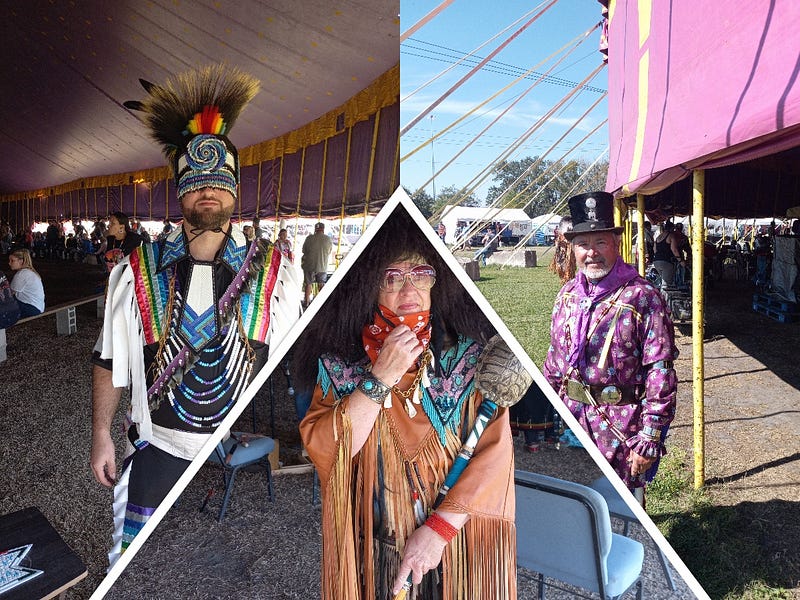
A little over two weeks ago, I attended my first-ever pow-wow event. I had a general idea of the purpose of pow-wows from several PBS documentary shows and the first season of Marvel’s Echo. I got up early to catch the bus to the downtown terminal where I would wait at least an hour to catch the second bus that would take me to the Auburndale Flea Market where the annual Spirit of the Buffalo Pow-Wow was taking place.
As soon as I got off the second bus, I toured the flea market and saw that it had completely changed. I spend roughly a half-hour exploring the flea market before walking over to where the pow-wow is taking place.
The line is building up but things move along quickly.
Because I grew my hair long, which I have grown since 2012, one dude (a white guy) asked me what tribe I belonged to. I politely corrected him and said that I was Asian. The dude was shocked that I wasn’t an Indigenous American. His shocked response was “Are you s — ting me?”
I make my way to the giant tent which is the main area of the pow-wow. Nothing is happening in the main part of the tent, yet, but I walk over to one side. A historian named Jim Sawgrass gives a brief history lesson on Native American culture. The man has a plethora of knowledge regarding Native American history, culture, and issues.
I also learned that he’s also an actor, too.
This was one of the best ways to start off the event. Shortly after Sawgrass finishes his presentation, he leads us to an open field to give a demonstration. We got to see spears, arrows, and a musket (it wasn’t loaded with live ammo). It was an interesting, educational, and enlightening presentation.
After the demonstration, I managed to get a Q&A with Sawgrass who is a descendant of the Creek Tribe. He told me that the Creek Tribe is predominant in Alabama, Florida, and Georgia. Sawgrass told me that the Creek Tribe in Florida doesn’t have state recognition. In the case of the Creek Tribe in Alabama, it has both state and federal recognition.
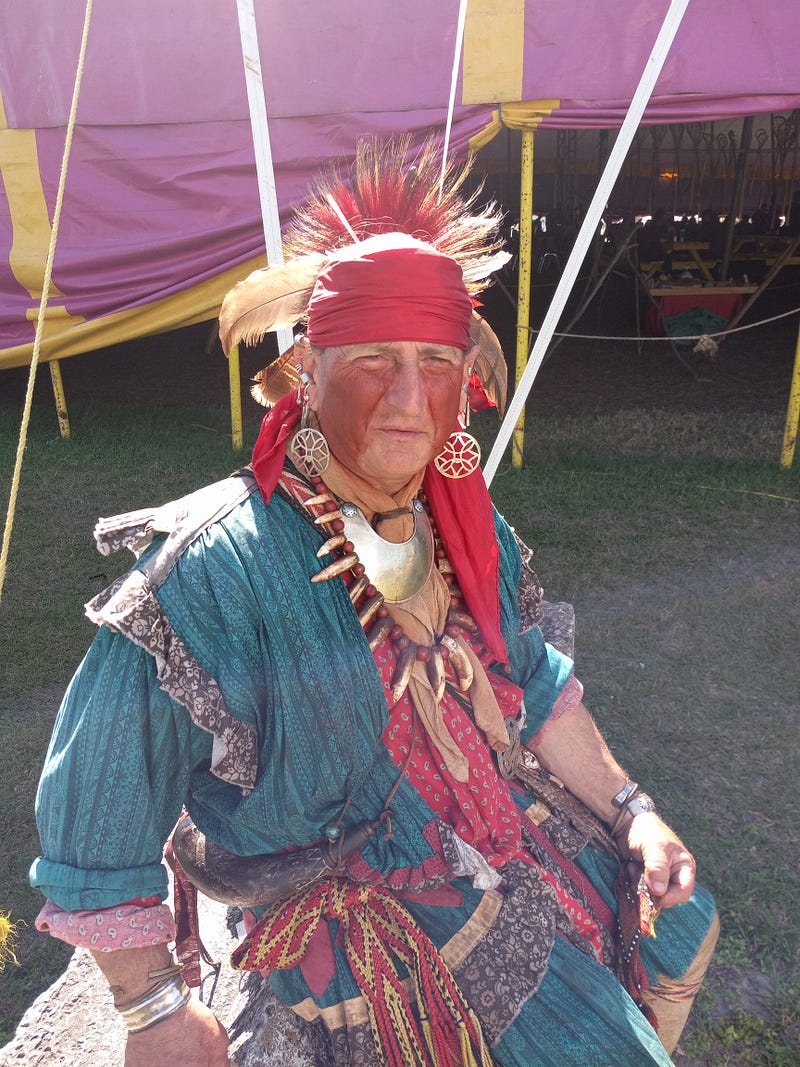
I brought up the concept of tanning in which I heard him explain how animal brains were used in the process. The word “tanning” comes from a compound called “tannin” which is found in a lot of things such as animal brains. Sawgrass added that tannin is also present in vegetables, acorns, and bark. In the case of the acorns and bark, Sawgrass said that the tannin in those are responsible for making the Florida waters brown.
Regarding the purpose of pow-wows, which are held across the nation during different times of the year, Sawgrass told me that these events hold two purposes
- The first purpose is to teach and educate people on Indigenous culture. Members of the Non-Indigenous community are encouraged to attend and observe these pow-wows whenever they occur.
- The second purpose is that the pow-wow scene enables many Indigenous peoples to make a living.
Attending pow-wows is a way for us to learn about Indigenous culture, especially to learn that many Indigenous tribes exist. Sawgrass adds that learning about other cultures is essential to bring about peace to the world.
We brought up the evolution of weapons and I brought up my martial arts background. He answered that the change in weapons is universal.
I attended Central Florida Comic-Con 2024 two weekends before which led me to ask about the difference between dressing up for a pop culture convention and dressing up at a pow-wow. At the pow-wows, the outfits are known as “regalia” representing their families and tribes, continuing the traditions.
I learned an interesting commonality between the Indigenous and several East & Southeast Asian communities, too, they both observe the Lunar Calendar. I felt the need to ask that as the Lunar New Year is generally observed in February though the previous LNY happened in January. However, the Indigenous community observes the Lunar Calendar differently, where its calendar has 13 moons because it has 13 moons.
There’s one moon for each month.
The Indigenous peoples kick off the LNY with a ceremony known as the “Green Corn Dance.”
The largest pow-wow to date, which takes place in New Mexico, is the “Gathering of Nations,” in which there is a pageant called the “Miss Indian World Pageant.” The pow-wow spread from Oklahoma, where most Indigenous American Tribes were forced to reside, to other parts of the country.
Florida’s first pow-wow originated in Saint Augustine in the late-19th century. Many western tribes who were captured were taken to and imprisoned in Saint Augustine at Fort Marion. The prison was administered by General Richard Henry Pratt, who is one of the architects of the Indian Residential Schools as a means to “reeducate” the Indigenous Americans to become “more useful.”
Pratt would go on to establish the Carlisle Indian School.
An NPR piece credits Pratt for being responsible for the word “racism.” Pratt is credited for saying “racism” for the first time.
There’s also the sheer irony of it all because Pratt believed that he was fighting racism but inadvertently reinforced racism by his actions of “Kill the Indian..save the man.” To Nikki Haley and Tim Scott, you two are wrong, America has always been a racist country.
I’ll get to that part in a little bit because I’ve asked that question to a couple of people.
Sawgrass added that most of the dances at the pow-wows are mostly from the western tribes whereas most of the dances by the eastern tribes are private.
When we talked more about St. Augustine, I learned that Geronimo’s daughter was born in that city and he would end up being held in Pensacola before being sent to Fort Sill in Oklahoma.
This led to the talk about Geronimo’s skull which is supposed to be in the custody of Yale’s secret club called the Skull & Bones. There is also the allegation that the late Prescott Bush, the father of former U.S. President George H.W. Bush and grandfather of former U.S. President George W. Bush, was part of stealing Geronimo’s skull.
Geronimo’s surviving descendants launched a lawsuit that demanded the return of Geronimo’s remains.
We further talked about how the Indigenous Americans saw the sea for the first time when they were moved down to Florida. They called sharks the “buffalo of the sea.”
After that, I entered the tent and saw several dance demonstrations.
I talked with many attendees who represent the Indigenous tribes of North America, Latin America, and the Caribbean.
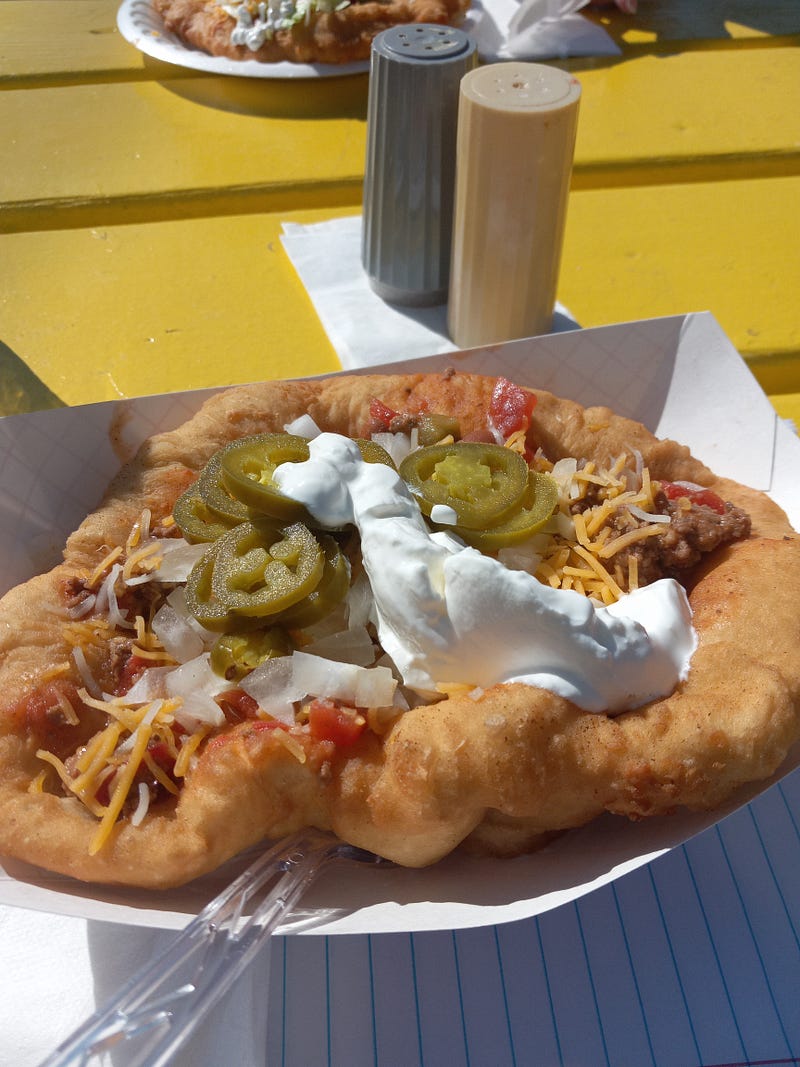
I had a chat with a man named Gary Thorton, who was relaxing and enjoying his Indian taco (which is a unique taco where Native American fry bread is used as the shell), who told me he comes from the Cherokee Tribe while being part-Creek. I learned that the Creek Tribe resides mainly in Oklahoma and North Carolina.
Though Thorton is a descendant of the Cherokee Tribes of Florida.
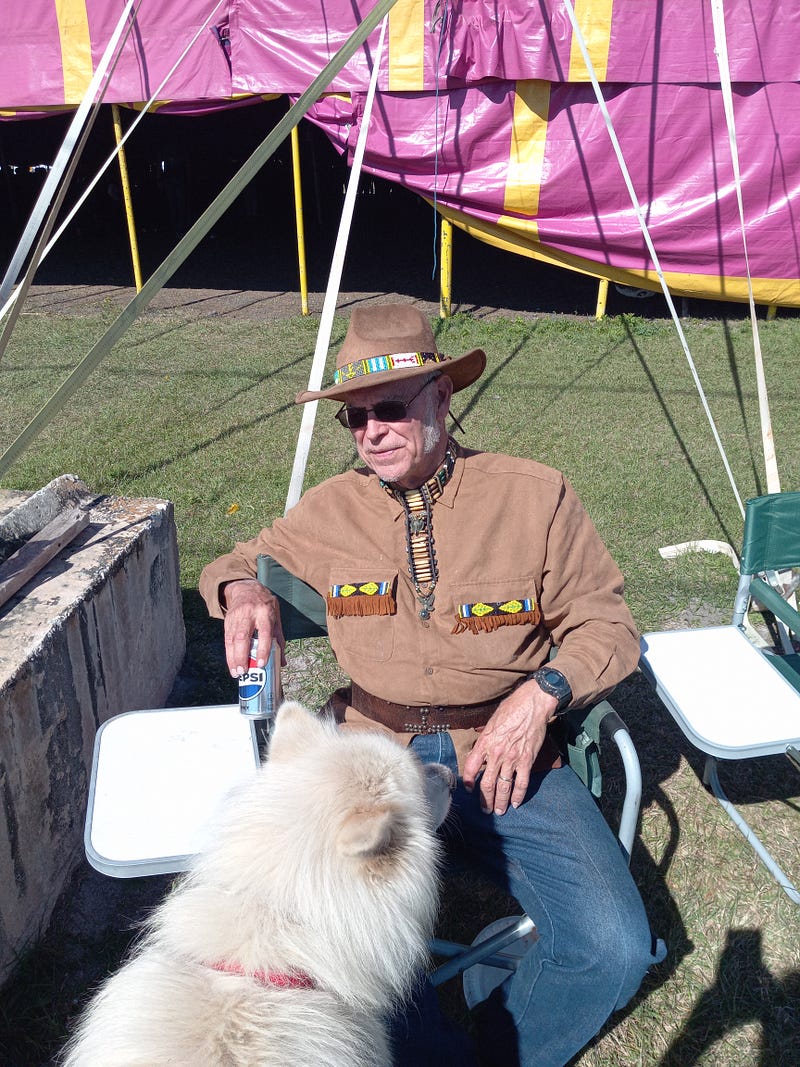
We talked a bit about the 1819 Treaty With The Cherokee in which the Cherokee Tribe ceded much of its land to the United States Government. This treaty forced the tribes north of the Tennessee River.
I met Nebli Villareal who is a member of the Taino Tribe who members are the Indigenous people of the Caribbean. It is important to know and remember that the original Black residents were brought to the Caribbean as slaves. In the case of Cuba, though, many Chinese were brought to that country also as slaves.
The Taino Tribes come from the Greater Antilles which compasses countries such as The Bahamas, Turks and Caicos Islands, Cayman Islands, Jamaica, Haiti, Dominican Republic (NOT to be confused with the Commonwealth of Dominica), Cuba, and Puerto Rico.
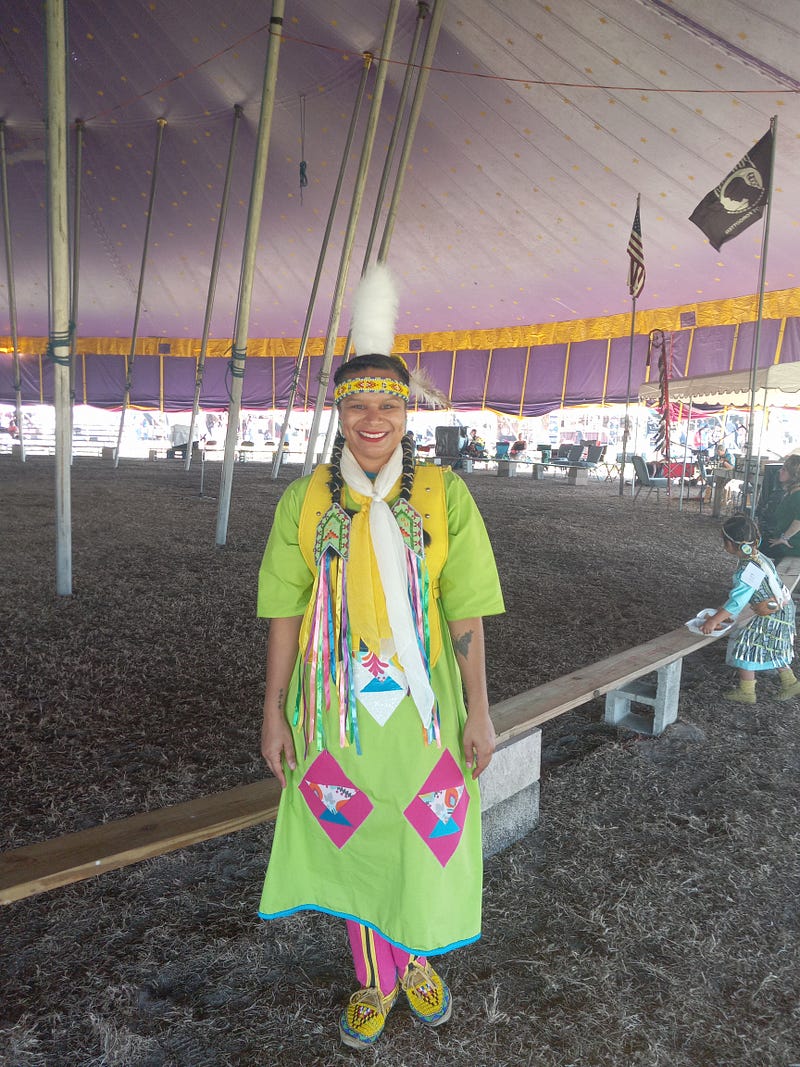
I met Denesha Smith, a woman of mixed heritage half-Black American and half-Indigenous American, who hails from the Yankton Sioux Tribe which is predominant in South Dakota. She has been dancing since the age of 2. I also learned that Smith was a background extra in episode 2 of Marvel’s Echo.
I also met a First Nations Canadian by the name of Otter Oliver who is of Cree and Dakota Heritage. He hails from Whitebear in the Saskatchewan Province of Canada. Otter was the emcee of the pow-wow and I was able to get a quick Q&A with him before he had to continue with his duties for the day.
At the Pow-Wow, I got to see an explanation of flutes and a demonstration by a man named SiCANNi who is a member of the Inca Tribe from Peru. He gave a demonstration of the different flutes, that he crafted, which varied in shape and size.
When asked, he has been crafting flutes since he was 14.
The pow-wow wasn’t all entertainment, it was very educational. They allowed me to ask questions on several hot-button political topics. I brought up the injustices inflicted against Black Americans for centuries and how they parallel the injustices inflicted against Indigenous Americans. Villareal explains that it’s a divide-and-conquer strategy aimed at erasing what happened while silencing experts in history (including oral history).
I also had to ask their views on what former state governor Nikki Haley (R-SC), who’s running for the GOP nomination for this year’s U.S. Presidential race, said about America “never being a racist country.”
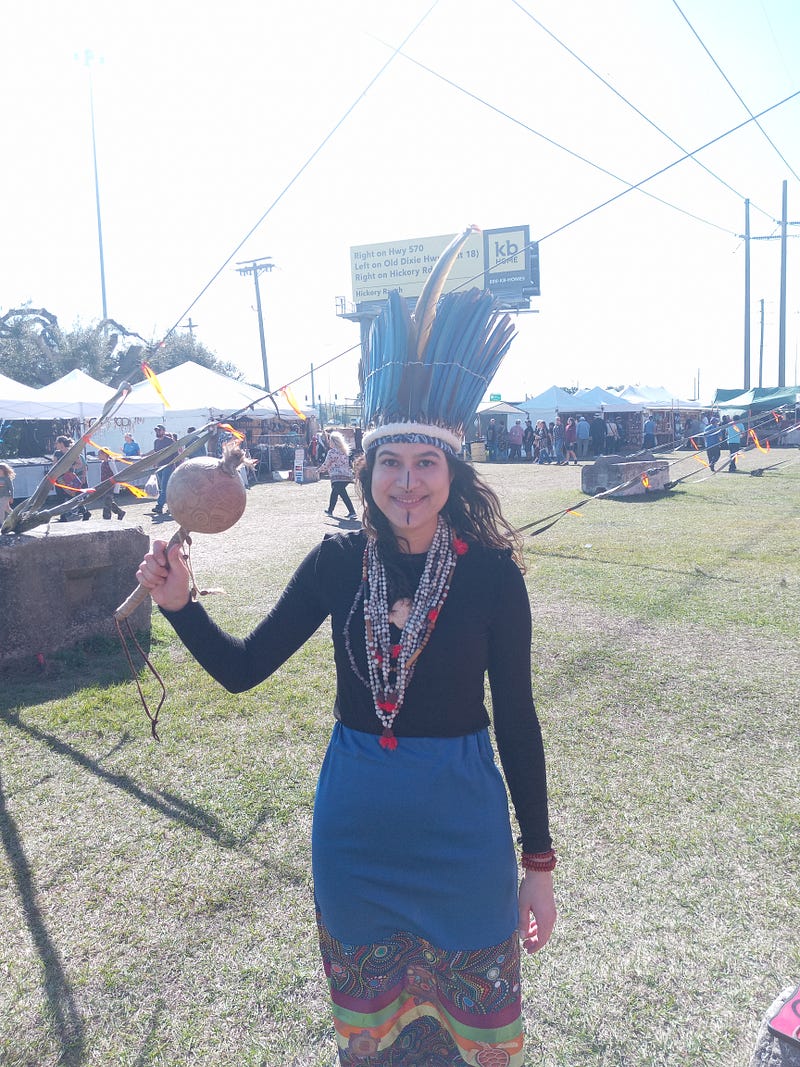
Villareal, who taught race & ethnic relations from a sociological perspective, responded by saying Haley “knows no history.” Smith answered with “False.” Oliver’s response echoed that of Villareal and Smith but gave a deeper explanation.
Oliver explained that the actual country of America was colonialism. He added that as long as slavery has been a part of America, it was a racist country. This led to a brief conversation about Abraham Lincoln’s hostile relationship with the Native Americans. While Lincoln freed enslaved Blacks, his policies were hostile and detrimental to the Native American peoples.
Sorry Haley, but you’re wrong, America has always been a racist country.
When bringing up the Florida Department of Education (FDoE) banning of DEI (Diversity, Equality, and Inclusiveness) from public schools, they voiced their contempt. To Villareal, banning DEI is depressing and taking a step backward. To Smith, the FDoE shouldn’t have done that because those initiatives make people feel seen and welcome. Oliver responded that people should have a say on what colleges teach and added that they are one of the only places where one can learn critical thinking.
With the issue of Confederate symbols and monuments being another major topic, I felt the need to ask their opinions on the matter. I received different but nuanced answers. Villareal responded that the removal is a step forward in progress but at the same time, those removed monuments end up in cemeteries.
It’s a double-edged sword as the monuments end up in cemeteries and it is not beneficial to anybody.
Villareal also added that it should extend to taking down monuments and symbols associated with known colonists (and murderers) such as Christopher Columbus.
Oliver believes the monuments should be removed because they don’t deserve to be respected or revered. He added these monuments still need to be around, but kept in museums, to remind us of our racist history.
The conversation expanded into what’s going to be taught in history class at public schools across Florida, which is that “Blacks benefited from being enslaved.” Oliver bluntly responded, “Slavery isn’t beneficial to anyone, period.” He gave a counter-question, too, “Are Black people getting reparations for slavery?”
Smith was shocked at the revelation. Her response was “It’s WILD.”
Villareal found it horrifying and feels it will get worse from there. She added that there will always be progressive and regressive movements.
Given how many books at risk of being banned from libraries appeal to marginalized communities, I had to ask their views on the concept. Oliver responded that banning books doesn’t give the youth the ability to have more knowledge.
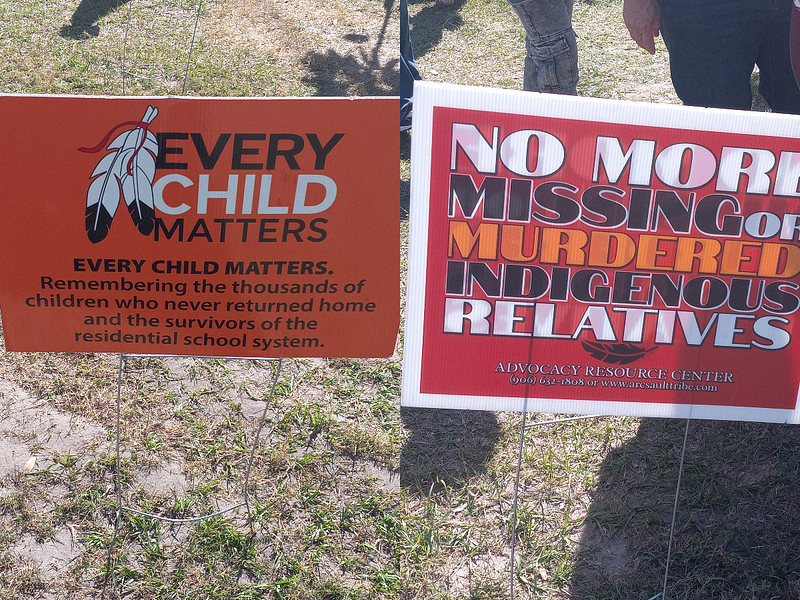
I asked about the current state of politics and the upcoming election. Villareal believes that all of the candidates are not viable and that we need strong third-party candidates. She added that choosing the “lesser of the two evils” is not viable.
We all know of the current state of the GOP, but Villareal’s words serve as a stern warning to the Democratic Party. Despite the GOP being a 5-alarm dumpster fire, the Democratic Party has difficult challenges ahead as well.
There has been a spike in viewing content about Indigenous Americans such as Reservation Dogs, Dark Skies, Blood Quantum, and more. In terms of representation, the consensus is that representation has taken a positive turn. Villareal believes representation has been positive overall while Smith believes it’s gradually improving.
When asked about favorite shows, Villareal enjoys comedies such as Reservation Dogs. When asking Smith, she revealed to me her background role in Echo. Like Villareal, Smith also enjoys comedies such as Reservation Dogs and Rutherford Falls.
There was the most important question to ask, why should non-Indigenous peoples experience at least one pow-wow in their lives? Thorton believes that it will help the Non-Indigenous communities learn about and appreciate the culture. Villareal responded that it helps Non-Indigenous persons to get a perspective on Native American culture and that pow-wows are gatherings for all nations, not just for Native Americans.
Oliver said that the pow-wows carry on the tradition and keep the culture alive.
Afterward, I got to visit the booths where they sold custom-made items crafted by Indigenous American artists. I was asked not to take pictures and was told that the pictures, when uploaded online, become the basis of knockoffs from other countries, which hurts the Indigenous artists who put their time and effort into making these wares.
On a funny note, another (white) person mistook me for an Indigenous American. When I was looking at one of the booths, this woman asked “Excuse me, do you work here?”
I also sat back and watched more tribal dances by the different tribes.
The pow-wow was an enlightening experience and I’m happy to have attended. I look forward to attending next year’s pow-wow. I’m hoping that I can attend the pow-wow for two of the three days during the two weekends it’s held.
The Indian taco I had was delicious, too. For those that don’t know, it’s a modification of the taco where Native American fry bread is used as the shell.
If you’re interested in attending a pow-wow, look online to see where and when.