avatarDr John Frederick Rose

Summary

The web content reflects on the author's lifelong fascination with steam locomotives, sparked by J. M. W. Turner's 1844 painting "Rain, Steam, and Speed," and parallels the excitement of the steam era with the era of space exploration.

Abstract

The article delves into the author's childhood passion for steam locomotives, ignited by a painting from 1844 by J. M. W. Turner. The author recalls a cherished model railroad, memorable encounters with historic locomotives, and a formative book on the Great Western Railway (GWR) that fueled dreams of becoming a steam locomotive engineer. Despite growing up in an era where steam gave way to diesel and electric trains, the author maintains a nostalgic connection to the steam age. The article also explores the author's interpretation of Turner's painting, which captures the speed and power of the steam locomotive through the metaphor of a fleeing hare. This connection to steam locomotives is likened to the collective awe experienced during the American moon landings, suggesting that both the steam engine and the moon landing represent pinnacles of human aspiration and technological achievement.

Opinions

  • The author has a deep-rooted affection for steam locomotives, stemming from childhood experiences.
  • J. M. W. Turner's painting "Rain, Steam, and Speed" is seen as a masterful representation of the steam locomotive's dynamism and its impact on the landscape.
  • The steam locomotive, particularly the GWR's Firefly class, is romanticized for its speed and technological advancement of its time.
  • The author draws a parallel between the steam era's excitement and the collective inspiration of the US moon landings, viewing both as milestones of human progress.
  • The transition from steam to diesel and electric trains is met with a sense of loss and nostalgia for the steam age.
  • The article conveys a personal narrative of how historical events and art can profoundly influence an individual's aspirations and worldview.

Spirit of Steam in 1844.

Imagination fired by J. M. W. Turner’s 1844 painting.
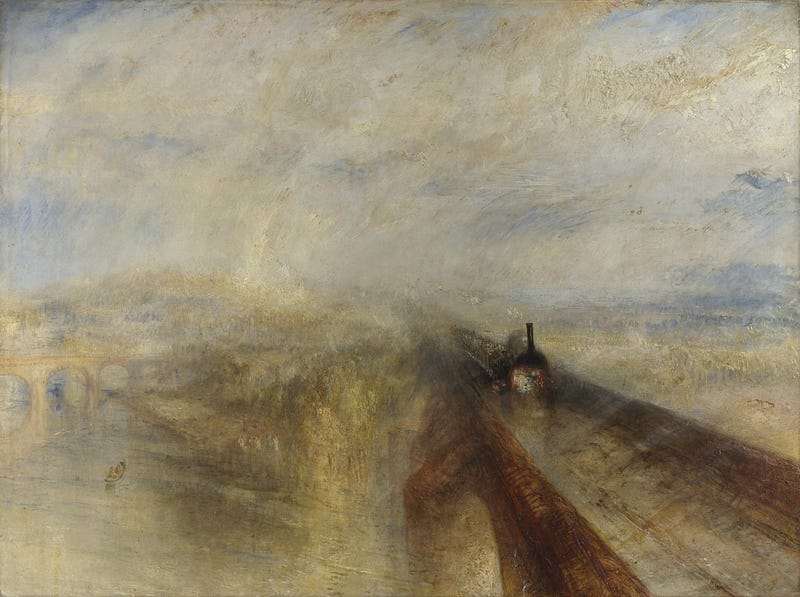
Rain, Steam, and Speed. oil painting by J. M. W. Turner. Exhibited 1844. Location now National Gallery, London

Love of Steam

From early age steam Locomotives fired imagination, Model railroad in bedroom with much loved locomotives, 3801 favorite travelled to see Grandmother, Saw 36 class steaming and D50 hauling freight, Loved them all, Remember them all.

Teen birthday treasure, Grandfather gave Great Western Railway picture-history book, Beautiful locomotives and handsome carriages, Caught up in steamy romance GWR steam, Modelled trains, Read all I could, Imagined being on Churchward’s 4–6–0 footplate driving passenger express, Wanted to be engineer designing steam locos when I grew up.

One day only diesels and electric trains, Growing up became sensible science and engineer graduate, Until this very day remember with melancholy longing days of steam on Great Western Railway.

Turner and I.

Saw Turner’s painting dating back to 1844 sometime in 1973, Loved painting’s focus on steam, Seemed to me everything pivoted around speeding locomotive.

Attended lecture, Adult “show and tell”, Shown little hare running away in terror from predator loco, Way of conveying steam’s speed and spirit in manner Victorians understood.

Understood little terrified hare, Rail-fan days, Standing with camera near the track as 3801 thundered past, Steam jets and cylinder exhaust shrieking, Connecting rods hammering, Ground shaking, Camera dropping, Falling backwards, “Bit too close” said my friend, 100 ton loco doing 60+ miles per hour, Remember bruises and broken camera with no close-up shots.
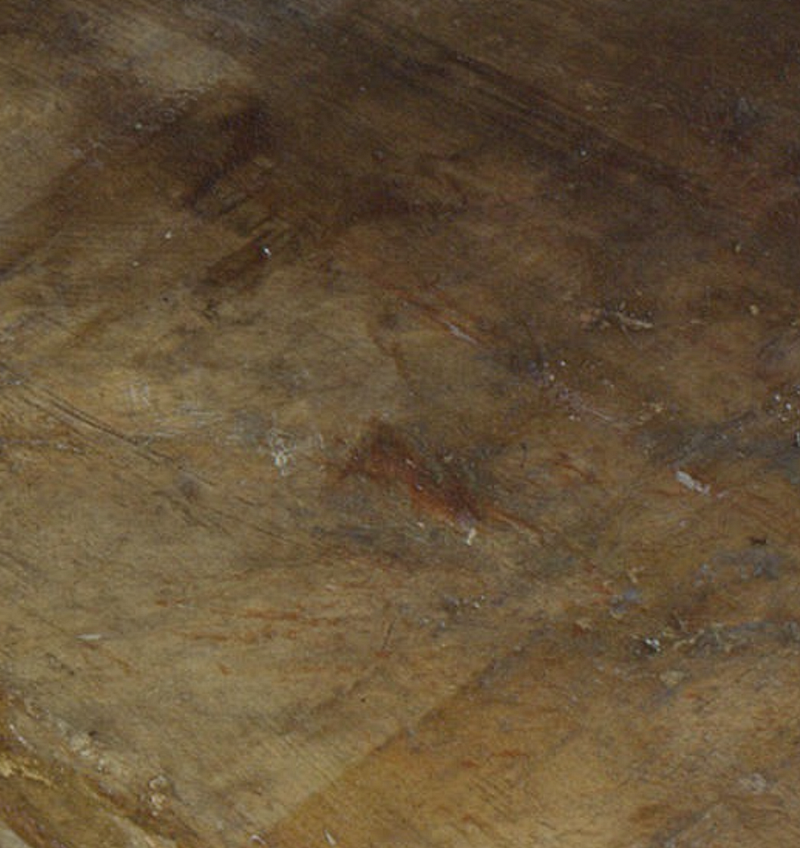
Terrified hare in Turner’s painting running for dear life. Zoomed Screenshot by John Rose.

The Locomotive in the Painting

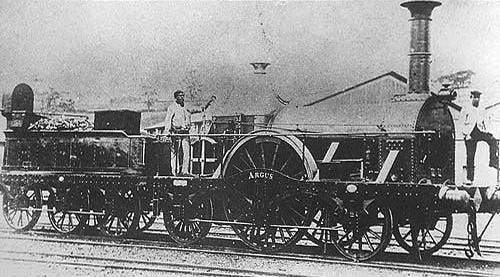
Photograph of GWR 2–2–2 Firefly Class, ‘Argus’ built by Fenton, Murray and Jackson. (Public domain).

Daniel Gooch GWR’s Locomotive Superintendent designed Firefly class, Introduced 1840 and superseded 1879, Convinced this was painting’s locomotive.

Was Firefly fast? Original FireFly Covered 30.75 miles in 37 minutes for speed of 50 mph, Unimaginable in 1840, No wonder hare was scared to death!

Turner and I

Turner’s painting holds special place in heart and soul, Captures essence of aspiration to be steam engineer in times long past, Saw same spirit surface again with spirit of US moon landings.
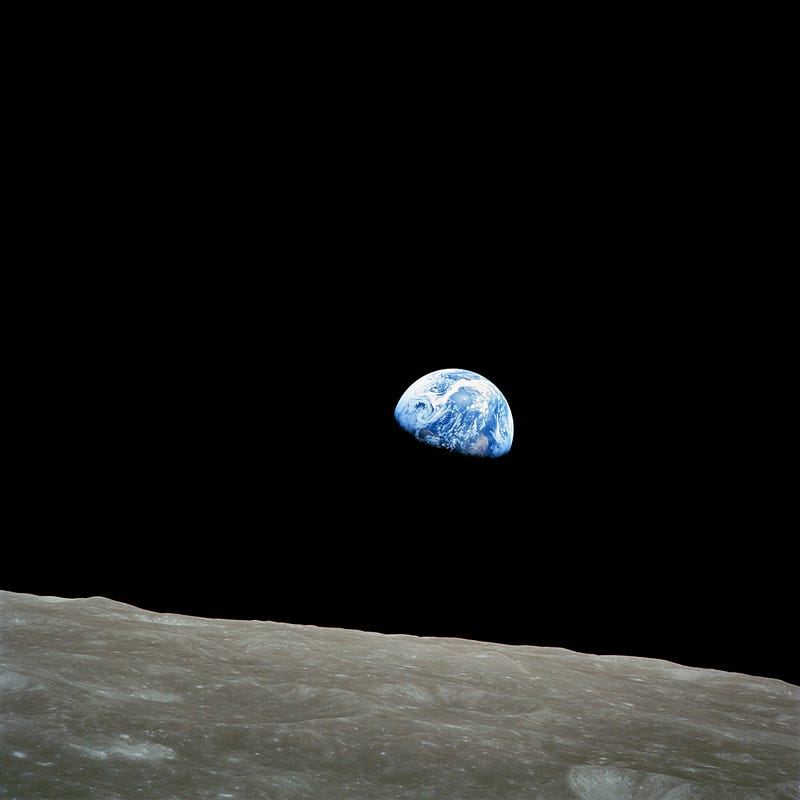
Earthrise, taken on December 24, 1968, by Apollo 8 astronaut William Anders.

Blessed be.

Poetry
Gwr
Steam Locomotive
Turner Painting
Railways
Recommended from ReadMedium