
Spike In Domestic Violence — We Need Something More Than A StopGap.
We as a society need to bring about change.
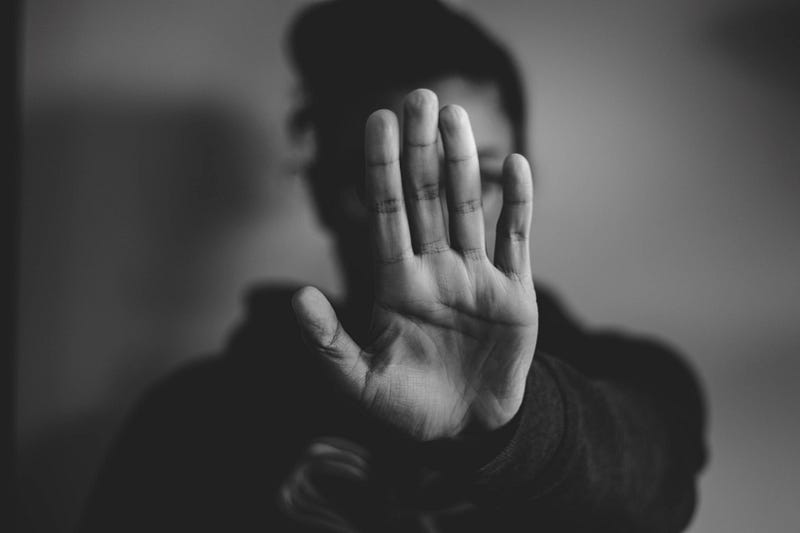
Last Sunday, United Nations Secretary-General António Guterres said something that has been ringing in my ears — “For many women and girls, the threat looms largest where they should be safest — in their own homes,”. He was appealing for peace in every single home, and around the world. He also said that the number of cases of domestic violence has doubled in just the last few weeks in many countries.
COVID-19 has resulted in many unwanted consequences and an increase in domestic violence is one of the horrifying ones. While many of us are trying to find a string of positivity in this whole thing which is to be spending increased family time, getting to bond with our loved ones, it was quite difficult for me to even imagine that the other side is a pretty dark lane, one with monsters in it.
“Home isn’t where you’re from, it’s where you find light when all grows dark.” ― Pierce Brown
Shouldn’t our houses be the safest place to be in right now? This is not the case for some is unfathomable and unacceptable to me. Prof Marianne Hester, a Bristol University sociologist who studies abusive relationships says that domestic violence goes up whenever families spend more time together, such as the summer vacations and Christmas.
When you can channel all the energy you have at either fulfilling your life’s desires or even better, sharing it all with someone you love should be the de facto, why do some of us get this idea to be mean, cruel and violent to our loved ones (A love is respect study shows a staggering 1.5 million high school students experience abuse from their physical partner)?
Where does this thought even come up from? Ok, thoughts are not under our control but aren’t our reactions to them in our control entirely? Is there no better use that we can put these thoughts? Are we mere animals with no sixth sense after all? I am only using the term animals because of a lack of a better word, even animals are kinder than we are as a species. Monsters would be the right word for us.
Intimate terrorism or in other words “domestic violence” is often explained as an abuse of power. “Power is neither good nor evil. It just is. It’s what people do with power that matters.” ― C.J. Redwine
Why do we tend to abuse this power when it has been given to us? It starts as a lewd comment and ends up in mindless violence. The German philosopher Friedrich Nietzsche says — “As a race, we have never lost our instinct for cruelty; we have only refined it.” Is this refinement not yet one where we are mindful of everything that surrounds us and are not in a rush to exhibit vindictive control or power over those of us who are deemed “weaker” just because they may be loved ones or a dependent person, or one who is shy, has low self-esteem or confidence, quieter, indifferent, not yielding, whatever the “category” be.
Attacking and forcing others to our will is a false sense of power, power is truly when we question our ideas, concepts, beliefs, the little circles that we have drawn around ourselves — this is right, this is wrong, I want this now, this is how it should be, even mere concepts such as women should do the dishes, men look after finances. Power is when we break out of these very concepts internally within our head, and that change, awareness needs to come from within every individual, and we as a society need to instigate and fuel that change.
“I spend my life building the world I want to live in.” — Robin Chase
But first, we need to understand, and if possible, in the bigger scheme of things, we need to help both the victim and the offender. No amount of understanding or knowledge undermines the perpetrator’s behavior. Abuse is abuse, and any kind of abuse is bad and needs to stop. The knowledge is only to act as a propeller so that we may act in a way that has a greater best-case outcome — the vision of a peaceful and harmonious society.
Understand the layers of human personality. Freud’s personality theory which divides the human psyche into the id, ego, and superego gives a plausible insight.
- The id is the primitive yet mostly dormant component present from the time of our birth, this contains our hidden desires, sexual drives, and aggressive behaviors, actions that strive instant gratification defying all logic and reality.
- The ego is the one that we build up over the years as a means to curb the instinctive nature of the id, it is how we culture ourselves according to what is acceptable as being in the world and learn to tame our incorrigible urges.
- The superego is what we derive from our parents, society, environment, experiences, and friends and acts as the conditioning layer based on which the ego controls the id.
We as a society need to contribute effectively in helping form each other’s ego and superego so that each of us makes conscious correct decisions, one that identifies hurting someone else for pure selfishness or our gratification is incorrect and will not be tolerated.
“Knowing what must be done does away with fear.” — Rosa Parks
To a layman such as me, things that pop up in this aspect are:
“Women speaking up for themselves and for those around them is the strongest force we have to change the world.” — Melinda Gates
Only everyone needs to proactively speak up. We also need to break gender stereotypes and existing harmful trends. Abuse is not specific to a gender, though the UN’s latest statistics show that women suffer more.
Increased awareness, more understanding of ourselves and each other.
Why we behave the way we do? What is termed as violence? Defining acceptable vs non-acceptable behavior. Anything that threatens our physical, mental or emotional well being is abuse.
The National Domestic Violence Hotline defines abuse as — “Domestic violence includes behaviors that physically harm, arouse fear, prevent a partner from doing what they wish or force them to behave in ways they do not want. It includes the use of physical and sexual violence, threats and intimidation, emotional abuse and economic deprivation. Many of these different forms of domestic violence/abuse can be occurring at any one time within the same intimate relationship.”
It is hard to accept that more than half of the cases of violence go unreported. This is either due to fear, or a lack of understanding from society. Sometimes we are so unaware and unassuming that we often blame the survivor or the victim for being the “sensitive one” or “being vulnerable.”
We need to be a society that uplifts and supports a vulnerable person while paving the path and building a system that lifts the offender from their ignorance and aggressive behavior.
“I blamed myself for being vulnerable. Vulnerability felt like a banner that announced, ‘Come and get me!’ But when I think of it the other way, I don’t pounce on other people just because I can. I don’t go around looking for people smaller or weaker than me so I can attack them. When I find someone’s vulnerability, my impulse is to protect and cover them, not to use it against them.” ― Christina Enevoldsen.
Mindfulness and an increase in empathy, increase in empathy creates a safety net for others to confide openly and without any filters.
We need to create an environment that is open for an individual to talk, about their sufferings and experiences they have endured, or sometimes about their obsessive or aggressive desires because then we can collectively come up with a solution. We also need to understand that survivors are more vulnerable and are in living in a world of hell created by abusers and fed by their minds and thereby treat the situation with empathy and compassion, and gently help them come out of it.
“Emotional abuse can leave a victim feeling like a shell of a person, separated from the true essence of who they naturally are. It also leads to a victim feeling tormented and tortured by their own emotions.” — Lorraine Nilon
The NDVH also describes why we tend to stay in abusive relationships, and it cites fear and unawareness of what is abuse and dependency compels staying in an abusive relationship as the top reasons.
Rules, regulations, and corrective measures in place
This is for handling and dealing with the aftermath. Different Nations already have strict laws in place to combat domestic violence, but what we also need to address is “the why we behave the way we do?” adhering to “prevention is better than cure.” WHO defines the following 4 steps under the Public Health approach as part of the Violence Prevention Alliance:
1. What is the problem?
2. What are the causes?
3. What works and for whom?
4. Scaling up effective policies and programmes.
COVID-19’s dire consequence has provided us yet another opportunity and urgency to understand and come up with a solution to a problem that is highly prevalent and that we as a society, a community can and should combat.
“Remember, each one of us has the power to change the world.” — Yoko Ono
We need to speak up, join hands and address. Going back to what Friedrich Nietzsche has said, as a race, we need to refine our cruel nature to a large extent.
Please reach out to National Domestic Violence Hotline or the local hotline number if you notice any signs of abuse in your neighborhood or if a victim reaches out to you.


