
Spiced Vegetables Wrapped in Slices of Cheese and Bread
Curried-cauliflower-grilled-cheese sandwiches were hugs from Mom in my lunch bag.
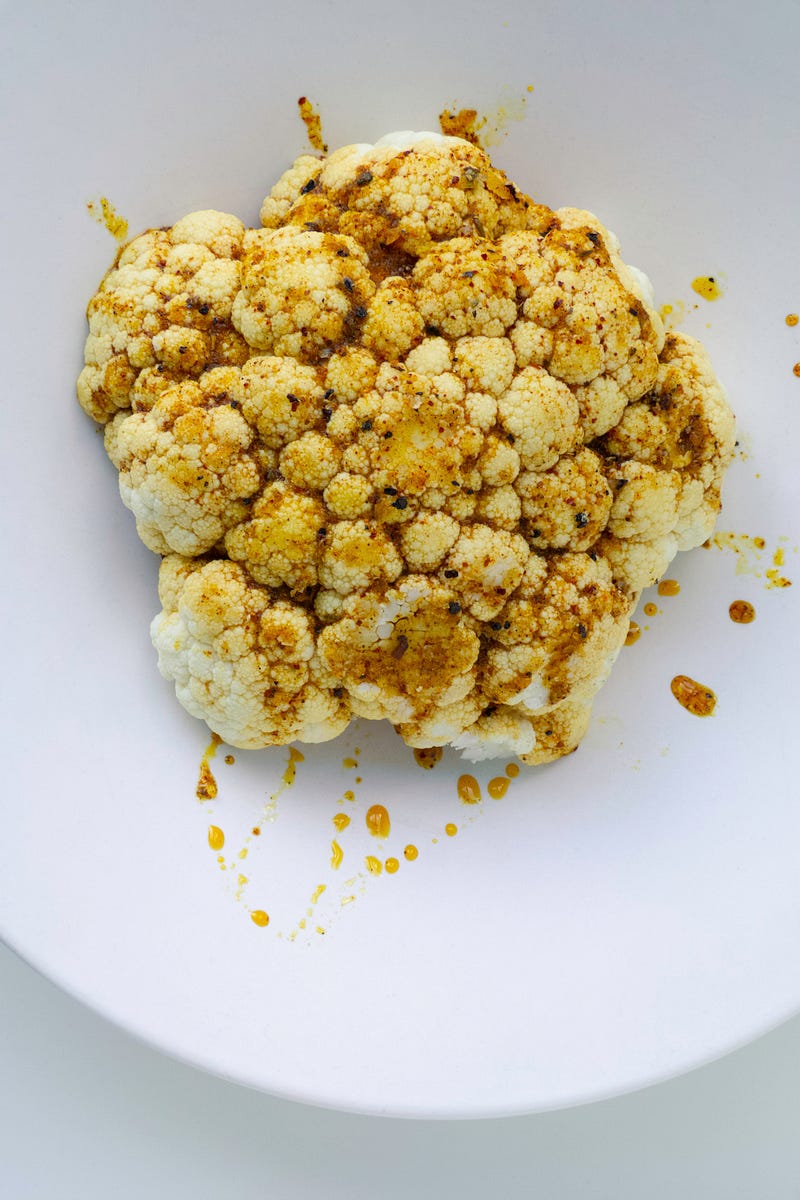
Cauliflower, or Phool-gobi (pronounced POOL-GO-bee) in Hindi, is a staple on most Indian-American dinner tables.
Vegetable entrees, or sabzi (pronounced SUB-zee), are essential to any Indian meal, and cauliflower gets dressed up in a myriad of regional Indian cooking styles.
My family’s version is one of many Indian regional traditions to transform creamy-white cauliflower into a spicy-bright concoction of potatoes, peas, tomatoes, spices, and herbs. Mom’s Phool-gobi-aloo sabzi is as versatile as it is a tasty complement to anything else on the plate.
She’s given me her sensibility of creating meals reflecting her life growing up in big-city Bombay (now Mumbai) and our family’s ancestral Gujarati regional cuisine.
My elderly parents live with my family and me, and Mom still cooks occasionally, despite her Alzheimer’s and tells stories as she did when I was growing up in Minneapolis.
Her instructions on how to chop, dice, wash, soak, knead, fry, steam, and spice met my teenage eye-rolls, sighs of frustrations, or feigned excuses of too much homework.
I paid enough attention, though, to what she did with leftovers.
That’s when she paired other kitchen staples, like bread and cheese, with left-over Phool-gobi-aloo sabzi to create delicious grilled-cheese sandwiches.
They made for perfect comfort on cold Minnesota snow-days. Occasionally, such a sandwich came along with me to school. I could swear hearing my locker declare my lunch bag’s spicy contents, hidden behind the nondescript metal door. The fragrant announcement crackled in a strong Indian accent of hot oil, asafetida, mustard seeds, and curry leaves.
My stomach growled in hunger by lunchtime on most school days. I’d rush to my locker to swap books and folders for my lunch bag before heading to the cafeteria in search of friends at our regular lunch table. We’d unwrap our meals and update one another on newsy info, homework, and melodrama.
Each morsel contained our language, our strides of walking in two cultures, and the re-fashioned traditions….
I learned that my lunch menu could unleash my friends’ gnawing disapproval, just as I hungrily took my first bite.
I’d grown used to my sandwich being met with polite expressions of distaste or outright yuck. Repetition didn’t soften the feelings of rejection of all of me, especially of my loving mom, who packed my favorite left-over creation, though now cold but still yummy.
My friends couldn’t know the joy of listening to those endless stories infused in the vegetables and spices, now wrapped in slices of Kraft American cheese and factory-made whole-wheat bread.
Each morsel contained our language, our strides of walking in two cultures, and the re-fashioned traditions reflecting our lives in an American community.
I felt my friends’ distaste for my lunch as a rejection of my home life and all that I loved, including my mom. I felt like an outsider when others got a glimpse of my ethnicity beyond my darker complexion, hair, and eyes.
My loneliness vanished, however, as I savored with gratitude every bit of those lunches Mom made for me. Each bite felt like her understanding caress to soothe my hurt feelings. And this filled a craving for love and belonging only comfort food can satisfy.
I’ve looked back at those years and realize my friends and I were just trying to figure ourselves out.
We had a lot yet to learn about etiquette, compassion, tolerance, and acceptance. I don’t harbor bitterness for any of them because of those lunchtime interactions.
… increased exposure of our various food and cultural traditions through mingling as friends and marrying across community divides.
I couldn’t have imagined, however, based on my experiences of Midwestern taste preferences, that Indian cuisine would one day fire up American food lovers’ passion for then-unheard-of items, like kesar, garam masala, naan, ghee, chicken tikka masala, chana masala, saag paneer, mattar paneer, tulsi tea, haldi (turmeric) milk, and chai.
My sisters, friends, and I still laugh in disbelief at how the world has changed as we’ve grown older. Our kids do not understand the isolation and culturally oriented disapproval we endured.
These changes over time reflect the growing numbers of South Asians in America, resulting in increased exposure to our various food and cultural traditions through mingling as friends and marrying across community divides.
It’s another version, on a societal scale, of my leftover-sabzi-grilled-cheese sandwiches.
I’ve continued to make this favorite recipe. My sons grew up eating sabzi sandwiches. I now use organic cheeses (like Havarti, pepper jack, or sharp cheddar) and large slices of sourdough bread (or pumpernickel-rye), drizzled in olive oil and grilled over medium-low heat.
These sandwiches are just as filling and affirming of my lived life in two cultures. They are lunchtime hugs to show my undying love and hope for my family and friends, now.
I offer this basic recipe for Phool-gobi-aloo sabzi as an invitation to my dinner table. An ingredient not listed below includes a heartfelt embrace of friendship and gratitude for a willingness to try it and make it your own.
This preparation can be a great filling for a pita sandwich, or a side dish for baked fish, for example. I like it with a side of daal (a spicy soup), basmati rice, and yogurt. It’s still best served nestled in the middle of a hot, melty grilled-cheese sandwich!
You can find all the ingredients for gobi-aloo-sabzi at your favorite grocery store with a well-stocked spice section. Trader Joe’s and Whole Foods carry garam masala and other spices, naan, and other prepared frozen Indian entrees to complete an Indian meal.
Phool-gobi-aloo sabzi
Serves 4. Time: 30 minutes.
Ingredients
1 medium-sized cauliflower, washed and cut into 1/2-inch florets
1 peeled potato, cubed to match cauliflower florets in size
1/2 cup frozen peas (do not defrost)
1 tomato, diced
2 tablespoons of your favorite oil
1 teaspoon cumin seeds
1 teaspoon turmeric powder
1 teaspoon ginger powder
2 teaspoons coriander powder
1/2 teaspoon cumin powder
1/2 teaspoon cayenne powder (optional)
salt to taste
a generous pinch of garam masala
chopped cilantro as an optional garnish
Instructions
Heat oil in a large skillet or wok on medium-high heat. Add cumin seeds until they become fragrant and reddish-brown. Add potatoes and a pinch of salt to make them “sweat”. Lower the heat to medium-low and add cauliflower florets to cover the potatoes and another pinch of salt. Cover the pan for two minutes to allow the cauliflower to release its moisture and soften the potatoes. Add turmeric and cayenne pepper; give it a stir; cover the pan partially and cook for 2–3 minutes.
Once the potatoes and cauliflower are about half cooked, add coriander and cumin powders; stir and cover. (You can add another teaspoon or two of oil if the mixture looks too “dry” or “tight”. This is a judgment call, and you can skip adding oil if you’re being mindful of overall fat content.) Add chopped tomato and frozen peas once the cauliflower-potato mixture is mostly cooked. Lower the heat to low, and cover for 5 minutes.
Turn off the heat, sprinkle the finished product with a generous pinch (or two) of garam masala and chopped cilantro leaves, if desired. Cover for 5 more minutes and serve.
Note: You can alter this recipe to serve 5–6 by adding another potato or two, tomato, and another 1/2 cup or more of frozen peas. Adjust the oil, spices, and salt accordingly. It’s a flexible formulation. Make it your own!
This basic recipe contains bits of what my parents brought to this country mixed with my mom’s creativity to use ingredients available to her.
Do you have a favorite food memory and a special recipe?


