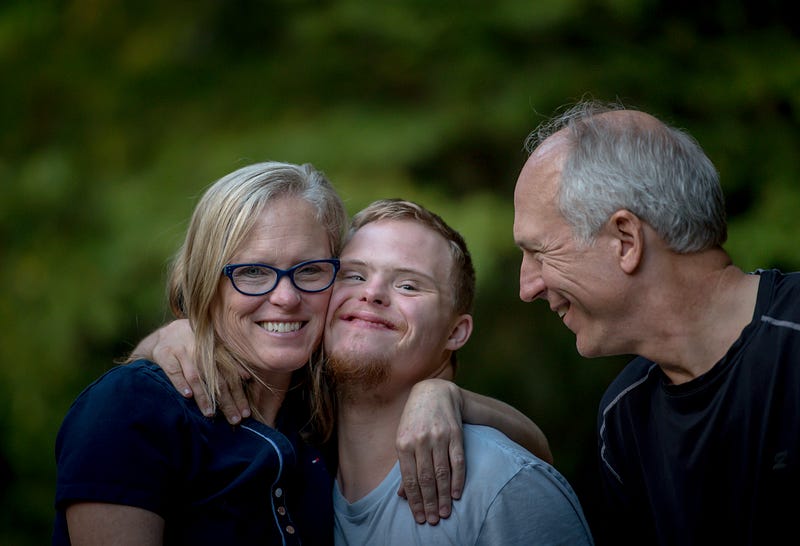
Pope Francis: Sacred Love for Suffering, Disabled and Special Needs
A little girl melted my heart: Disabilies couldn’t dampen her joy.
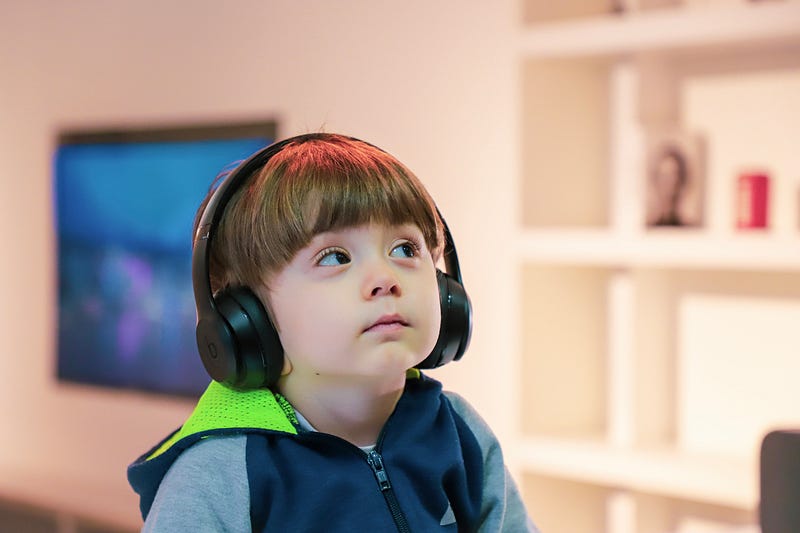
The dignified lady and her daughter stole my attention. I’d never seen them at Church before — but they stood out four days in a row. Right before me.
Last Friday, they knelt praying in Adoration. By Sunday, the little girl held the big Bible at the front of the line of first through fourth graders. On Monday, I got within three feet of them — and was bowled over.
As I passed, making eye contact with that little girl, I sensed a disability. Her hands shook. There was a certain look (Down syndrome?) but it was her soul that overwhelmed me.
The Voice whispered: “What you thought was a curse was actually a one-way ticket to Heaven.’’
Our greatest strengths become our greatest weaknesses — and vice versa. Elated, I looked at Deacon Pat and Jesus on the Altar. I received the Body and Blood of Christ. Then I wondered why we look away from such beauty.
And why do we instinctively run toward some beautiful love and other times fear or fail to recognize it?
Why do we forget to be grateful for our lives?
Everything, except our own sin, is a gift. My whole life I wanted my family — especially my children, grandchildren and wife — to be as perfect as possible:The best looking, the smartest, the most successful. Winners.
My worst nightmare was the mere thought of one of them losing, becoming disabled or disfigured in anyway.
Americans pursue happiness (running from suffering):
Two-thirds of U.S. pregnant women, told their baby has Down syndrome, choose abortion.
In Iceland and Denmark, nearly 100 percent of Down syndrome babies are aborted.
America buzzed this week about Gus Johnson, the Ohio State superstar called “a miracle baby’’ because his teen mother almost aborted him — but chose him. We wonder whether our baby will be a president or a football player. Our faith teaches us everything happens for a reason and every life has meaning and purpose.
Every one: short, long, big, small, happy and sad.
God transcends time, Bishop Robert Barron reminds us. He recalls being a young priest, observing a family wondering about the life of a young quadriplegic, totally immobilized. His family had to constantly help.
Barron watched the boy’s sister dutifully wiping away drool and wondered whether that sister was acquiring traits and habits that could be passed on for generations to some future important saint. Part of a bigger cosmic plan?
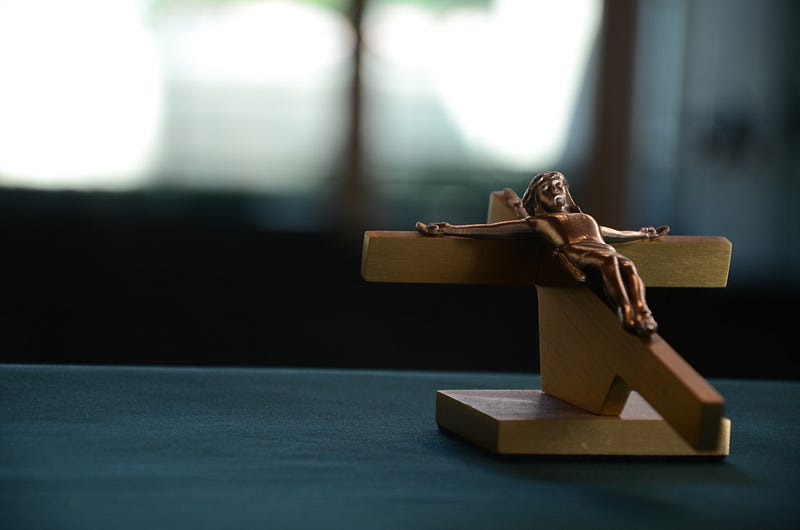
Every cross we bear makes it possible for suffering, mixed with love, to transform into Divine Mercy
Every year, about 6,000 Americans are born with Down syndrome, one in every 700 births. Between 1979 and 2003, the number of Down syndrome babies grew 30 percent (older mothers are more likely to have such babies).
Life expectancy for such children keeps growing: In 1960, an average American with Down syndrome died by age 10. By 2007, that life expectancy had climbed to age 47.
Suddenly, it hit me: this girl and her family are blessed by great love
The world doesn’t see how crosses bring crowns. Or the love those journeys make possible. What if our life is like a big series of tests determining how we will spend eternity?
St. Catherine of Siena, in “The Dialogue’’ learns: “all labor in this life is small, on account of the shortness of time. Time is as the point of a needle and no more; and, when time has passed labor is ended, therefore you see that the labor is small. They endure with patience, and the thorns they pass through do not touch their heart, because their heart is drawn out of them and united to Me by the affection of love.”
Does joyful laughter scare the devil away? The little girl, with the beautiful bow in her head, stood by her mother, full of grace. And I just knew. They’ve already passed life tests we can’t imagine. You can tell.
I’ve still got a lot a lot of work to do. So do many others who judge that certain lives aren’t good enough or aren’t worth living at all.
St. John Paul the Great taught that we are all unique and unrepeatable. JPII, the great mercy pope, taught us to “be not afraid’’ of the culture of death and create a culture of life. His successor, Benedict XVI, stressed faith and reason.
Why Pope Francis loves the people the world devalues most
Pope Francis calls us to create a culture of encounter. Encounter, Father Pat Brennan stresses, means “we are having an encounter with God whenever we meet one of his children.
“Every person is an encounter,’’ Father Brennan says. “You’re encountering the living God. The culture of encounter denounces the exclusion and isolation…’’
When we encounter God’s children, we encounter their Author. Pope Francis, speaking of this same topic right after I encountered the little girl and her mother, said we must “Recognize the dignity of each one, knowing that it does not depend on the functionality of the five senses.”
Pope Francis laments our “throw away culture,” where some aging, weakened or disabled people are discarded like trash no one wishes to even look at.
“Great progress has been made towards people with disabilities in the medical and welfare fields, but still today we see the presence of the throwaway culture, and many of them feel that they exist without belonging and without participating. All this calls not only for the rights of people with disabilities and their families to be protected, but it also exhorts us to make the world more human,’’ the Pope said in his latest message for persons with disabilities.
Divine Mercy in the Fatima messages. The pope has already announced the next World Youth Day will be in Portugal, the home of Fatima and the 1917 messages culminating in the Miracle of the Sun.
The list of Fatima messages adds up to one unified message from Our Lady: We will suffer a great deal but God’s grace of God will always be there to share our suffering and be our comfort, said Sr. Ângela de Fátima Coelho, MD, the postulator for the cause of canonization of Its. Jacinta and Francisco Marto and Sr. Lucia dos Santos, the first Fatima Visionaries to reach sainthood.
“Loneliness can be the greatest of suffering and Our Lady tells Lucia, ‘I will never leave you. My Immaculate Heart will be your refuge. I will be with you in your sufferings,’’’ she explains. “God is not here to take away our sufferings: God is here to SHARE our crosses. That is the message of Mercy.’’
St. Maria Faustina Kowalska called suffering a great gift because the crosses we bear transform ourselves and others. Sister Miriam James Heidland explains: “Suffering that is not transformed is transmitted.’’
“I think of people of every age, especially the elderly who, also due to disabilities, are at times considered a burden, a ‘cumbersome presence’, and risk being discarded, of being denied concrete job prospects for the construction of their future,’’ Pope Francis said this week. “We are called to recognize in every person with disabilities, even with complex and grave disabilities, a unique contribution to the common good through his or her own original life story.’’
Every person is a sacred mystery
We want to believe what we choose to believe but do we want to belong?
Or do we isolate ourselves by pushing others away?
“We have forgotten how sacred every human life is,’’ Father Brennan explains. “Every person is a great mystery, is sacred… People are lonely. They want to be known but they don’t know how… The pope is the bridge that unites all the churches into one community of faith… Look into the faces of one another. See the face of God. See Christ looking back at you.’’
God “reserves a special place in His heart for whoever has a disability, and so does the Successor of Peter,” the Pope said in earlier remarks. Pope Francis adds:
“It is necessary to care for and accompany persons with disabilities in every condition of life… to make way alongside them… It is a demanding, even tiring journey, which will increasingly contribute to forming consciences capable of recognizing that each one of us is a unique and unrepeatable person.’’