
Special Tactics to “Wap” That Tiktok
No one should grow up knowing that their body is all that can help them to ‘succeed.’
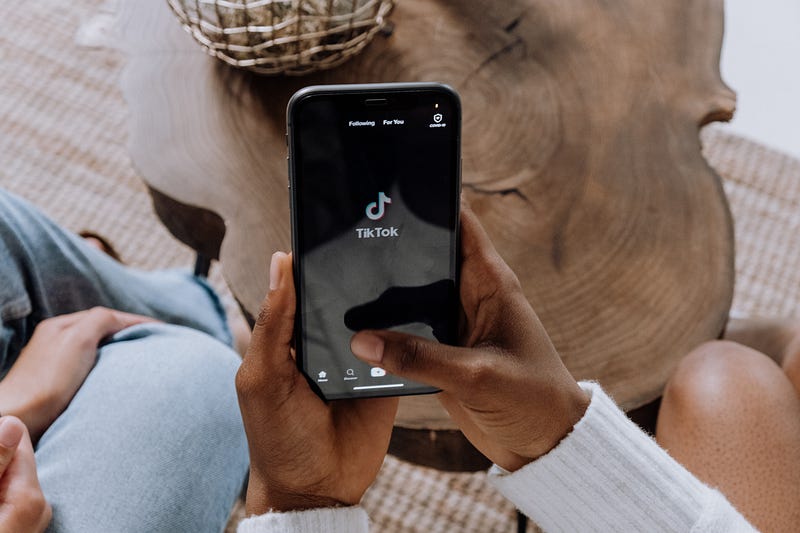
I’m not sure if there’s anything wrong with presenting a female body, for all its dimensions, who chooses it and feels comfortable with it. However, as it becomes the foremost and most important thing to gain publicity, success, and fame, regardless of talent or content, it is much more problematic.
Depending on the period in which we live, the desire to be published on social networks and especially on one specific network: the controversial “TikTok” is more significant and more burning than ever.
A personal and individual mental calculation is not enough. It changes the criteria for the “stage” that the company provides to win the coveted title “famous” or as they say today: “TikTok Famous.”
Maybe some are saying that we are already in 2020 (terrible, I would like to note), and we have made some progress concerning the society of yesteryear. Still, the criteria for the “advertising platform” remained and even strengthened, in my view. Despite what one thinks about society’s progress, even today, a large part of those criteria is body and object.
Accordingly, many young girls, and even girls who naturally want to adapt to society these days, use these means to sanctify the goal. Of course, some boys act this way, but in this article, I would like to concentrate mainly on girls’ issues, as the female body’s case has always been controversial. What has changed these days? The answer to the question becomes more and more blurred as time goes on. On whom does it depend? Who gives a hand in this and causes the phenomenon to develop?
“TikTok Famous.”
What is “right” to change, and what is actually “wrong” with it? To me, the answer to that is a circle; And I will try to answer that.
In my opinion, a few years ago, the interest in the body in general and the female body, in particular, balanced a little. The argument that a female body is not an item has been reinforced, as has the idea that thinness is not inherently a synonym of attractiveness and also, particularly in terms of the body, the war on the ideal of beauty. We seem to have managed to reach some “harmony” in terms of this issue.
However and with the acceleration perception of the Tiktok app, I feel we have returned a bit to the starting point: on the coveted “For You” page, where everyone wants to be “famous,” there are mostly dancers with different body structures, though, but can not be ignored from the fact that they perform movements that do not precisely maintain modesty. In my view, somehow, there is a use of the body here to become famous.
I’m not saying this is wrong, but I wonder what message it is conveying. Of course, the dance talent is very prominent in those TikTok stars, but I do not know how much is enough. I think the interest in movements that are interpreted as sexual, in some way, significantly contributes to their success (an example of this is the “Wap” dance, which is very popular now).
Otherwise, how can one explain that most of the app’s dances include such movements? From the way I see it, the message conveyed here is that a “good” body is worth advertising. In other words, “use your body to be successful.” Broadcasts of sexuality to become famous. Where does this take us? Strictly, for the same purpose, body use, mostly feminine.
This brings me to the next trend I want to discuss
In this trend, the video begins with a photo of a girl’s face. Then, she moves “smoothly” to present her buttocks and returns to face forward. In the “masculine” or other versions of the trend, you can see them taking off a shirt and exposing the upper part of the body or part of it.
Another similar trend is a video that shows girls in one form or another. Soon afterward, the video creator takes a picture of themselves and asks what color the girl’s glasses or shirt are. These are not the topics that have been centered on by the audience. In other words, the message conveyed in these videos, in my eyes, is that the colors of those girls’ clothes are not what matters here.
After all, it is quite understandable that most of the audience looks at the sexual dimensions presented to it anyway. It does not even matter if you were able to answer the question.
There is another trend that is of concern and related to these issues
In these videos, one can see mostly young women stretching their oversized shirt backward so that you can see their body proportions. In a glance at the videos, I concluded that these are mainly girls who want to demonstrate their thinness, except for a few who choose to challenge the phenomenon.
The trend is viral these days and once again brings with it a controversial message: the many likes that those skinny young women sweep indicate that “a slim body is beautiful”; That is, “If you are fat, you are not beautiful, and you will not be popular.” Of course, this claim is very wrong in my eyes and, in my opinion, should not be believed, but I think that is what those videos broadcast what again, brings us back to the rigid ideal of beauty.
I repeat that I am not sure if there is anything wrong with presenting a female body, in all its dimensions, whoever chooses it and feels comfortable with it. However, when the matter becomes the foremost and most important thing to gain publicity, success, and fame, regardless of talent or content, make it much more problematic.
A female body is a fact; it exists and is used for other things besides sexuality and beauty. Those girls and girls who crave “success” grow, in my eyes, into a world where their body is all they have. They are their body, and it is what defines them. I think that every girl, in general, every person in the world and its fullness, has different and diverse talents that can be displayed.
No one should grow up knowing that their body is all that can help them to ‘succeed.’
So how do we reverse the phenomenon, after all, and give a new message?
As I said before, the answer to this is circular: if a famous star posted it, a young girl coming to the specific video of one of the types I mentioned would be accommodating. She clicks “Like” like the rest of the fans who liked the video, and the diversity of likes makes the video famous. Other creators pay attention to the typical content generated and decide to imitate it to gain equal sympathy, gain traction, and become a “trend,” implying that everybody begins to do it.
If that girl wants to become “famous” too and maybe gain admiration (again in terms of the app), she understands that she has to follow what is “popular,” so she shoots a similar video herself. Those who like the video or know the trend click “Like,” the companies notice the diversity of likes and decide to make a similar video as well and come back for more.
The content gets likes; And the likes entitle the app to another similar content, which also sweeps many likes, followed by more content, which continues until the trend passes. Another one appears in its place, with equivalent content (obviously it will also win sympathy).
In other words, on the one hand, if such content ceases to exist, it will not rake in sympathy but for it to cease to exist, what needs to happen is that it stops to gain popularity, that is, it ceases to rake in sympathy. On the other hand, as long as the content exists, it will most likely rake in sympathy because it is popular. This isn’t very clear because it is challenging to understand where the starting point is and where the end is.
To me, there is an answer to the question “how to turn the situation around,” but it is not as simple as it seems. To do this, we need to maintain the social, psychic account I mentioned earlier to think about what message we are interested in conveying through the app for children, youth, and young people and make it a little less controversial.
I think, first of all, you should stop giving a stage to those videos of that kind and stop marking them with likes, even if it’s a video by Charlie or Dixie Demilio, Abani, or Edison Ray. This will then lead to a decrease in content that conveys a less optimal message.
Beyond that, it is worthwhile for new content creators to break in the app with content that includes talent of all kinds: singing, dancing in all its different and varied styles, drawing, writing, acting, video editing, and affects everything they like and are good. The next thing that needs to happen is to promote videos of this kind over the other videos; And it’s up to you, the viewers: just like and share with friends.
There is a lot of such content in the app even today, but it seems to be slightly less popular these days than the videos that feature physical content. Sounds easy? Only if everyone cooperates.
It is essential to understand that we, the users, are the ones who make the whole app what it is. We are responsible for the content and message it can convey. So too with the company, each of us is the one responsible for its design. We are the ones who decide how we want it to look.
If everyone thinks about the good of society and what it can do to contribute to it, from social networks to interpersonal relationships, society as a whole may become better and more cohesive, and we can all feel better about ourselves and our environment. Maybe then, we will all succeed together as a society.


