TRAVEL | NATURE | TREE OF LIFE | ENVIRONMENT
Listening To Mother Nature Through the Trees of Life
Exploring a baobab forest in Botswana
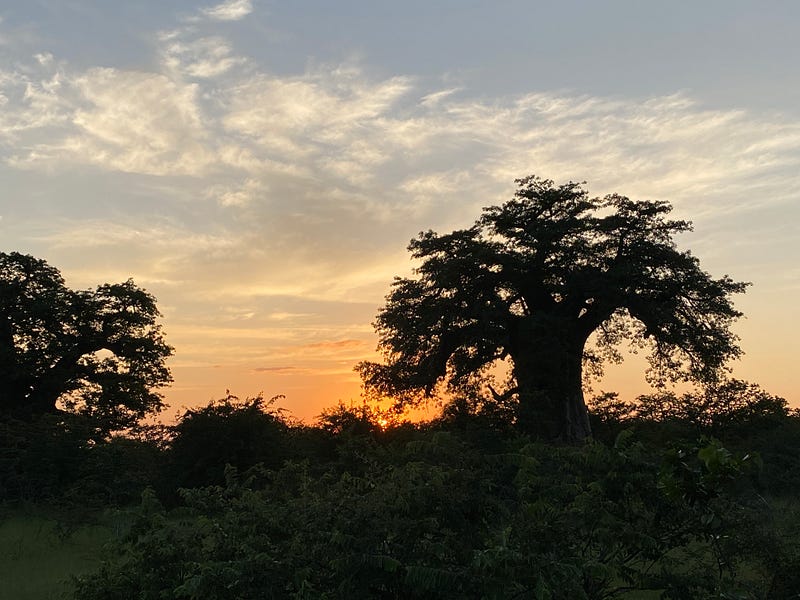
Chris and I saw our first baobab trees from the train window in 2021 as we whizzed across the Tanzanian savannah from one side of the country to the other.
We were required to be in separate rooms because men and women weren’t allowed to mix in second-class cabins — and we each shared a 6 bunk cabin with 5 same-gender strangers. For those wondering, there was no first class on this train. Not that we would have bothered with it anyway.
It wasn’t too big of a deal because both of us were quite exhausted and did a lot of sleeping. But our rooms were side by side, so occasionally we would find each other in the companionway standing and looking out the window that was outside our cabins. The windows all opened and it was nice to hang our arms out while taking in the stunning landscape that passed us by.
The trip was 30 hours in total and we felt like true explorers as we pulled up to the numerous train stations along the way. Upon arrival, we would smell food being cooked over open fires, and vendors would run towards the train, outmaneuvering each other to sell items through the doors and windows.
Like much of what we experienced in Africa, I imagine that it was a very similar scene 60 years ago as well. I said a few times that if we took cell phones away from the scene, many places we visited could easily make us feel like we had been transported back in time.
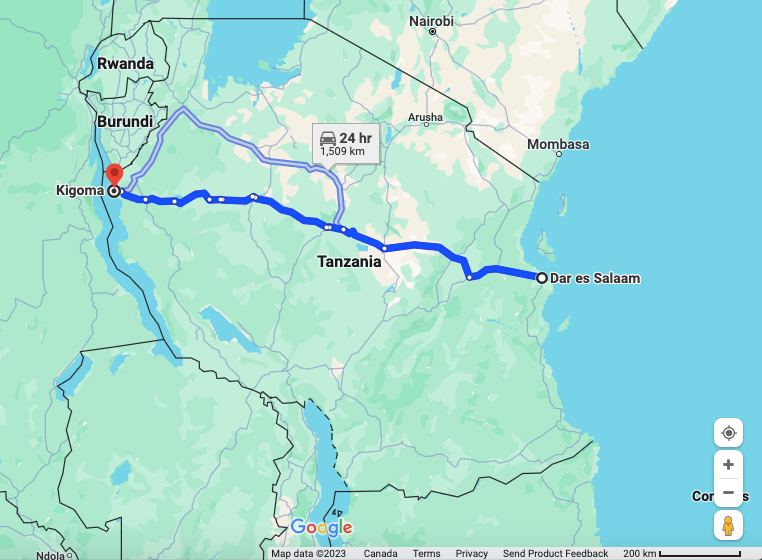
As the train slowly made its way out of the station — the excitement of the stop now easing as people sat to consume their purchases — our faces were covered by huge smiles from ear to ear. Eyes wide and speechless, we would watch the world go by out the window, just taking it all in with pure joy and appreciation.
Were we actually on a train, crossing the spectacular continent of Africa?
The wind felt nice while we gazed upon the land as the train picked up steam — pulling away from the hustle and bustle of civilization, our eyes would be glued to the landscape. We were mostly hoping to see giraffes, zebras or elephants — but we were surprised and thrilled when we started seeing the baobab trees whizzing past us.
“Look! A baobab tree!” I exclaimed when I saw the first one. I had never seen one in person before, but it was an obvious site. I guess I had seen enough pictures of them before because I immediately knew what they were when I saw them.
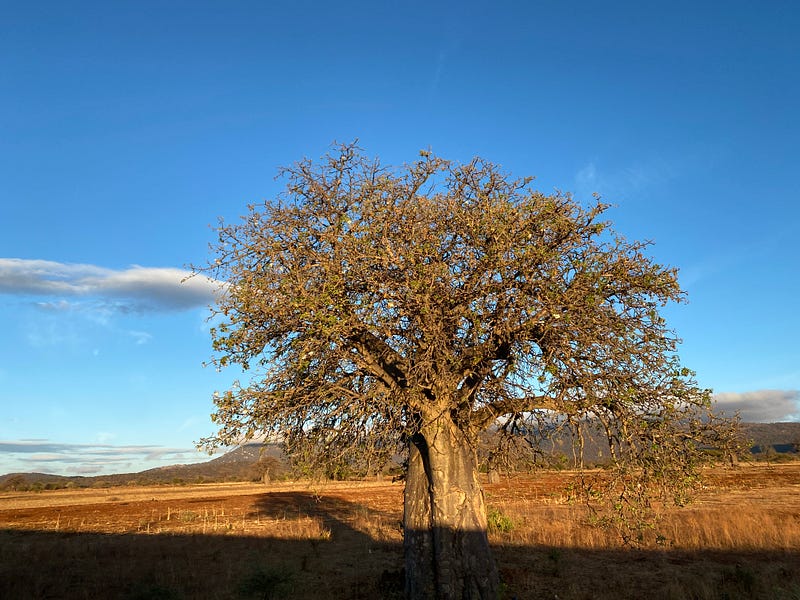
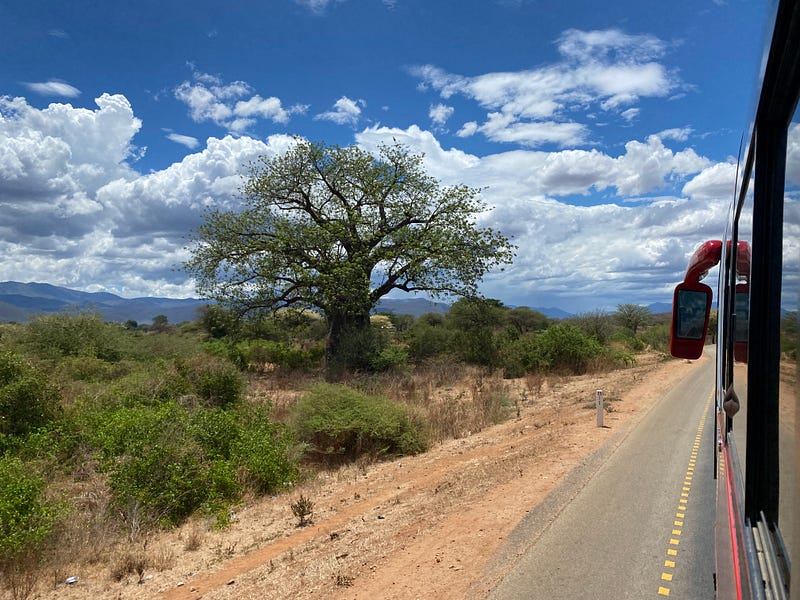
They looked like stalks of broccoli popping haphazardly out of the landscape and they came in all sorts of shapes and sizes. Some offered a place for shade and we would see locals gathered under them seeking protection from the sun. Some were very close to villages and were used as a part of the architecture of the homes.
As I watched kids kick a soccer ball (football) in front of one, I couldn’t help but wonder how many children that tree had witnessed growing through the years. Humans came and went under its gaze, but it would be a constant throughout their lives — its sturdy branches and life-giving succulence had likely helped many generations of people stay alive through its years.
Baobab trees reach ages of up to 3000 years and some of them are simply massive. Their trunks are so wide that one recorded tree in Zimbabwe can hold 40 people inside its trunk! These trees hold water and have long been a source of life-giving liquid in times of drought and desperation in the desert-like savannah lands. They also have nutrient-dense fruits, flowers and leaves, plus a useful bark that contributes to the tree's moniker — The Tree of Life.
Botswana was our ultimate destination while on the train in Tanzania. We traveled overland from Southern Uganda to Maun, Botswana to do a housesitting job over the Christmas holiday in 2021.
Because we were housesitting and taking care of a cat, we didn’t have an opportunity to go out onto the most famous site in the area — the Okavango Delta, the largest inland river delta in the world. But, it was certainly at the top of our list as a must-see while we were there.
When our housesit was finished, we moved down the road to a backpacker camp and decided to do a day trip out onto the delta. The night before we were to do that, though, we met a local at the on-site bar who lived in and had grown up in Maun.
We told him that we were to go out on the delta the next day, but instead of encouraging us to go, he convinced us to go with him to his safari camp a two-hour drive away. He would be leading us away from the delta and towards Zambia, and we knew that we wouldn’t have a chance to come back. But we were also intrigued by his camp, and he sweetened the deal by promising us that he would take us out into the Baobab Forest.
Wow! A whole forest of baobab trees!? We couldn’t imagine something as cool as that.
Our new friend had recently sold the lodge and was heading out there the next day to clear out his stuff for the final time. He told us we could be his guests and we didn’t have to worry about food or paying for our room. We were thrilled with the opportunity to stay in such a swanky spot and didn’t want to discard the opportunity.
On our second night there he announced that it was time we headed out to the Baobab Forest — we could hardly contain our excitement.
We loaded into his safari jeep, sitting high up in the back, as one does. Neither of us had ever been in one of these vehicles, and the novelty was certainly exciting.
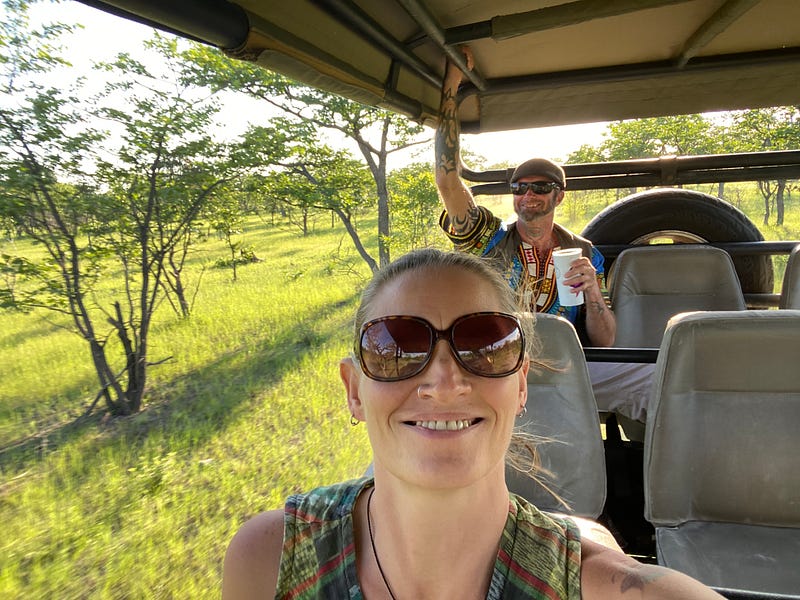
It was late afternoon as we headed out. The wind was calm as we watched the landscape roll past us. We were bumping and bouncing on the dirt track as we inched our way further and further away from the main road and closer and closer to the beckoning call of the wilderness.
Flamingos languished in a pond as we made our way past them, other birds sang their chitter chatter as they regaled their news of the day to the others.
The landscape was still, yet it was also very much alive.
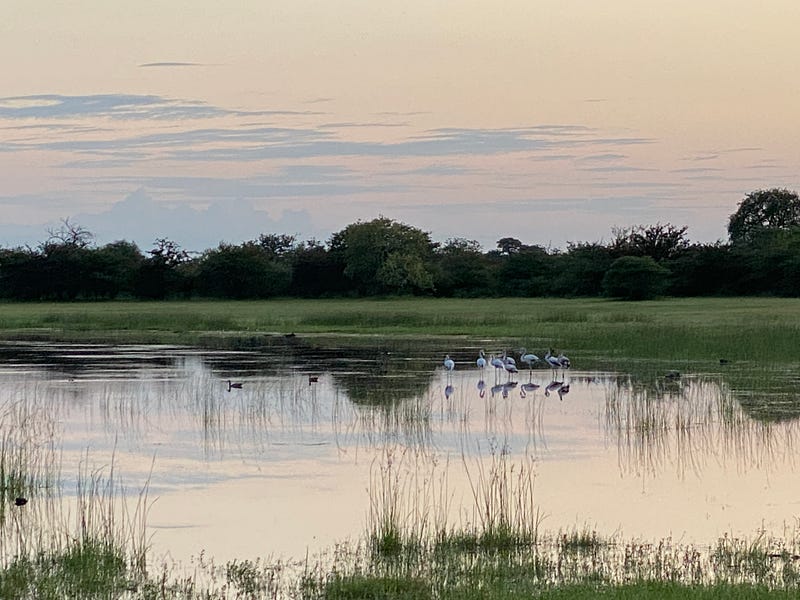
After about a 40-minute drive and a detour around a farmer's field, we started to see the trees in the distance. Because of their sheer size, they were not located as close together as we thought they might be, but we could see that there was a definite group of them in one relatively small place. In most other situations, these trees stood alone and solitary.
We parked the vehicle and followed our friend through the thigh-high grass to his favorite tree. We were all in wonderful moods and were happy to be out in nature, but in the short 5-minute walk, a solemn look crossed his face.
“What has happened to the tree?” He asked no one in particular.
As we approached it, we could see a gaping hole in its side, and there was a hole in the foliage where a massive branch had once been. Arriving to the base, we could see that its branch was now lying on the ground, splintered away from its mother.
“Wow, I wonder when that happened.” He said. “It must have been recently.”
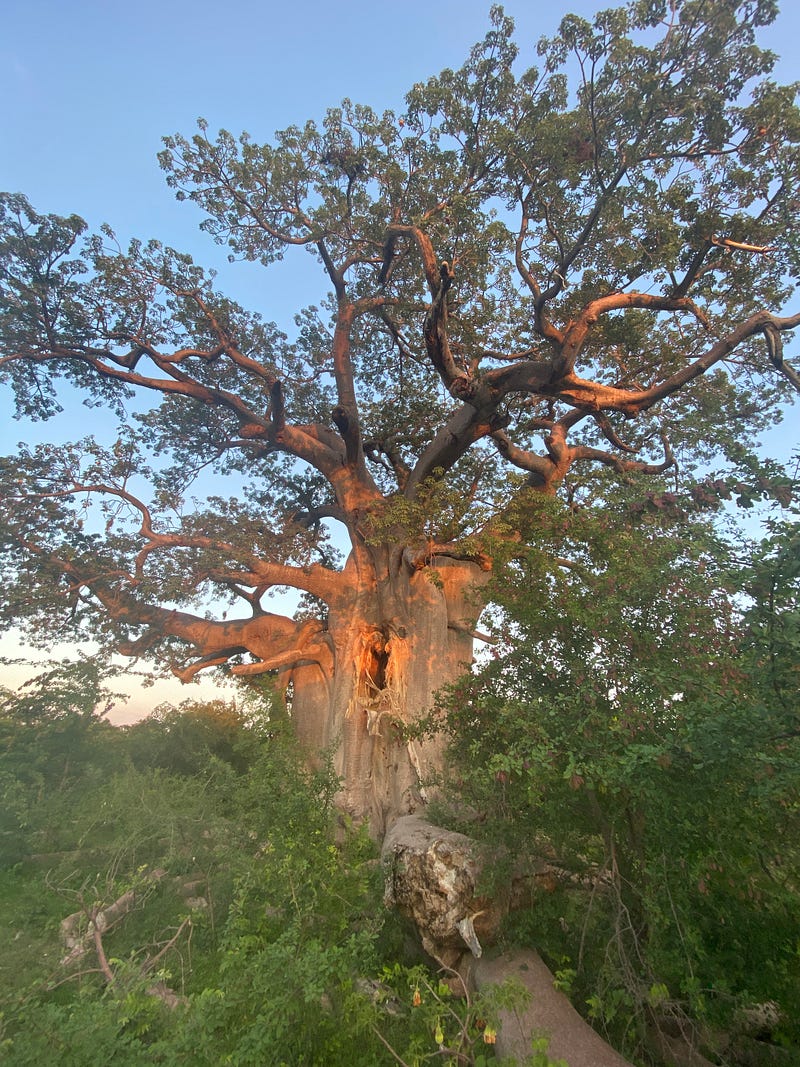
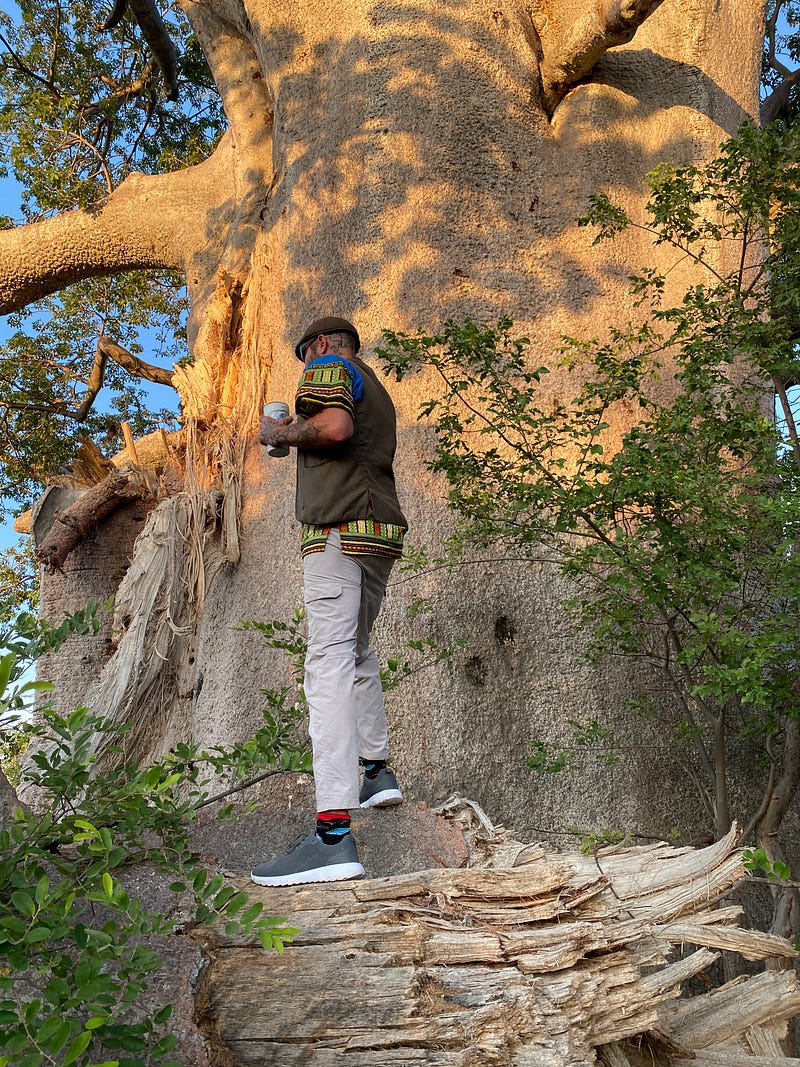
As we stood there speechless, we all tried to imagine what had happened to this beautiful giant. Was it drought caused by the climate shifting? What could have caused a 2000+ year-old tree to behave in this way? Were we truly witnessing the final stages of this ancient tree's life on this planet?
It was then that we learned that baobab trees are not trees at all — they are succulents. As stated previously, they hold life-giving water and their steadfast presence in the lives of humans has long made them the subjects of multiple different legends.
According to this website, ancient legends claim that:
“…at one time the young the Baobabs were upright and proud. However for some unknown reason, they lorded over the lesser growths. The gods became angry and uprooted the Baobabs, thrusting them back into the ground, root upwards.
Evil spirits now haunt the sweet white flowers and anyone who picks one will be killed by a lion. One gigantic baobab tree in Zambia is said to be haunted by a ghostly python.
Before the white man came, a large python lived in the hollow trunk and was worshipped by the local natives. When they prayed for rain, fine crops and good hunting, the python answered their prayers. The first white hunter shot the python and this event led to disastrous consequences. On still nights the natives claim to hear a continuous hissing sound from the old tree.”
We couldn’t help but feel terribly sad to be witnessing this turn of events for this gentle giant as we all climbed up on the branch to walk its immense length. We sat in silent contemplation while I held my hand to it. Would it tell me its secrets if I just listened? Knowing what I know now, I’m glad I didn’t hear any hissing.
I can’t imagine how many stories that a tree like this would have to tell if it could.
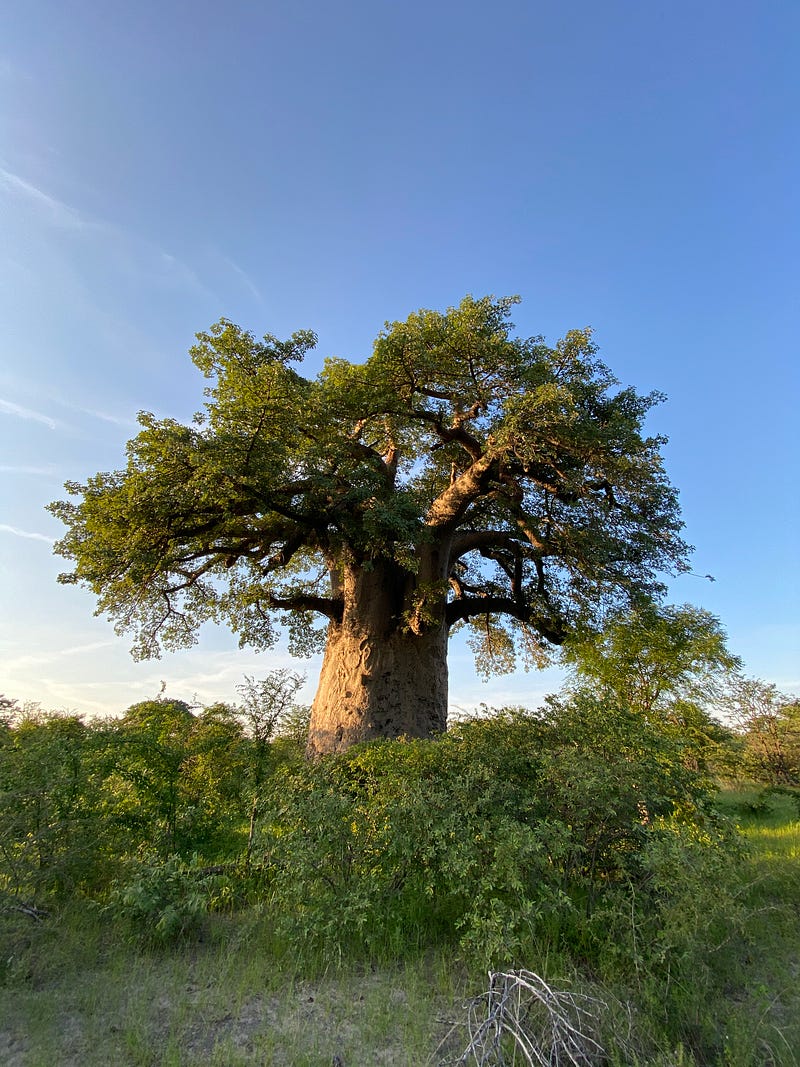
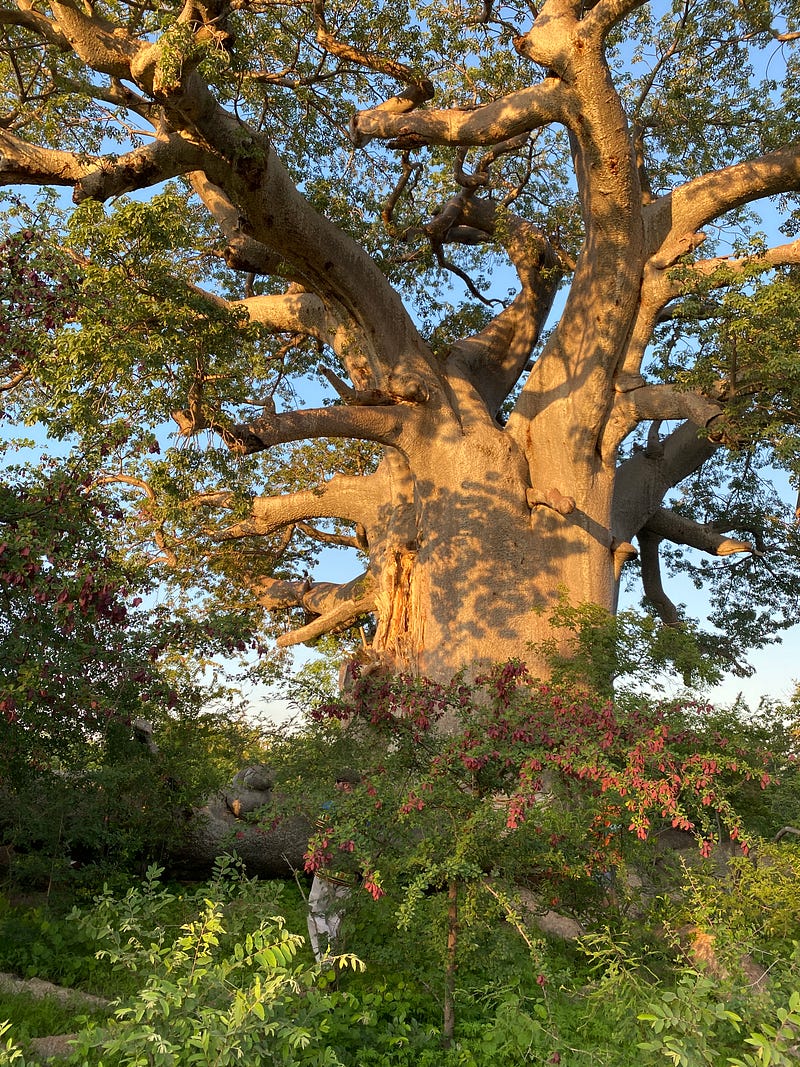
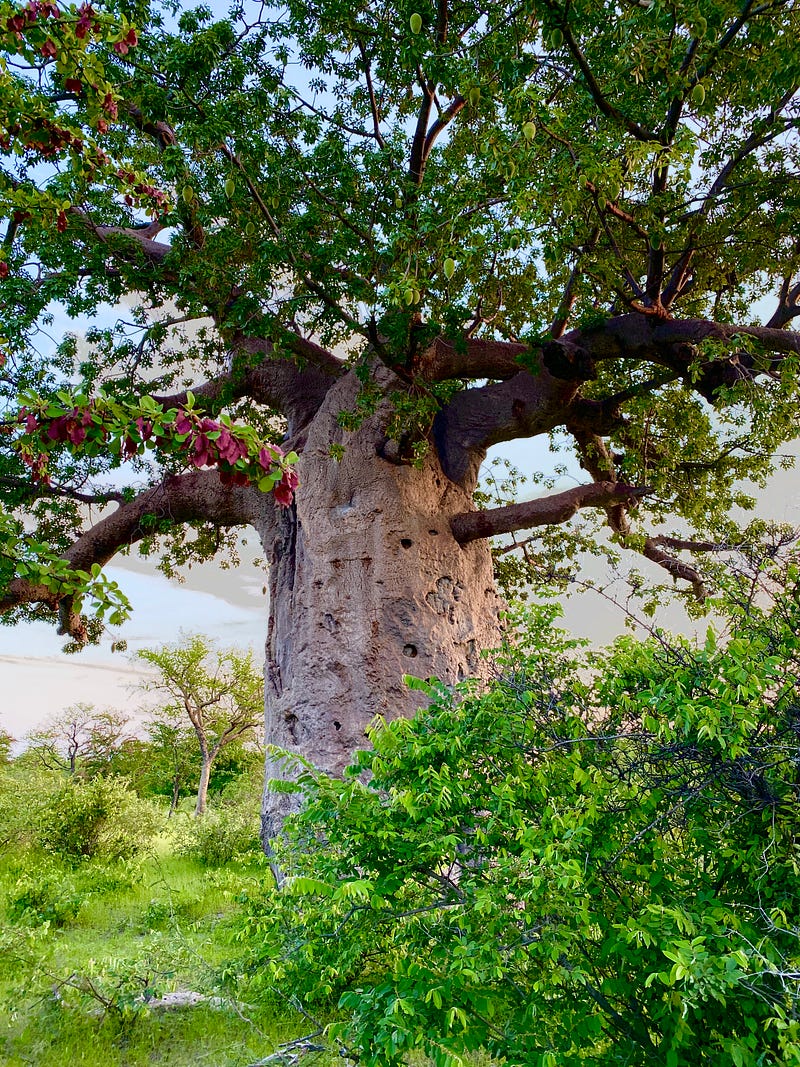
Walking amongst these trees was certainly a different experience than whizzing past them on the train and bus. Feeling so very small against their giant sizes, one couldn’t help but feel insignificant.
There was a palpable spirituality in the Baobab Forest. The immensity of the giants, the sheer length of their lives, the calmness that they exuded. It’s impossible to describe it, but it was there. The earth was beating its steady heartbeat beneath our feet. We could somehow feel it in this peaceful place.
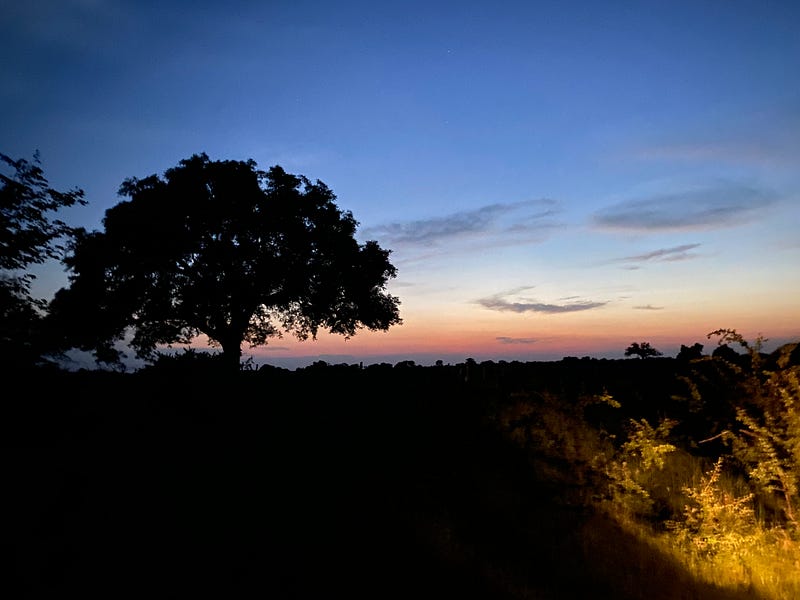
As the sun set and the sky grew darker, we figured it was time to go. Our exuberance and excitement on the trip out had been replaced by a humbled and quiet contemplation on the way back.
As the sun fell, the sky shifted and took on an impossibly purple hue. The contrast of the green grass and the purple sky truly took my breath away.
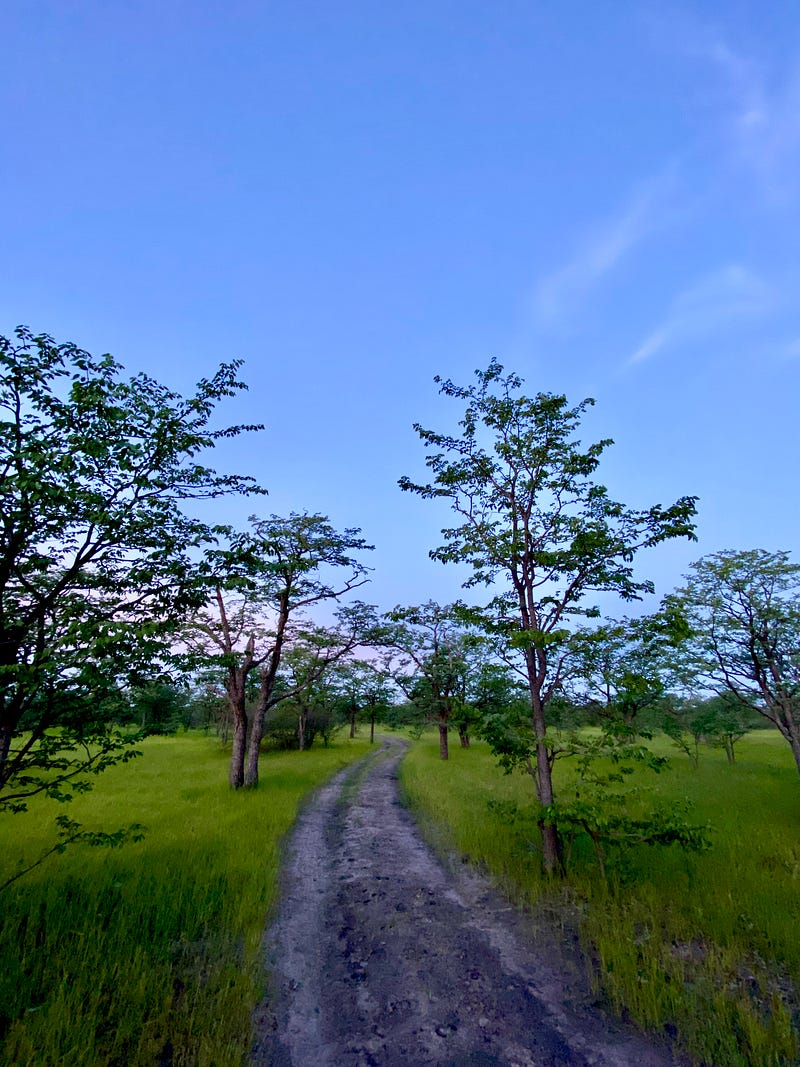
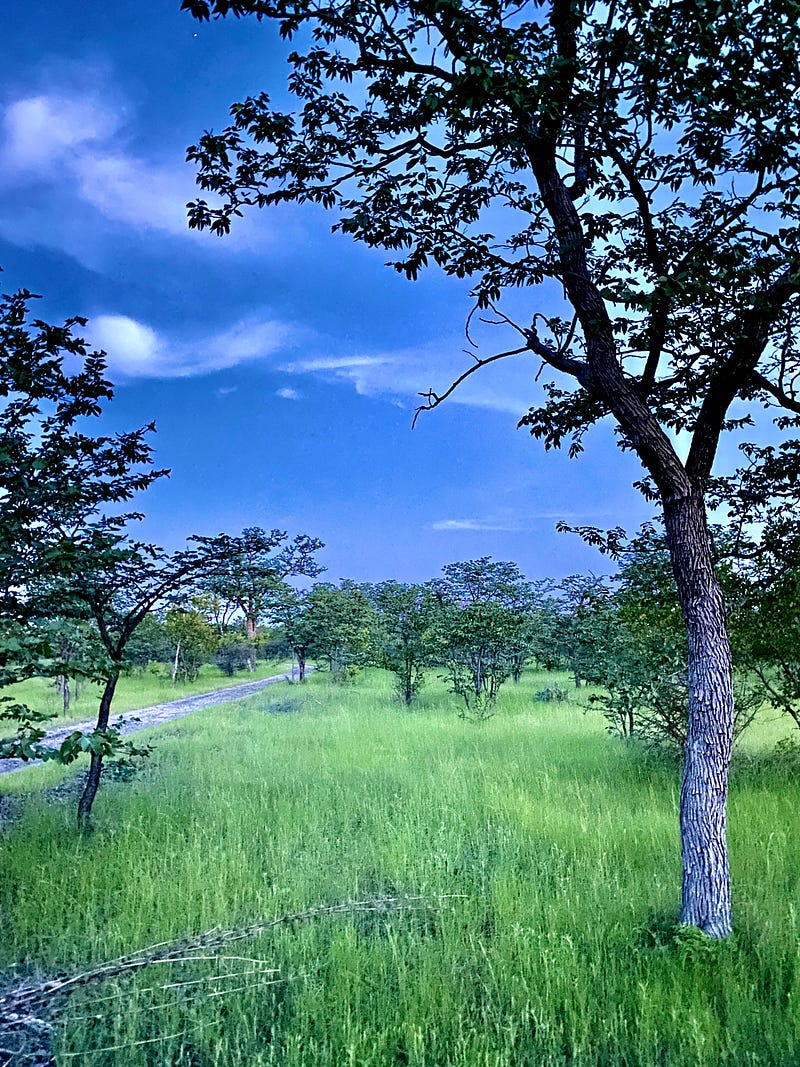
Stopping the truck one more time to take in the stunning vista, we couldn’t help but feel so grateful for this life. Moments like this remind us that we are on the right track — and the constant and long life of the baobabs let us know that we are but a blimp on the vast timeline of our planet's existence.
As we contemplate the future of our planet, one thing is for sure. These Trees of Life will continue to shine the way forward, as they have already done for millennia.
This is a prompt response to Globetrotter's December prompt Spiritual Sites. Read the intro post to the prompt by Anne Bonfert if you want to write your own.
Other Globetrotters that have found spirituality in nature:
Scott-Ryan Abt visits the forests in Western Canada:
Oksana Kukurudza's Sunflowers Rarely Break finds it while hiking in various places of the world:

More spiritual articles from me:
Celebrating the Strangest Ramadan in Morocco
We Snuck Through the Garden to Visit An Old Mosque During Lockdown
If you like my writing and want to read more, follow me and sign up here to get my articles by email. We would also be happy if you considered leaving me a tip by using the link to Patreon or Ko-Fi below:)
We have been nomadic since 2017! Join our journey by hitting these links:
Website | Instagram | Facebook | LinkedIn| Patreon| YouTube | Medium | Twitter | Ko-Fi | Unsplash