
SparkNotes Shows How to Go Viral on Twitter With Humor
All you have to do is stay relevant, respectful, and keep your initial audience small

Sparknotes is a resource that students use to learn about classic literature. It also is an account that regularly goes viral on Twitter.
This obvious discrepancy is what makes it such a good case study in Twitter brand strategy. How on earth can a dry website about book summaries be so popular on Twitter, a website famed for low engagement? Especially for a company that wants to sell something, it’s really tricky to get high levels of interaction with audiences on Twitter.
You can break down their Twitter brand strategy into three sections. If you want to reach your audience, raise awareness, and, ultimately, sell whatever it is you’re selling, use Sparknotes as a role model for your Twitter brand strategy.
Humor Is Your Brand’s Best Friend
If you want to go viral, the easiest way is to be Twitter-funny.
Think about it this way: if you post blatant promotional content, nobody is going to like or retweet it. You might reach some of your own followers, but nobody else. Brand awareness remains low.
But by using humor — memes, specifically, which are already accepted on Twitter as a source of hilarity — you’re far more likely to create something that other people will like. Crucially, you’re much closer to creating something other people will share.
In the words of BIGfish Communications, an award-winning PR firm, “Information about sales and new products is important, but it’s “closed loop” content… followers are less likely to retweet overt promotional material, so if that’s all the account tweets about, they won’t reach or convert new potential customers.”
Especially if you’re a brand, which is already viewed with some suspicion on Twitter for being ungenuine, using brand-specific humor goes a long way to diffusing that suspicion. It shows you’re willing to make an effort, that you understand the way Twitter works, and you’re not there to sell, you’re there to entertain, which is the primary currency on Twitter, whether you’re aiming for Twitter brand strategy or not.
Sparknotes exemplifies this by consistently posting the hottest meme of the day with their very own literary twist.
Including humor and memes in your Twitter brand strategy will help you show your followers you’re not just a brand, you’re there to provide value. And on Twitter, humor is the most important currency.
Find the Right Twitter Niche
Here’s the secret sauce to success on Twitter: narrow niche, broad audience.
What does that mean? It means your jokes are about a very specific situation or topic, but the group of people who will likely find it funny is big. The biggest stumbling block brands often run into is the temptation to be broadly funny: the broader the humor, the more people will like it, and the more they’ll want to share it with their friends, right?
The answer is actually no. Especially on Twitter, niche humor is much more popular than generic humor. Generic funny accounts like @girlposts and @fillwerrell have quietly died a Twitter death, while much more specific and targetted humor performs much better.
But that doesn’t mean you have to limit yourself. Within even the most specific and narrow of niches, there’s a lot of wiggle room. Again, take Sparknotes as an example. They don’t ever stray from their format, but still find a lot of variation within that format. They take aim both at individual stories like Phantom of the opera, but sometimes also 19th-century authors as a whole.
Now we’ve established their niche humor, take a minute to consider their audience. Think about the number of people who have read the Great Gatsby, a poem by Edgar Allen Poe, or some Homer. It’s got to be just about every single person who’s done even one year of high school.
This is where Sparknotes really provides a clever twist. They have their niche humor, they have their broad audience: but why do people find it funny?
By poking fun at the classic heroes and plotlines of 19th century English literature, they turn you, the reader, into the hero. You struggled through these dull books in high school, and now you’re allowed to laugh at them. This is the clincher and the crucial element of their Twitter brand strategy that makes them so likely to go viral tweet after tweet.
Stay Relevant, but Respectful
Here’s something that may be surprising to some folks: Sparknotes’s most recent viral tweets are about the coronavirus.
How does a website about literary education both reference the current worldwide crisis and not step over the line of what’s respectful? By relying on the two points above. They make it funny while staying in their niche.
Here’s the wacky and kind of beautiful thing about human psychology: when things go dark, we turn to humor. Brands especially may find it hard to find that line: too dark, and you’re mocking the pain and suffering of millions, too light, and you’re not making any impact.
Sparknotes walks this tightrope with an amazing amount of balance. They reach for the pains we’re all feeling, the huge number of Zoom calls we’re enduring, the slow spiraling we descend into after endless social distancing, how to transition into working from home. But they keep it brand-focused and relevant. We, the readers, are not the punchline, Shakespeare is, or the Phantom of the Opera, or the Oracle at Delphi.
Sparknotes sticks to their Twitter brand strategy by staying relevant by referencing the pandemic and also poking fun at some of the ridiculous things that happen in the books they summarize.
They’re respectful because the target of their humor is the own heroes in the books they summarize. It’s relatable because everyone's struggling to fill their time and remain calm. And those factors have made them go viral.
Brands on Twitter are in a great spot to reach their audience by going viral. The only thing they have to do is stick to a well-thought-out Twitter brand strategy.
Taking Sparknotes as the ultimate example, by using these three elements, they’ve been able to slowly but steadily grow their following into the hundreds of thousands.
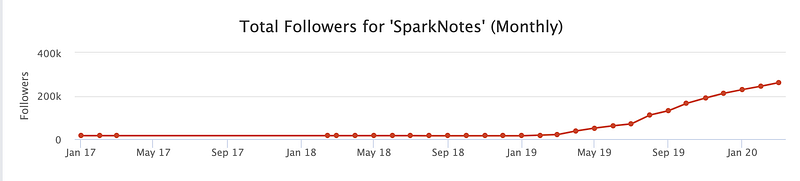
Not only that, but they consistently get a much, much higher engagement rate with their audience than is typical on Twitter. On a site where 1% engagement is considered almost unbelievably good, Sparknotes reaches between 4–8% engagement per tweet.
Twitter is the perfect place to build an audience who will know, recognize, and even trust your brand. You can do it without any selling at all. All you have to do, like Sparknotes, is prove your worth by using humor. Develop your niche. Remember: narrow topic and broad potential audience. And finally, stay relevant and respectful of current events.
This cocktail of elements makes up your Twitter brand strategy. By using those, you can go viral, which will ultimately help you raising awareness of your brand and increasing your sales.


