
Spare Me Your Rage Regarding the Academy’s New Inclusivity Initiatives
The Academy of Motion Picture Arts and Sciences announced revised eligibility criteria for the Best Picture Oscar that emphasized diversity, equity, and inclusion. Naturally, sectors of the internet and the industry exploded with resistance and rage over perceived loss of artistic freedom. Here’s why they are wrong.
Some Thoughts on the Academy
Although I am a passionate observer, frequent commentator, and self-proclaimed expert on the Oscars, I am hardly an Academy apologist.
I have written about several major decisions they have made over the past few years that I thought were ill-conceived at best and disastrous at worst. These include their quickly-scrapped plan for a new category for Outstanding Achievement in Popular Film, their handling of the Kevin Hart as Oscar host controversy, and their membership body’s decision to give Best Picture to Green Book.
But I also don’t think the Academy is inherently bad, nor do I think that it is consistently regressive. For example, their decisions to give Best Picture to innovative films with rich social commentary and exclusively non-white casts like Moonlight and Parasite over the last few years has really impressed me. I am also struck by these two fascinating trends:
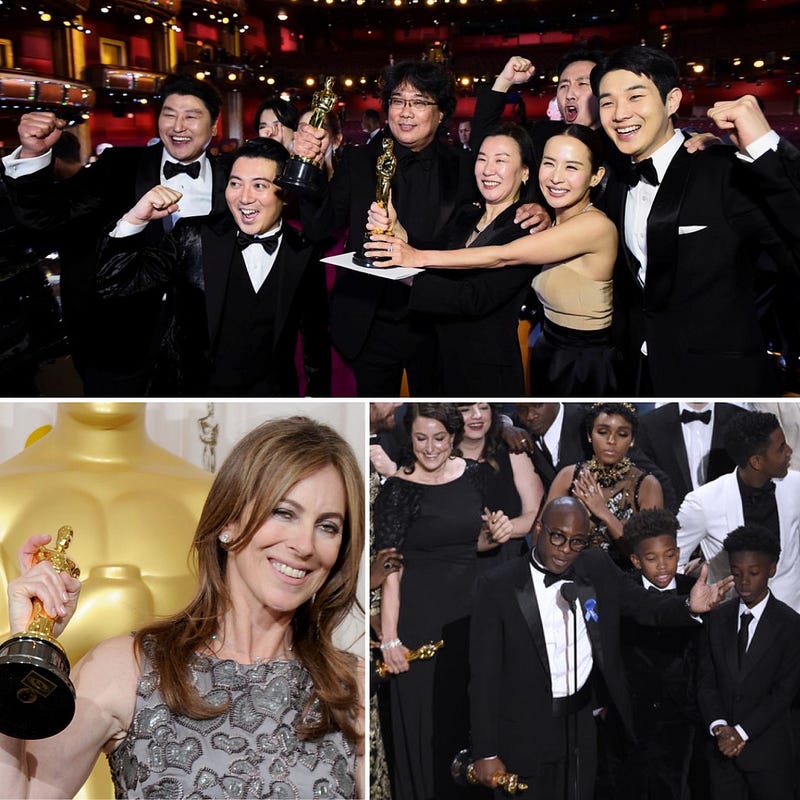
- For the first 77 ceremonies, every single winner of the Best Director Oscar was a white and (ostensibly) heterosexual man. For the last 15 ceremonies, the percentage of Best Director winners that were white straight males decreased from 100% to 40%. In the last 15 years, we have seen 5 wins go to Mexican-born filmmakers (Alfonso Cuaron twice, Alejandro J. Innaritu twice, and Guillermo Del Torro once), 3 wins go to Asian filmmakers (Ang Lee twice, Bong Joon-Ho once), and 1 win go too a woman (Kathryn Bigelow).
- Among the 72 Academy Awards ceremonies that took place in the 20th Century, only 36 of the nearly 1,400 acting nominees were black and only 6 of the nearly 275 of acting winners were black. In the first 20 years of the 21st century alone, there have been 41 black acting nominees and 13 black acting winners. That is a tremendous increase in black representation from roughly 2.5% to 10% of acting nominees and from roughly 2% to 16% of acting winners.
There’s still a long way to go. Women directors, writers, producers, and multiple technical/creative categories are woefully underrepresented. Openly LGBTQ people and people with disabilities are rarely if ever feted in the major categories, as is the case for Hispanic/Latino, Asian, and Indigenous people. Of note, there is still room for improvement even among metrics where the Academy is statistically improving, such as the inclusion of directors that aren’t white men and the inclusion of black actors in the acting categories. The numbers are undeniably better than they were in these areas, but that doesn’t make them sufficient.
After controversies ranging from #OscarsSoWhite to #MeToo and #BlackLivesMatter, the Academy has demonstrated increasing dedication to addressing issues of equity, diversity, and inclusivity in the film industry through a number of new initiatives. The boldest of these so far was announced this week and people got all worked up.
The New Eligibility Criteria
The full text of the new eligibility criteria are available here and can and should be read in full by people before they weigh in on the issue. I won’t rehash all of the details, but will summarize the key points below.
Starting in 2024 (over three years from now), to be eligible for the Best Picture Oscar (only), a film has to demonstrate that it meets (just) two of the following four criteria:
- The film must contain A) a lead character who is a member of an under-represented racial/ethnic group OR B) substantial supporting casts include significant representation of under-represented groups (broadly defined as women, racial/ethnic minorities, sexual and gender minorities) OR C) subject matter or themes relevant to the broadly defined under-represented groups described above.
- There must be significant representation from under-represented groups among A) creative leadership or department heads, B) key technical roles, or C) the crew.
- The film’s distribution or financing company must have either A) paid internship/apprenticeship opportunities or B) substantial training opportunities that are open to and utilized by members of under-represent groups.
- The studio or film company must have multiple in-house senior executives from under-represented groups on their marketing, publicity, and/or distribution teams.
Debunking the Myths
Several people have taken to social media and various magazines and websites to voice their outrage regarding these standards. Three very common myths that continually arise in these arguments can be easily debunked.
Myth #1: The diversity problem in Hollywood isn’t that bad and these new guidelines are going to make studios scramble to find and promote minorities at the expense of hard-working and better qualified white men!
If you, like many, find these guidelines seem unreasonable to you and you find yourself thinking about all of the arguments that have been lobbed against affirmative action in the past few decades, let’s actually take a look at the data. When you remove women, racial and ethnic minorities, sexual and gender minorities, and the disabled, we are talking about men who are white, cisgender, heterosexual, and non-disabled. Depending on how you define and measure some of these constructs, estimates will vary, but based on current available data men who are white, cisgender, heterosexual, and non-disabled reflect a maximum of 25% of Americans. These new Academy standards are basically saying that there has to be some representation of the other 75% of Americans either on screen, in behind-the-scenes creative roles, or in the marketing and distribution sectors of the film company. Is requiring that a multi-billion dollar industry in 2020 include some representation among groups that comprise 75% of America really that draconian? Or, rather, it is a remarkably low bar that reflects how poorly the industry has historically performed with regards to diversity, equity, and inclusion?
Myth #2: Filmmakers are now being told by the Academy how to make their movies by dictating what stories get told and who can work on them!
The Best Picture Oscar is an award given out by a private organization. It is not the inalienable right of any individual or project to be eligible for it. Countless movies have been released that have been ineligible for the Best Picture Oscar due to not meeting other eligibility criteria that have nothing to do with diversity, equity, and inclusion. The Academy is not telling them that they can’t make the film (nor does it have the power to do so), it is simply saying that starting in three years if their film or the studios that finance and produce it cannot demonstrate the bare minimum effort to promote inclusivity, they will not be deemed eligible for one specific honor. There’s a big difference. Also, their movies can still compete in every other category, so it’s not even a broad exclusion for the film!
Myth #3: So many great movies of the past wouldn’t be eligible for the Best Picture Oscar under these new rules!
Bizarrely, many hot takes included people decrying that recent movies like 1917 and Lady Bird wouldn’t be eligible under these inclusivity initiatives when they most certainly would have. 1917 might have had an entirely white male cast (it was about the British military during WWI after all) making it ineligible for the first criteria, but it achieved the second criteria several times over, considering that director Sam Mendes’s father is from Trinidad and Tobago, co-screenwriter Kristy Wilson-Cairs is a woman, and two of its producers (Pippa Harris and Jayne-Ann Tenngren) are women. Also, studios like DreamWorks and Universal were involved in its production and distribution, indicating it certainly would have met some of the 3rd and 4th criteria. (I won’t even dignify the knocks on Greta Gerwig’s films with a detailed rebuttal; as one of only five women ever nominated for Best Director films like hers are at the heart of what these new rules are trying to be inclusive of.)
Also, this is perhaps stating the obvious but this rule is not retroactive. The Academy is not going to go back and take away the Best Picture Oscars for The Departed or The Godfather because they lacked on-screen or behind-the-scenes diversity. What they are doing is saying that starting in three years, if you can’t demonstrate the bare minimum efforts toward promoting diversity, equity, and inclusivity either on- or off-screen, they won’t consider you for the honor of being named one of the best films of the year by their organization.
The New Eligibility Criteria are Far From Perfect
As has been pointed out by others, most notably by journalist Mark Harris, it is good that these rules won’t take affect for a few years because there are issues to work out. First, there are strict, well-intentioned laws about what information about people’s disability status and racial, ethnic, sexual, and gender identity can be asked by employers that seem likely to get in the way of the implementation of some of these guidelines. Second, there will be lots of challenging and thorny discussions about who counts as an under-represented minority and who does not (for example, whether Jews and Middle Easterners are considered white or an under-represented racial/ethnic minority). Third, significant efforts will have to be made to ensure that these new guidelines don’t have disproportionate negative impacts on small, independent studios that have smaller staffs and limited resources. The last thing guidelines to promote diversity, equity, and inclusivity should do is inadvertently give favor to major conglomerates over small, independent voices.
Conclusion
It is very possible that certain guidelines are scrapped for being un-enforceable or having unintended negative consequences, or even that backlash makes the Academy reconsider implementing them altogether. Or maybe the Academy will stick to them as written and there will be no change in representation in Hollywood. But I certainly hope that the Academy sticks with them and that they do have the intended impact.
I think it is impressive that a highly visible and influential body like the Academy was willing to go beyond virtue signaling and develop a concrete initiative that could result in greater diversity, equity, and inclusivity. The lack of representation in Hollywood is a major, longstanding problem with our culture and our economy and the time for key stakeholders to start taking action has long passed.
To read more about the entertainment industry, consider following the author of this article on Medium and Twitter.
Check out these related articles:


