Space Travel: Journey to the Stars
Have you stared into the night sky, captivated by the twinkling stars and the vastness of the cosmos?
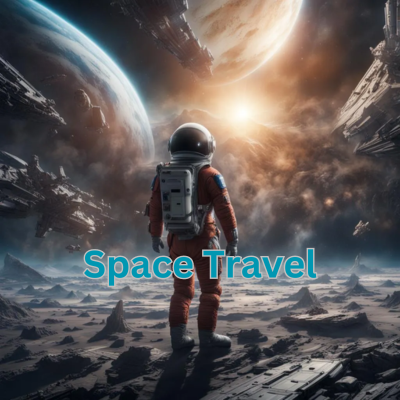
The allure of space and the mysteries it holds have fascinated humans for centuries. Today, we stand on the precipice of a new era, where space travel is no longer a distant dream but a tangible reality. Let’s explore the challenges, triumphs, and future of space travel. Space, often called the final frontier, is brimming with challenges. An early hurdle is escaping Earth's gravity. Imagine running the fastest race of your life, but the finish line keeps moving further away. That's what it's like for a spacecraft trying to leave Earth. It needs to reach a speed of 28,000 kilometers per hour to break free from Earth's gravitational pull. Once in space, astronauts face a whole new set of challenges. Our bodies, which have evolved over millions of years to survive on Earth, must adapt to the conditions of space. In the microgravity environment, muscles begin to weaken, and bones lose density at an alarming rate. The heart, no longer needing to fight against gravity to pump blood, changes shape and function. The isolation and confinement of space can also have significant psychological impacts, leading to feelings of loneliness and depression. The spacecraft must be equipped to handle the harsh conditions of space. They must provide protection against cosmic radiation, which can cause damage to the human body at the cellular level. It must also withstand extreme temperature fluctuations, from the intense heat of direct sunlight to the freezing cold of the shadowed areas. The risk of collision with space debris, which can travel at speeds up to 28,000 kilometers per hour, poses a significant threat. Despite these formidable challenges, humanity's quest for knowledge and exploration has led to remarkable achievements in space travel. The Apollo missions of the 1960s and 70s, which culminated in Neil Armstrong's historic first step on the moon, marked a significant milestone in our space journey. Since then, we've established a continuous human presence in space with the International Space Station, a testament to international cooperation and human ingenuity. Our curiosity has also led us to send robotic explorers to our neighboring planets. Mars rovers like Spirit, Opportunity, and Perseverance have traversed the Martian landscape, searching for signs of past life and studying the planet's geology and climate. These missions have not only expanded our knowledge of Mars but also paved the way for future human exploration. As we look to the future, the possibilities of space travel seem limitless. Plans are already underway for Artemis, a series of missions that aim to return humans to the moon by 2024. This time, we're not just planning to visit; we're planning to stay, using the moon as a stepping stone for future missions to Mars and beyond. Private companies are also joining the space race, developing new technologies for space tourism and commercial space travel. Concepts like asteroid mining and space manufacturing, once confined to the realm of science fiction, are now being seriously considered. Perhaps the most exciting prospect is the potential for establishing colonies on other planets. Becoming a multi-planetary species could ensure the survival of humanity in the event of a global catastrophe on Earth. It could also usher in a new era of exploration, as we venture further into the cosmos and uncover its secrets. Space travel is indeed the ultimate adventure. It's a journey filled with challenges and triumphs, risks and rewards. As we continue to push the boundaries of what's possible, we're not just exploring the universe. We're also discovering more about ourselves. When you gaze up at the night sky, remember that those stars are not just distant points of light. They're destinations, waiting for us to explore.