Sovereignty, Brexit, and Control of What Exactly?
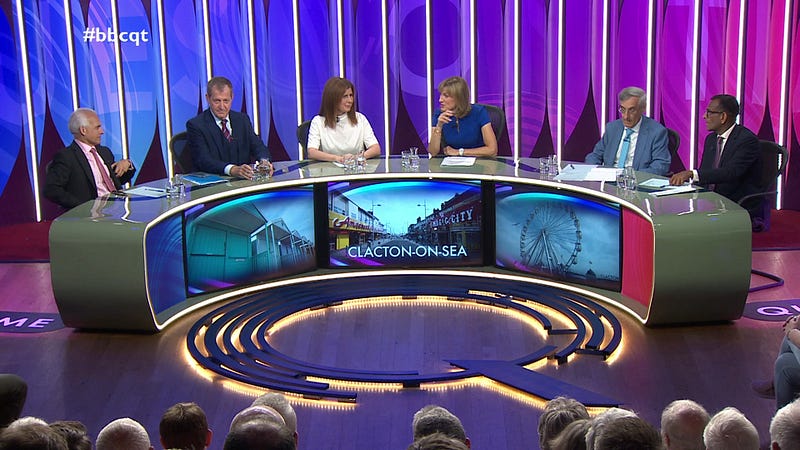
The Brexit-focussed episode of Question Time last week re-opened some old wounds and the issue of sovereignty once again reared its ill-defined head.
For those unfamiliar with the format, the weekly program usually puts a panel of politicians, experts, spokespeople or other personalities fields topical questions from an audience representative of the British electorate. Last week, that audience was comprised entirely of people who voted to leave the European Union in 2016. Notably, not a single member of the current cabinet agreed to participate on the panel — interesting considering that “getting Brexit done” is meant to be one of their key achievements.
The issue of sovereignty was recurring though. It was and remains, quite bizarrely, one of the staunchest and dare I say respected reasons for voting for Brexit. It is the last bastion of defence for those who, having seen a multitude of promises from the Leave camp fail to appear and a multitude of “fear-mongering” from the remain camp become reality, can hold on to. It is unassailable in its resistance to definition because it can be described purely as a feeling. It is the essence of “Take Back Control” and the epitome of “feelings over facts” that reigns supreme in our current political climate.
In the episode, even Alistair Campbell, the voice of Remain on the panel, expresses sympathy with those voters who felt they were voting in the interest of sovereignty
“I accept the point about sovereignty, lots of people voted for that”.
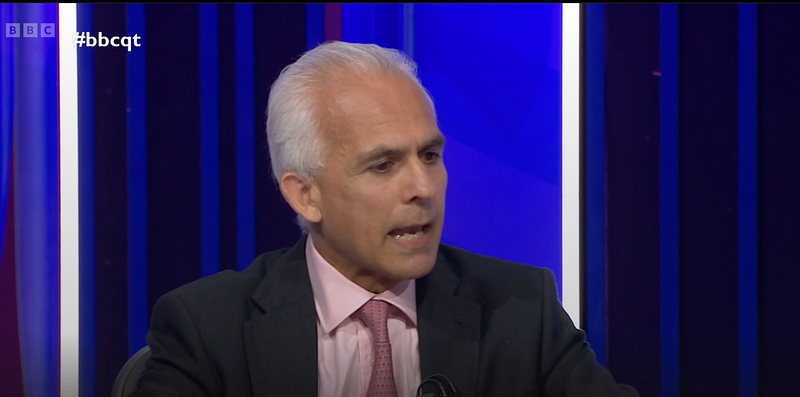
At the other end of spectrum, Ben Habib, former Brexit Party MEP, lamented the failure of the government to Fully Brexit and thus the failure to break free of EU control and fully regain our sovereignty.
“The problem with Brexit is not that Brexit has caused problems, it’s that we haven’t properly Brexited.”
What does he mean by ‘properly Brexited’, that would be to: “ Take back control of our borders, our cash, our laws.”
He cites the Northern Ireland protocol, which leaves a part of the United Kingdom with a foot inside the EU.
“We have not become an independent sovereign United Kingdom. Northern Ireland has been left behind in the EU Single Market.”
This is the unsolvable problem of having part of the island of Ireland that can’t have a hard border with its neighbour due to the Good Friday agreement, but which also must have a border for goods now that it is no longer part of the free trade agreement within the EU. Compromises had to be made to try to circumvent this intractable issue, which left most sides unsatisfied. So too he lamented the EU trade agreement, which left the UK beholden to certain EU rules.
“When we signed the trade and cooperation agreement, Boris Johnson signed up to non-regression on state aid, competition and environment. We are not allowed to regress from EU standards.”
In order to trade with the EU, the UK must adhere to certain EU standards. Or as Habib puts it “We are hitched at the hip to the EU.” This comes to the crux of the issue — what is sovereignty? To some, it seems to be doing exactly what you want. It is a naive position which denounces any compromise with a foreign power as a loss of sovereignty. To be fair, this is technically correct, but the naivety comes with thinking that international politics and law works any other way.
Any treaty is a compromise. The EU really is the outcome of two treaties — the Treaty on European Union (TEU) and the Treaty on the Functioning of the EU (TFEU), both of which were most recently amended in the Treaty of Lisbon. It is a treaty that the UK decided to leave in 2016, but that didn’t free us of the need to negotiate and compromise with our closest trading partners.
Let’s take another treaty that is sometimes confused with the Brexit argument — the European Convention on Human Rights (ECHR). Many Brexit voters listed this as a reason for leaving the EU, citing numerous cases from interference with the UK rental market to not being able to deport Abu Hamza quickly enough. The EU was blamed. The ECHR was however signed by the members of the Council of Europe (note — not the European Council), a body predating and independent of the EU. Leave voters, despite the repeated insistence that they all knew what they were voting for, had to be told by the Daily Mail early in 2023 why, despite having left the EU, the UK was still beholden to the ECHR (and therefore why the UK government was having legal issues deporting refugees to Rwanda, irrespective of where they came from).
You may have heard this question from a Brexiter on sovereignty (I certainly have):
Don’t you think the UK should be able to implement the death penalty is that what people vote for?
Jumping over three issues quickly — firstly that the UK voted to end the death penalty in 1965, secondly that there is not strong support to enact the death penalty, and thirdly (and a separate issue) democracy does not mean enacting everything that the majority of the public vote for (in fact our parliamentary democracy is designed precisely to prevent the kind of “Tyranny of the masses” (perhaps why referendums might not be the best way to make irreversible, country changing decisions).
Then of course, the point addressed above, that leaving the EU did not free us of the scourge of not being able to enact state-sponsored murder of our own citizens. This is because, despite leaving the EU, we are still a member of the Council of Europe, and still a signatory of the ECHR. The link is that by leaving the EU, the UK is more free to now leave the ECHR, and this is likely the goal of many behind the Leave campaign. But the central issue here is — by signing up to the ECHR, did we give away some of our sovereignty?
Well, yes.
In the sense that by signing the treaty, we made it very difficult (but not impossible) to for the government to make a certain decision and enact certain laws. Is this a bad thing?
No.
It is a sign of cooperation between countries that is the cornerstone of international politics. Consider another treaty — the Geneva Convention, and then let’s ask a similar question:
Should it be possible for the UK to execute PoWs if that’s what the public vote for?
Obviously not. The Geneva Convention has a purpose and there is a very strong reason why countries are signed up to it. Imagine if during the Iraq war, there was a call from the British electorate to execute prisoners of war? Is it so unconscionable? Many in the UK would support the death penalty for terrorists (just look at the number willing to send Shamima Begum to her death). In the fervour of the Iraq war, and the erroneous connections to terrorism, is it so unlikely that there would be public support for this? In fact, the same poll given above did show support for the death penalty for terrorists. Does the Geneva Convention mean that we can’t act with sovereignty? Again, we cede some decision making power to an international agreement.
So then we come back to the much softer issues surrounding the treaties and loss of sovereignty since leaving the EU. Have we simply not Brexited hard enough? it depends if you think there is a world in which we can continue to trade with the EU entirely on our own terms. Habib laments the Trade and Cooperation deal with the EU, but the EU is under no obligation to accept our terms for trade without implementing its own requirements. The EU has strong requirement on goods to ensure a fair footing across the bloc and protection for consumers within member states. it is not going to let that slide for the UK. This is exactly the point raised repeatedly during the Brexit campaign — is it better to be a part of the single market and have a say in the regulations and rules, or to be outside but still required to conform to them just to have access to the biggest single market in the world?
So what does sovereignty mean to those voters still clinging to the credo of “Take Back Control”? Freedom to conduct our own trade agreements without EU restrictions. Well OK, but from a much weaker position, we are likely to negotiate less favourable trade deals, resulting in a greater loss of sovereignty (if defined by not being able to get exactly what you want).
Is it being able to control our own borders? Fine, now we can control how many EU citizens come in, but the kind of immigration that most Leave voters had issue with came from outside the EU anyway. Non-EU immigration has instead increased since the vote and the EU in any case did not state what benefits etc had to be given to these immigrants — as evidenced by the fact that other member states had their own rules in place.
The Treaty of Lisbon effectively expanded our sovereignty to the rest of the EU, in essence sharing it with the other member states in what should be a mutually beneficial exchange (for example by enabling access to the single market).
By standing outside the tent now we have in fact gone from sharing some sovereignty with mainland Europe, to giving more away, since we now have to follow rules over which we no longer have control, in order to trade with our closest partners.
There is no complete freedom from international obligations that the Leave voters are still clinging to. The EU will always have its own requirements and the UK, if we want to continue to trade with them, will have to acquiesce to those. Perhaps the only time we were truly sovereign was at the height of the British Empire, where we could dictate our terms to other countries, forcefully if necessary. Is that what Brexiters mean when they say Sovereignty?