avatarDr John Frederick Rose

Summary

The website content details the history and design of the Southern Pacific 4294, a cab-forward 4–8–8–2 locomotive, including its operational advantages and challenges, as well as its significance in the context of the Sierra Nevada snow sheds and tunnels.

Abstract

The Southern Pacific 4294 is a unique cab-forward locomotive, designed with the cab at the front to navigate the long tunnels and snow sheds of the Sierra Nevada, particularly on Donner Pass. This design was made practical by the transition from coal to oil fuel, which allowed for better crew conditions and communication, although it introduced new risks such as oil leaks causing wheel slippage. The cab-forward configuration was adopted to address the issue of suffocating exhaust fumes in tunnels, which conventional locomotives faced. Despite some safety concerns and a tragic incident in 1941, the cab-forward locomotives, including the 4294, played a crucial role in the Southern Pacific Railroad's operations, with 256 units built and placed on the roster. The 4294, built in 1944, is the only cab-forward locomotive not scrapped and has been on static display at the California State Railroad Museum since 1981.

Opinions

  • The cab-forward design was a significant improvement for crews working on the Southern Pacific Railroad, providing better visibility and working conditions.
  • The transition to oil-fired locomotives was essential in making the cab-forward design viable, as it allowed for the tender to operate correctly on uphill grades.
  • The cab-forward locomotives were a response to the specific challenges posed by the Sierra Nevada terrain, including long tunnels and snow sheds, which conventional locomotives were ill-equipped to handle.
  • Despite the advantages, the cab-forward design had inherent risks, such as the potential for wheel slippage due to oil leaks and the catastrophic consequences of a tunnel accident, as evidenced by the 1941 incident.
  • The Southern Pacific 4294 is celebrated as a historical piece of railroad engineering, being the last new steam locomotive of its kind and a preserved exhibit at the California State Railroad Museum.

Southern Pacific 4294, Cab Forward 4–8–8–2.

Cab forward loco for long tunnels and snow sheds Donner Pass.
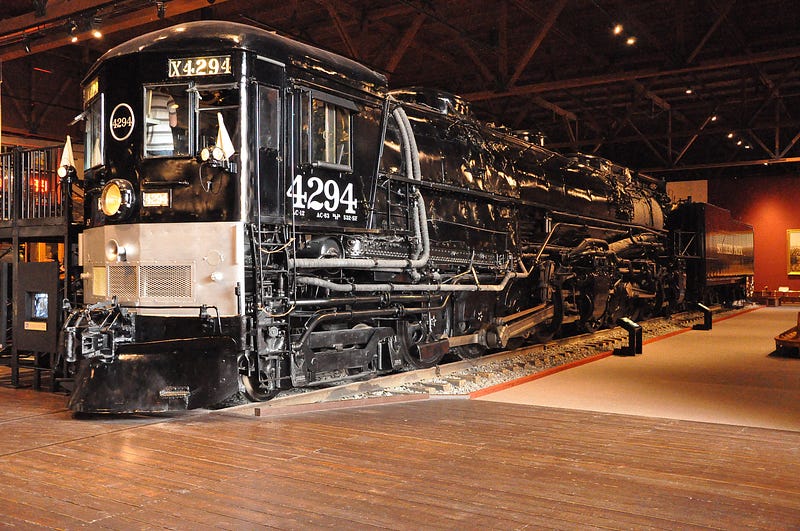
Southern Pacific 4294, preserved at the California State Railroad Museum in Sacramento, California. Picture by Neil916 at English Wikipedia. Licensed under the Creative Commons Attribution-Share Alike 3.0 Unported license.

Idea of Cab-Forward

Cab-forward design placed the cab at loco’s front by simply turning entire loco minus tender back to front, Made practical by burning fuel oil.

Cab-forward loco burning coal meant fireman on tender driver up front, Creating communication problems that made co-ordination and optimal firing difficult, Downside of course crew at front have less chance surviving mishaps and accidents.
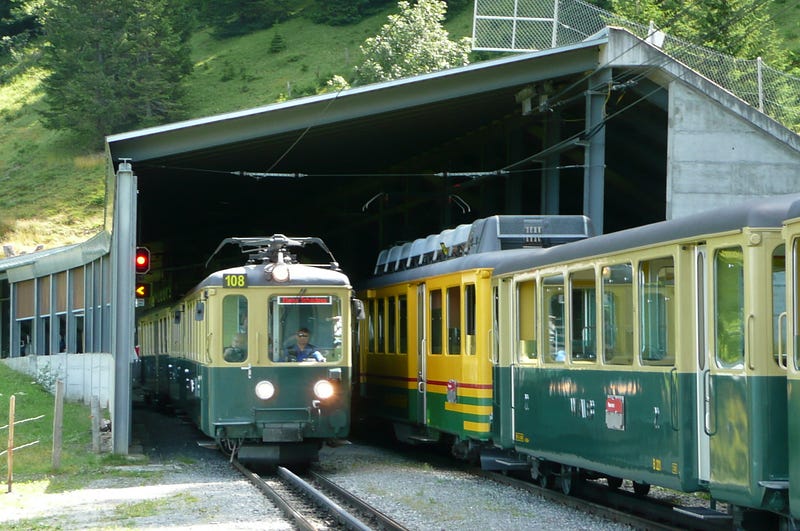
Wengernalp rack railway stop and passing point Allmend avalanche gallery (snow shed) 2 shuttle trains line Lauterbrunnen-Kleine Scheidegg — 2009–08–05. By Rahimsa Images — Own work, Public Domain, https://commons.wikimedia.org/w/index.php?curid=7553033

Southern Pacific Railroad Cab-Forwards

4–8–8–2 cab-forward used by Southern Pacific Railroad, Able to handle 39 long tunnels and nearly 40 miles of Sierra Nevada snow sheds, Major issue of conventional locos is tunnel directs dangerous suffocating exhaust into crew’s cab.

After number of crews running conventional locos nearly asphyxiated, SP made decision to run locos in reverse, Tender leading train blocked forward view and put crew on wrong sides of cab for seeing signals, Tenders not designed for pushing and to mitigate risks train ran at much lower speed.

Southern Pacific commissioned Baldwin Locomotive Works to build prototype cab-forward, Railroad under pressure ordered more units before prototype delivered.

All Southern Pacific cab-forwards oil-fired to enable tender operation as designed, Tender tanks pressurized, Oil and water flowed correctly on uphill grades to boiler and firebox, Pressurising had potential to make any leaks worse.

Cab visibility superb enabling single crewman to easily survey both sides of track, Still safety concerns and fatality did result from cab-forward collision.

One problem with cab-forward was necessity to route oil lines ahead of driving wheels, Oil leaks on track could cause wheel slippage.

1941 cab-forward with leaking steam from cylinder cock entered tunnel at Santa Susana Pass, Slow-moving train in tunnel, Leaking steam condensed, Water on rails caused wheel slippage train dragged slipping backward, Coupler knuckle broke separating air line and causing emergency braking, Train stalled, Tunnel rapidly filled with exhaust fumes and steam, Oil dripped on ties and ignited beneath cab incinerating crew.
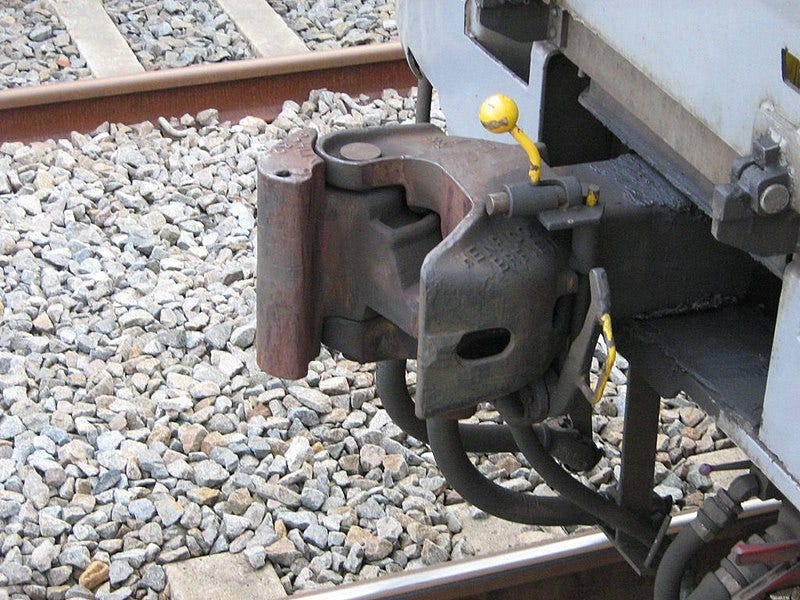
Type D Henricot coupler on a Belgian EMU. By François Melchior — Own work, CC BY-SA 3.0, https://commons.wikimedia.org/w/index.php?curid=3824318 Licensed under the Creative Commons Attribution-Share Alike 3.0 Unported, 2.5 Generic, 2.0 Generic and 1.0 Generic license.

Southern Pacific ordered cab-forward locomotives 256 built in 3 wheel configurations placed on SP’s roster, Southern Pacific 4294 4–8–8–2 only cab-forward not scrapped also SP’s last new steam loco, Built in 1944, Retired from service March 5 1956, Since 1981 located at California State Railroad Museum, Static display.

№4294 stats: Driver diameter 63 inches, Adhesive weight 475,200 lb, Loco weight 614,600 lb, Tractive effort 116,900 lbf.
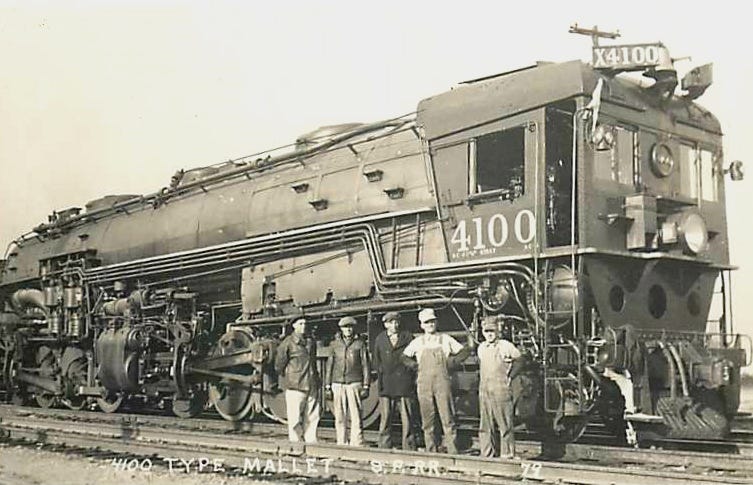
Postcard photo of Southern Pacific locomotive 4100 and crew. No name is shown on the card. — eBayfrontback, Public Domain, https://commons.wikimedia.org/w/index.php?curid=36687105. This work is in the public domain in the United States because it was published in the United States between 1928 and 1977, inclusive, without a copyright notice.

Blessed be.

Poetry
Steam Locomotive
History Of Technology
Articulated Transport
Steam Engine
Recommended from ReadMedium
avatarPiyushjakhar
First and last love

4 min read