
South Park’s Emotional Transition: AI as the New Showrunner
Monetizing Feelings. Could Artists Leverage Data for Creating AI Art?
AI: The New Language of Emotion and Creativity
As an AI art curator, I’m captivated by the evolution of technology and its integration in our lives. The rise of ML, and specifically the Showrunner AI, opens a compelling new dimension to storytelling, with implications that reverberate beyond mere entertainment.
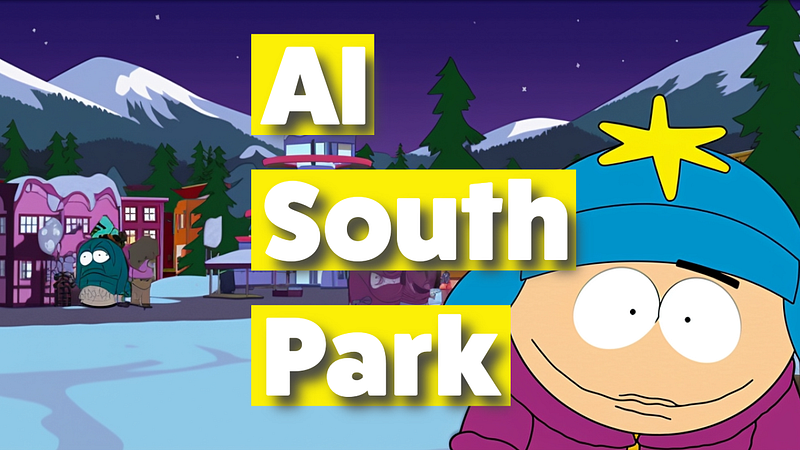
In the vanguard, we have “Westland Chronicles”, a South Park-like episode created by a unique AI, the progeny of The Simulation (formerly Fable Studio).

Generative AI: Shaping South Park’s Emotional Landscape
The Simulation’s Showrunner AI exemplifies the intersection of technology and creativity, fabricating engaging South Park episodes in ways previously unimagined.
With the power of generative AI, the creative landscape is transformed into an arena where the characters, narratives, and emotional texture are sculpted by ML models, paving the way for the future of TV.
The Future of TV and the Role of Showrunner AI
The new Showrunner AI revolutionizes the creation process, acting as a sophisticated storyteller, producing narratives, dialogue, and even emotional depth that mimic the iconic South Park style. But, it is important to remember that these Showrunner agents are not independent creators.
They are tools that still require the creative genius of humans — like Matt and Trey, the original South Park creators — to guide and refine their output.
Showrunner AI: TL;DR
Edward Saatchi, CEO of Fable, and Philipp Maas are at the helm of The Simulation, a company that created Showrunner AI. This technology generates 22-minute TV episodes featuring AI characters who live and grow, creating narratives similar to reality TV for AIs. While Hollywood expresses concern about the AI’s potential to disrupt writers and actors’ roles based on short text prompts, The Simulation clarifies their intent to showcase AI’s potential in entertainment, not encourage intellectual property theft.
“South Park Enters the AI Era: The Rise of Showrunner AI”
Fable, the South Park Episode, and the Power of AI
In 2023, an intriguing experiment unfolded: The Simulation utilized AI to create an episode that pitted the Writers Guild of America (WGA) against Bizney, a Hollywood studio using ML to disastrous effect. This South Park-like narrative, layered with meta-commentary and humor, underscores the capabilities of generative AI in TV episodes while pointing to potential pitfalls.
Show-1: An Intriguing Peek into Generative AI’s Capabilities
“Westland Chronicles” was not the end of the AI story. The Simulation team introduced another element to the Showrunner AI mix by incorporating a likeness and voice into the algorithm. The result? A captivating 15-minute TV episode where Professor Fink pays a visit to South Park, introducing a fresh dimension of reality to the ML-generated narratives.
Simulation, South Park Characters, and the Emergence of AI Art
In tandem with the evolution of Showrunner AI is the surge of a novel form of AI art — emotion decoding. Thanks to advancements in EEG-based brain-scanning technology, emotions can now be predicted and monetized. The inclusion of emotional depth in the AI-generated content of generative TV adds a new layer of complexity to the storytelling process, allowing South Park AI to provide an immersive, emotionally nuanced experience to viewers.
State-of-AI-Art Emotion Decoding
“South Park AI: A New Chapter for TV Episodes”

WGA, SAG, and the New Paradigm of AI TV
The WGA strike highlighted in the AI-produced South Park episode resonates with Hollywood’s fears about the rise of AI TV. However, rather than a threat, the Showrunner AI and its AI-generated content may empower writers more than ever before, helping to craft narratives and episodes of TV shows with unprecedented emotional resonance.
“The Simulation Revolution: Fable’s Brainchild in the World of South Park”

AI: Shaping the Future of South Park and Beyond
As we look ahead, the future of TV seems intertwined with the growth of AI. The Showrunner AI has the potential to redefine the creative process, presenting a fascinating confluence of technology, creativity, and emotion.
Whether it’s producing South Park-like narratives, shaping the emotional contours of a storyline, or even potentially creating whole seasons of a show, the episode is generated by AI is here to stay.
The Closing Credits: AI, Emotion, and the Next Chapter of Creativity
The world is on the cusp of a new era, where emotion decoding and AI art coalesce to create riveting narratives. We are no longer passive spectators, but participants in a grand spectacle where AI-generated stories, characters, and emotions shape our experiences.
And as we ponder on this spectacle, let’s remember a quote from Andy Warhol, “In the future, everyone will be world-famous for 15 minutes.” With Showrunner AI, this future might just be a TV episode away.
The Next Gold Rush in Machine Learning? EEG-Based Emotion Prediction
I invite you to explore the concept of Creative Machine Learning tools by reading and learning from the many articles found on 🔵 MLearning.ai 🟠
- Check out my instagram with new material every week
- If you enjoyed this, follow me on Medium for more
- Want to collaborate? Let’s connect on LinkedIn
- https://linktr.ee/evartology
Data Scientists must think like an artist when finding a solution when creating a piece of code. Artists enjoy working on interesting problems, even if there is no obvious answer.
All our writers (members) receive the opportunity to be promoted on our social media, which increases the popularity of articles published on MLearning.ai
- Linkedin (58K+ ML-professionals)
- Twitter (5.7K+ followers)
- Instagram (2.4K + followers )
- Sketchfab * — individual vRooML!
- Youtube
- Apple Podcasts
- Substack 8K+ Subscribers


