
UNDERAPPRECIATED ALBUMS
Soup
Welcome to our record — strap your shit in
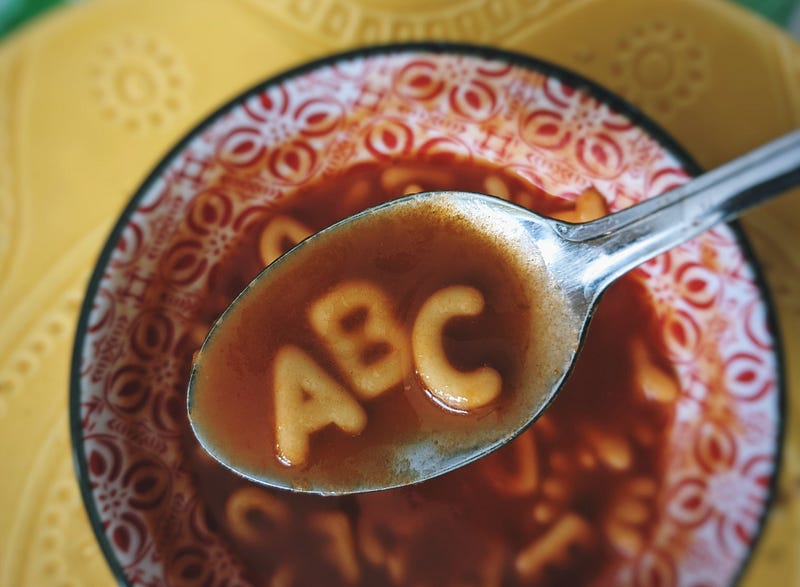
“We’re in New Orleans. We’re out of our minds. Welcome to our record — strap your shit in. — Christopher Thorn of Blind Melon on Soup
There was a time when critics could single-handedly take down an album with a negative review.
Music critics create a certain amount of accountability for integrity in music and I hold them in high enough regard for their intense scholarship and dextrous effort to put a language (writing) to another (music). It’s what we are doing here on The Riff every time we submit a story.
But for albums like Blind Melon’s haunting triumph Soup, the critics were just as reductive as the public in painting the album as a failure based on stereotypes arising after the first album. The critic’s consensus with the public on Soup was a failure of their trade.
Steven Shehori of AV club points out the same Rolling Stone critic who dismissed Soup, did so with Radiohead’s The Bends likely due to its perceived departure from “Creep”. Reviews will always be subjective, but sometimes the privileging of that subjective view — feebly locked into a fixed image — becomes a barrier to accepting unquestionable evolution in a band.
Soup was Blind Melon’s Pet Sounds. It’s Exile On Main St. A dynamic achievement by young musicians determined to create something memorable. No pretension, no self-indulgent filler. It was a watershed career moment. And it tanked. Fucking hard. — Steven Shehori
Few were able to appreciate Blind Melon’s deeply textured, dark, and nuanced sophomore album Soup, which was recorded in Daniel Langois’ Kingsway Studio — purported to be haunted. Shehori describes their sound on the album as a “constant fusion of alternative, folk, acid rock, and…tinge of Dixieland”.
For me, it immediately conjures a banjo and “a lampshade of durable skin”. The themes of the album included serial murder, suicide, fatherhood and addiction but the appeal of poetic lyrics and rich instrumentation give Soup a lightness that contrasts its content. Hardly the image of the pop-driven hippy image from “No Rain” that ultimately pigeonholed the band.
Soup is lusher than their debt — which itself had great tracks outshone by the hit single — and the melancholic ballads are delicious — especially “Mouthful of Cavities” featuring groupie Jena Kraus who insisted her way into singing harmonies with Hoon.
Lyrically, Hoon is as obscure as relatable in sharing his struggles, so beautifully summarized in “St. Andrew’s Fall”:
I got sewage fruit and it’s growing out back from roots I don’t know if they belong to me But if I could buy the sky that’s hangin’
Over this bed of mine And if I could climb these vines And maybe see what you’re seein’
If you can make it past the whirlwind of instruments in the middle of “St. Andrew’s Fall”, the exit floats in bittersweet, tear-jerking reverie befitting of its inspiration where the band witnessed a woman commit suicide next to St. Andrew’s Hall in Detroit where they were paying. The downtempo version on the posthumous Nico is retitled “St. Andrew’s Hall” in reference to the tragedy. Hoon reckons with the experience in that it could have been anybody who succumbed to depression. Lyrically, and ironically, he meditated on untimely and unromantic deaths.
Soup is black humour and dark beauty. The zippy kazoo gallows humour of Skinned juxtaposes the gorgeous mandolin and personal frankness of his struggle with addiction in “Walk”. The album reflects great range for the band as musicians as much as Hoon’s beauty and undomesticated nature.
Listening to Soup the first time was haunting and it took time for the album to grow roots for me, but when it did, it became one of my favourite records for the rest of the ‘90s. I think many of us were not ready for Soup. It’s embarrassing to think back on times when we thought we knew our shit musically, only to be humbled by a revised first impression. The critics should take note.
My first experience of having an album truly “grow on me” taught me to hold back on dismissing a record quite so quickly. “Toes Across the Floor” was probably the first song that I would put on repeat for the nimble and languid guitar shifting to intense drumming echoed by Hoon’s screeching. “Toes Across the Floor” provides that contrast of sleepy reflection and stomping out fires.
Now that the concept of the album has lost significance and we are flooded with access to countless tracks, it is even harder to make time for a release to grow on you. Journalist and critic Amanda Petrusich describes how she doesn’t want to squawk about golden days mentality when one would stew with an album before giving it a score, but laments the current age of instant reviews questioning:
How long will it take until we really know what a song or record means, how it works on us, how it works on others, what it does, if it might endure, and why? Who hasn’t lived with a record for weeks, only to wake up one morning and find that it has suddenly unlocked a whole new suite of rooms deep in one’s subconscious?
Soup was one of these albums.
Any momentum Soup had was quickly eclipsed by negative reviews and Hoon’s overdose 2 months after its release. And the fact that even critics couldn’t shake the ubiquitous “No Rain” and Hoon’s negative publicity shaded reviews of their innovative mastery with the worst kind of erudite bias.
I can be proud to say that us Canadians received the album well, where it posted highest on charts — even after Hoon pissed on us. But it’s such a shame that Hoon was not around for the delayed critical reckoning of the album as one of the best alternative albums of the ‘90s. The sound evades some of the distinguishing elements of ‘90s rock making it still sound fresh.
I don’t regret that “No Rain” was my gateway to the band because it lead me to engage with the rest of their album all the way to buying their sophomore Soup. We cannot help how we are introduced to bands or even genres and we are lucky to catch a glimpse of something different that leads us on a musical journey. My love for Bossa Nova stemmed from Annette Funacello’s sterilized “Blame it on the Bossa Nova” when I was a (really weird) teen and now I am listening to obscure Brazilian musicians from over a half century ago. A friend of mine got into the New York Dolls after listening to a cover on Guns N’ Roses’ The Spaghetti Incident? One cannot condemn the gateway.
We find our way to the masterpieces — lauded or not — because you cannot manufacture a musical appreciation unless you already have something inside you to cultivate that connection. And you can’t hear the good stuff with an ego in the way.
There is a draw that makes music a need, not an option. This is the draw that makes music lovers take a second listen and dig for gold where a piece of your soul recognizes a new language.
In a slice-of-life 1995 article by Steve Newton, of Vancouver’s Georgia Straight fame, he discusses with Blind Melon’s bassist, Brad Smith, how music videos were a dangerous validation of a band’s worth, which can be well summarized by the heavy rotation of “No Rain” on MTV to their subsequent dumping of Blind Melon. Only the curious fans and a handful of critics stayed around to enjoy Soup when it was released. Smith describes MuchMusic (Canada’s MTV) as we might describe streaming media like Spotify nowadays:
you don’t have to dig hard for information now, so why make music lovers dig? They can just flick on the TV and catch what’s hot at the moment. And if MuchMusic doesn’t play you, or MTV doesn’t play you, there’s, like, this weird type of mentality, that you’re not ‘hot’ or something. Fortunately, there are music lovers out there who do dig and do their own footwork to decide what they like as well, so there’s two different worlds.
Jessica Lee McMillan © 2021
Blind Melon Shannon Hoon — vocals, guitar, harmonica, kazoo Brad Smith — bass guitar, double bass, flute Christopher Thorn — rhythm guitar, mandolin, banjo Rogers Stevens — lead guitar, piano, Hammond organ Glenn Graham — drums, percussion
Additional musicians Jena Kraus — backing vocals on “Mouthful of Cavities” Miles Tackett — cello on “Car Seat” and “St. Andrew’s Fall”
Production Steve Sisco — mixing assistant Andy Wallace — producer, engineer
Soup (booklet). Blind Melon. Capitol. 1995. CDP 528732.