
Sound Of Chimes
An episode in the life of Riza
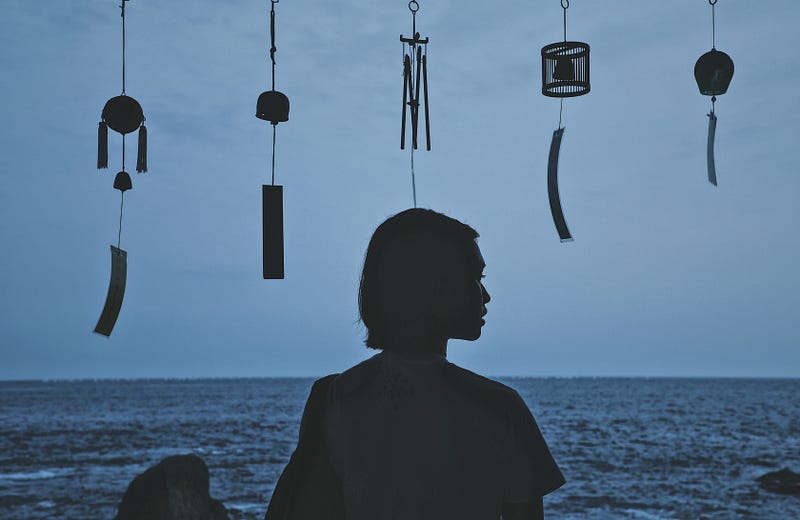
As usual — on those days— she woke up to the sound of chimes with headaches. She had no idea why she had been constantly being awoken by the sound of chimes in the dream.
The pain of enduring a toxic relationship, betrayal, and the following breakup had pulled Riza into a spiral of self-destruction. This path of self-destruction — as a way to cope with hurt feelings and frustrations — including addictions, emotional eating, etc.
Her mother, who had grown old, helplessly witnessed her daughter spiraling into a point of no return. For Riza, it was like being affected by a demon that forces her to do things that harm her emotionally, physically, and spiritually. Lack of good sleep and overuse of addictive substances had made it almost difficult for her to even think about getting better.
And for the mother — seeing her daughter end up this way — it was painful. She stopped complaining and getting angry at Riza–anger intended to help her– as it clearly did not help, in fact, it made their relationship worse. And having her own health issues and pain related to aging, mother decided to not hurt Riza anymore; it was just adding more suffering to both of them, instead, she relied on prayers for her daughter’s well being — there was nothing much she could do.
It was not that Riza did not want to get better at least for her mother, but the weight of addiction, thoughts of betrayal, and pain of getting back to normal was too much for her.
And soon the bad news had arrived: A cancer diagnosis.
Not for her, but for her old mother.
It was a shock for Riza, she did not want to lose her mother, though she herself had lost the zest for living.
The treatment had begun, her elder sister and brother-in-law (who were living in a different city) had joined with them.
But there was no much hope of recovery as cancer had gotten worse; it was days of meaningless pain for mother.
Riza was overwhelmed by helplessness and guilt, her eyes filled with tears–sitting in a corner of that hospital canteen with a cup of tea in her hands. It was then one of the waitresses decided to stop by and sat with her.
She, the waitress, had a message of hope for Riza. It was about the cancer recovery of that waitress’s own mother and about the treatment in a rather a monastery kind of place. That the natural treatment and the environment there helped her mother heal (when all other treatments failed).
But the only conditions at that monastery was that only the patient and a bystander were allowed to be there. And they have to live there for a minimum of six months according to the rules of the monastery.
Riza realized that this might be a chance for her to come clean too, along with curing her mother. Somehow she sensed that it was the very thing she needed to do — to take her mother to that place and live there, no matter what may come.
She was met with strong disapproval from her sister and brother-in-law — they thought she was out of her mind. But her mother — seeing Riza’s hope and sincere wish to escape from here — wanted to support her. She ignored the risk of traveling in this condition as she favored her daughter’s well-being more than herself.
Finally, Riza was able to convince her sister and they decided to take a chance. Riza called the concerned people in the monastery and confirmed their stay and treatment proceedings.
All of them — Riza, mother, sister, and brother-in-law — began the journey towards the monastery.
Upon reaching the monastery, they were greeted by the abbot and other monks. All of them were given a fresh cup of medicinal tea to rejuvenate from the tiredness of the journey. Some people (patients) were walking in the spacious outdoor of the monastery while some were sitting and having their evening snacks and tea. All of them looked relaxed and happy. Some of them smiled at Riza and mother while taking mother towards the room allotted for her.
Few monks recited a form of mantra and proceeded with some sort of rituals in the room and asked the mother to take rest.
Before it began to get dark, Riza’s sister and brother-in-law started their journey back.
One of the monks (female), explained to Riza about the rules and rituals in the monastery, and the particular duties that she would have to do as a bystander of the patient.
Some of the major disciplines she had to follow were to get up everyday early morning at the exact time as the bell rings, take a bath, walk towards a specific temple, and to offer prayers for her mother and the healers in the monastery.
Other than that, she was mostly free to use her time as she wanted to. But that was the trouble she had to face; she was not allowed to use mobile phones or other electronic devices there for the period of treatment there.
It was a friendly environment, there were no judgments within the discipline.
It had been some days now and Riza had got used to the morning challenge, mother was feeling better mentally in that environment, though there were a lot of physical healing works to be undergone on daily basis.
Riza began to enjoy the early morning walk and the time spent in the temple. The only trouble was getting up and bathing early morning–the cold shower baths. Once having dressed up, the freshness followed her with each step towards the temple in that nature-friendly environment.
But the hours after the return from the temple and the morning breakfast was the most difficult one for her. She found other bystanders getting engaged in some sort of duties (voluntarily taken). Some helped with the food preparation for the people in the monastery, some engaged in the farm works, some in the canteen, cleaning, gardening, some even learned to meditate, learn healing methodologies, etc.
Riza, from the after-effects of the traumatic relationship, was quite reluctant to form any sort of friendship with other people there; she was scared of opening up to them about herself and her past — if at all anyone questioned her. She became quite restless most of the time, as days passed without anything much to do–though she was free to make herself engaged like others.
Once a monk noticed this and he intuitively knew there was something bothering her. The monk–a painter and an art therapist by himself– handed over some papers, brushes, and color paints to her; he did not tell anything else other than “maybe you could draw”. “But I am not good at…” — she said.
“I think you can draw I believe there are many beautiful things here for you to see or your own imaginations to draw. It is up to you. I am not here to judge you. I am not your teacher.” –he said in a caring manner.
The words “I am not your teacher” surprisingly took her back to a memory. She later sat in steps, looking at nature. She began to move the brush on the paper; her mind went back to that memory:
During her childhood, in the school, on that day, as her attention was taken over by the trees and the mountains seen through the window of the classroom that she began to draw them immediately on a paper. Suddenly a wind blew in through the windows, the paper flew towards the teacher. The teacher–being already in a bad mood–took the opportunity to spill all her hate over that little child, Riza.
She had never experienced shame so intensely until then in her life. Her little mind interpreted the whole situation in a very damaging way. She lost interest in drawing, or rather she was consumed with feelings of shame and wrongness. It was a petty thing to do–that was how that particular incident registered in her mind. And the teacher never bothered to apologize.
Suddenly she was inspired to draw that picture (the memory) of that child shocked by the reaction of the teacher towards her in front of her classmates. There was sadness but it was of a healing nature. She did not stop, she went with the flow as the brush moved through the paper.
At one moment she stopped and closed her eyes in a sort of relief and sat there. Some moments passed; a gentle breeze blew in activating the wind chimes — she awoke from that involuntary short nap, but this time to the real sound of chimes.