
Sorting Out The Nation’s Priorities
What really matters, when it comes to re-opening schools?
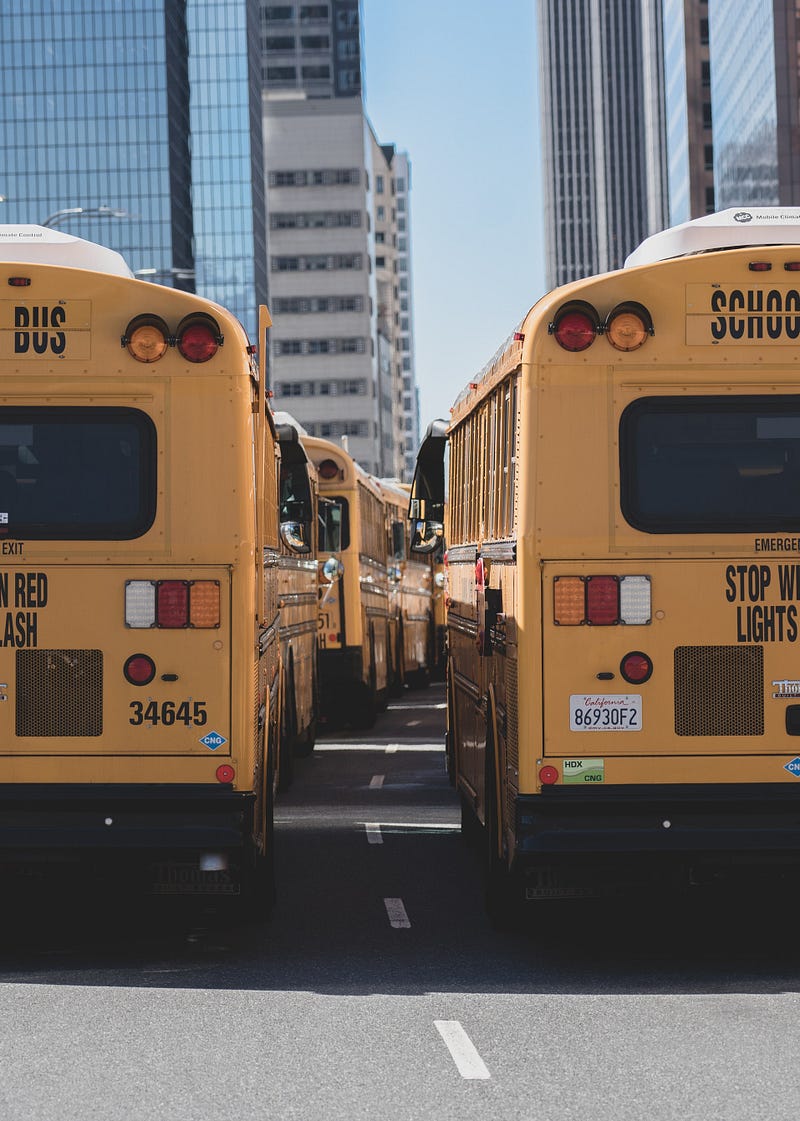
Every week, the headlines are dominated by some new development related to the Coronavirus pandemic. The past few days, the focus has been whether or not, and how, to re-open schools.
Everyone has a dog in this fight. The only surprising thing is that it’s taken this long for all stakeholders to start arguing about it, given how universal the consequences will be.
When only 25% of the US population is school-aged children, why is it such an important issue? Who are the stakeholders, when it comes to decisions concerning schools?
Children are affected.
School dominates their lives, occupies their time, shapes their lives, both academically and socially.
Parents are affected.
Children being at school 7 or more hours per day shapes their lives and enables them to work outside the home.
Families are affected.
The time spent together, the norms for interactions, the expectations of each member, and what their role is in the household — all are formed around a system in which child care, teaching, socialization, and in some cases feeding and healthcare are provided by an extra-familial resource.
Businesses are affected.
Today’s workforce is made up of many adults contributing to their family’s upkeep, who can only do so because their children have someplace to go during normal business hours. When that goes away, those working parents are unable to work, and consequently spend less — thus businesses feel it at both ends of the equation.
Communities are affected.
Schools provide a safe place for kids to be, where they are supervised, protected, and to some degree controlled. If there are no schools, there is the increased likelihood of (especially older) kids out and about, unsupervised, out of control. Schools also provide a number of extracurricular organizations, sports events, and activities that community members — business leaders, alumni, local government — connect with and participate in. When schools are closed those programs go away, fragmenting the interconnection of the different groups.
Government is affected.
With the impact on the economy, there is a greater need for support from government programs, and fewer tax dollars to pay for everything. The public looks to its elected officials for leadership and guidance in times of crisis, as well as for smart policies dictating their role in helping and supporting the citizenry’s needs. The success or failure of officials can change the outcome of elections.
To promote the welfare of the community at large…things will have to be rearranged for a while, and schools are at the center of that rearrangement because they touch every level of our communities, and what happens with them affects us all.
So everyone has a finger in this pot. The biggest takeaway, however, is that very few of the numerous considerations people are putting forth have anything to do with the actual education of children.
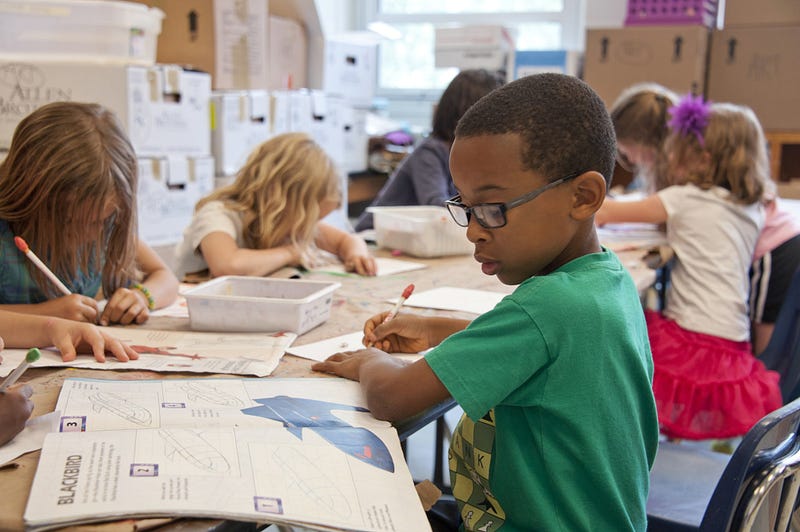
The American Academy of Pediatrics (AAP) has stated that it is best for children to have face-to-face schooling and that reestablishing that norm should be everyone’s top priority.
However, they are looking at what is a global issue through only one, very simple (and pretty obvious) lense: what best-enhances student development and learning?
We are social creatures. Of course, it is best for our young to be in social environments, being taught by trained professionals.
But in a larger sense, what is best for meeting the tiny goal of an ideal environment for childhood development and learning, may very well not be best for the community at large — and if it is destructive to the community at large, it is ultimately not best for children, either.
This is the contradiction some people are unable to grasp: compromises require the sacrifice of some things, for the best long-term outcome. To promote the welfare of the community at large, to prevent deaths and limit infections and sickness, things will have to be rearranged for a while, and schools are at the center of that rearrangement because they touch every level of our society. What happens with them affects us all.
So we must revisit all the issues surrounding re-opening schools, and decide how to answer the question: What is most important?
The Nation’s True Priorities
If the politicians are any indication, fostering the limping economy is of far greater importance than educating children — the childcare function of schools eclipsing everything else that they do.
How do we know this? As they say, “Follow the money.” No one is offering the funding packages required to enable schools to open their doors while following even the most basic safety guidelines promoted by health experts.
No one is promoting economic aid to enhance school facilities so that students can safely be housed there for full school days; money to hire the additional teaching faculty, administrative leadership, staff, and bus fleet expansion to safely transport and handle a more spaced-out, safely contained student population; grants to purchase more and better technology to enable quality distance learning when and where it is called for.
People put money where their priorities are, and they are not doing so when it comes to the education system. The PPP was for businesses. Nothing was offered to schools. Clearly, the economy as defined by a thriving business market is what people value, and as such, they want above all holding tanks for offspring, not safe, quality education for the next generation.
Fine. If that is our true priority, then let’s be frank about it and find a way to make it happen.
Why not turn school buildings into a giant, free daycare centers for parents who need to be able to work? Not every family with school-aged children would need or want to take advantage of that, so the population of such places would be much smaller. Social distancing and other safety practices would be possible where it simply isn’t in the traditional schoolroom paradigm.
It is disingenuous and unproductive for us to continue debating the re-opening of schools as if education itself is what everyone is really worried about.
Get the childcare angle worked out first. Then assess how the secondary concern — presumably teaching young people — can fit into it safely and effectively. Virtual learning, at home, and even at the daycare locations, would certainly be useful. Perhaps some teachers would be staffing these centers, and teach small, in-person groups there. Perhaps outdoor classrooms, where teachers could meet once a week for face-to-face instruction could be interspersed with online coursework.
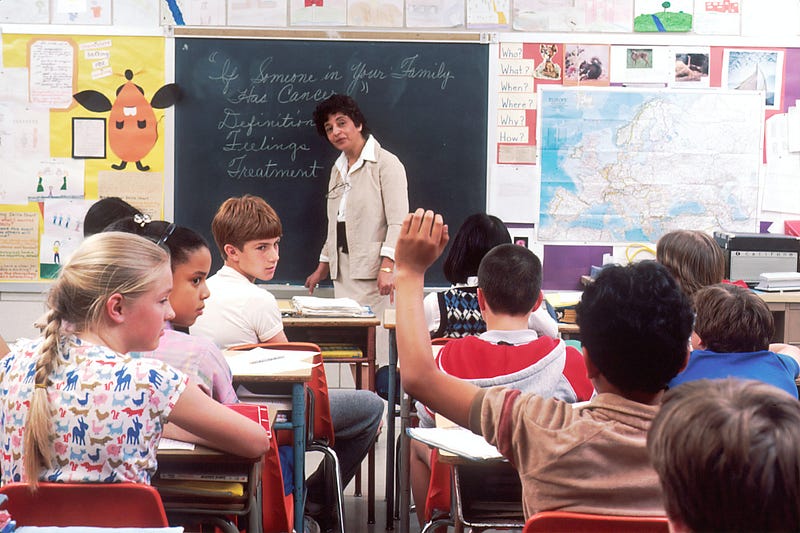
Or perhaps, in the interests of achieving true economic recovery by freeing parents to work, we agree to let the education piece slide for a while or be very minimal. Because these are unique and difficult circumstances for which we are unprepared and ill-equipped, and we can’t do everything. We must prioritize, compromise, and improvise until the world changes again, and gives us more freedom, latitude, and safety.
Each community could and should determine what best fits their demographics.
But it is disingenuous and unproductive for us to continue debating the re-opening of schools as if education itself is what everyone is really worried about.
It’s not.
Some are concerned about kids’ learning — most notably educators and many parents. But those most forcefully promoting a full re-opening of schools in the fall, are far more concerned with the economic impact of doing so than they are with public health and the education and development of young people.


