
NEW YORK
Sorry, We’re Closed
When good businesses die
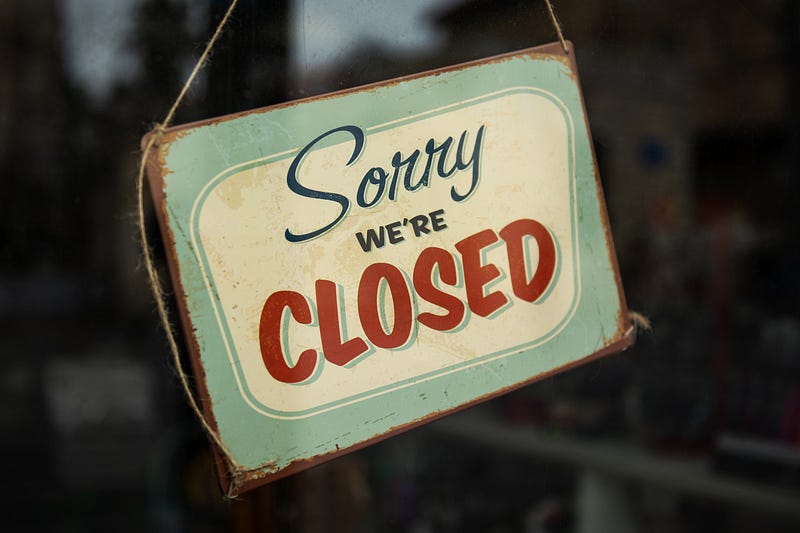
For the first time in a long time, I bought a magazine at the check-out counter. It’s been a year of dependency on online tools and a virtual life that I normally resist but that we have all been forced into thanks to the pandemic. Lately, I have been relishing as many brick-and-mortar moments as I can get, anything to balance a life now led on Zoom. The cover story of the latest issue of New York Magazine features illustrations of the storefronts of 38 New York businesses that are now closed, permanently. The black-and-white sketches were what caught my eye — a rest for my rods and cones in the Pantone chip book that is my local Whole Foods.
Most Sundays don’t find me on the couch reading a magazine, but thankfully today did. And I soon discovered that the cover was only the prelude to a longer list of 500 city businesses that have shuttered for good, many just blocks or miles away. Some were classics like the Copacabana, opened in 1940, where my grandparents used to dance when they were dating. Others were opened for a later generation, like BBar in Noho, established in 1993, where I used to go as part of my coming-out club crawl, back when Tuesday night was as hot as Saturday night in my early 20s. The list was a comprehensive obituary of everything from Odessa in the East Village to the Staten Island Yankees, a hometown favorite of mine, just a ferry ride away in the fifth borough.
The editor’s eulogies were mostly focused on what we will miss as New Yorkers, as city dwellers, as customers. But what was overwhelming in those pages was the death you could feel behind the storefronts, and the mournful not pictured: the business owners. For every store, there is a family, an entrepreneur, even an executive grieving the closing of those doors. The magazine editors remained hopeful, reminding readers that New York is a city of constant reinvention. But the expansive list was a stunning reminder of all that we have truly lost this year.
I was instantly reminded of my own father’s small business and the journey our family took in the early 90s when my dad, a New York City school bus driver, decided to leave his job to buy a franchise of a company called Oil Butler. The then innovative service would bring Jiffy Lube to you, instead of you driving your car in for your seasonal oil change. I’ll share the full story another time, but suffice it to say that the loss of that business was one of the foundational experiences of my childhood — one that I still process in my work today as a film director.
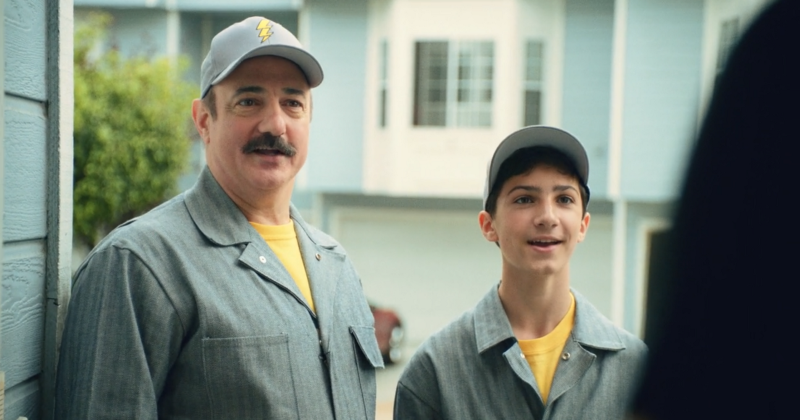
Despite our family’s best efforts to save my father’s quest for the American Dream from devolving into an American Nightmare, we lost that business. We would go on to lose four more, year-after-year, as my father struggled to stem the bleeding with an annual venture and a new set of business cards. It was a road that led him and my mother to bankruptcy, depression, and divorce. It still stings to remember the moment he decided to do it, the moment he signed the papers, the moment we celebrated the opening, the moment the phone rang with our first customers, and the moment it stopped ringing.
In each of these 500 stores — and in each of the thousands across the country that have also closed — there are floors that will be swept for the last time, cash registers unplugged from the wall, kitchen faucets turned and tightened, and social media announcements thanking the community. And for each, there will be a family, a manager, and a staff who will remember each of the moments — good and bad — that brought them from opening to closing. As the doors lock, someone will look at the logo and remember who designed it. Someone will hand the key to the landlord and remember when they signed for it. Someone will stare just a little longer at the signage…before they walk away, for good.
And sometime next week, or next month, or next year, they will each come to a moment where the need to go forward will outweigh the dark heaviness pressing on their hearts. And they will find a way to reinvent themselves and start anew. May our government help them. May our communities embrace them. And may they not walk alone. None of it will be easy, but we as a city look forward to what they bring the world next.
—
Julio Vincent writes weekly here on Medium. Follow him to read his future pieces. He lives in New York City, where he is a writer and director. His debut feature film is now available from Samuel Goldwyn Films. Learn more and join his newsletter at www.juliovincent.com.


