Sorry Not Sorry
The art of genuine apologies, and how to detect when someone doesn’t mean it.
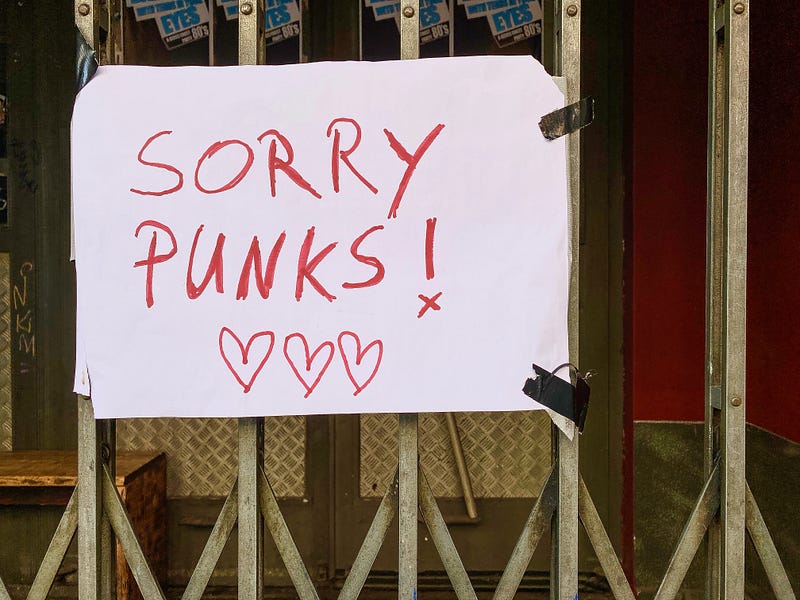
After a fight or quarrel, apologizing is the mature way of admitting error and preparing to move on, while maintaining a healthy relationship and rebuilding trust.
Whether your goal is to maintain a healthy relationship with your partner or an efficient and reliable working environment with coworkers. Knowing when and how to apologize goes a long way and can make the difference between a short falling-out and a life-long feud that drains both you and others of energy.
Unfortunately, apologizing often isn’t as easy as it sounds. Some people have a hard time admitting that they’ve been in the wrong. You might have been in a similar situation yourself, where someone was waiting for you to apologize for past behavior, while you are absolutely convinced that you did nothing wrong to begin with.
“I’m sorry that you feel that way.”
And self-righteous and egocentric people will even turn the tide on you while offering what may appear to be a genuine apology. Be warned, it’s not.
A genuine apology can easily be set apart from a non-genuine one by looking at what is said, and how it’s said.
This can also help us in analyzing our own behavior and spot any potential problems when we find ourselves in a tight spot.
A reminder for those who struggle saying these magic words
Know this: By fighting that clump in your throat and saying that you’re genuinely sorry, you’re putting the other party above yourself and owning up to your mistakes. This shows great strength and maturity. So don’t think of this as “losing”, cause you’re not. You’re winning the maturity game.
I know it’s hard. Sometimes it can feel like you’re the victim. But look past your emotions and try to see the whole picture. I’ve personally been a victim of my own self-righteousness more than once. And it never paid off.
A genuine apology goes a long way and can be a strong indicator of a long-lasting relationship.
So let’s look at some of these scenarios and learn how to tell if someone’s apology is a genuine offer to set our differences aside, or whether they are just adding insult to injury.
What does a true apology look like?
In order to spot a false apology, we need to understand what a real apology looks like.
A genuine apology expresses clear remorse about what happened. It’s not about who was right or wrong. The blame game is over already. An apology should never try to shift any or all blame on someone else. There’s no need for pointing fingers or looking for excuses or justifications.
Even if you think that you acted out of good reason, the one whose feelings you hurt won’t care about the why. So save yourself the trouble of coming up with “I did it just because…”, and cut it short to “I did it.”
A clean and genuine apology:
- Empathizes with the victim and takes complete ownership of wrong behavior.
- Is unconditional. An apology is not a trade deal, there are no “if”s and “but”s.
- Does not try to “even the odds” by naming any wrongdoings of the recipient in turn.
- Promises that the same behavior will not be repeated in the future, forming a basis to rebuild lost trust.
- Is short and to the point. No run-on sentences or beating around the bush.
- Focuses on the recipient, not the one offering the apology. Else it will turn into a justification again.
A sentence as simple as “I’m sorry.” can be enough in the right context. This is most often considered the most genuine apology because it skips all unnecessary talks and cuts to the chase. The two most important words are in there: “I’m” and “sorry”.
Depending on the situation, mentioning what you’re sorry about can be beneficial, because it shows that you actually know what went wrong. Nothing is worse than realizing the person who apologized to you earlier not only didn’t mean it, but doesn’t even know what they did wrong.
If an apology hits most or all of the marks above, you can consider it genuine. But there are many ways to “feint” an apology without ever owning up to one’s mistakes. Let’s take a look at how not to apologize, and why.
Types of disingenuous apologies
The following shows various fake apologies that may feel genuine at first, but lack important qualities to be considered real and genuine apologies.
Downplaying the behavior
One of the most disingenuous apologies you can get is the one that tries to minimize responsibility and to downplay the behavior by adding a reason to it.
- “I didn’t mean it like that”
- “I was just joking. Don’t be so serious.”
- “I just wanted to help, but whatever.”
None of these apologies really express remorse or regret. They try to suggest that it wasn’t that bad or that they only meant well in doing whatever it is they did.
Shifting the blame
Another disingenuous apology tries to shift the blame back to the victim. Here it’s not our fault that we misbehaved, but the victim’s fault for not being able to stand it.
- “I’m sorry that you can’t take a joke.”
- “I’m sorry that you think I owe you an apology.”
- “I’m sorry that you are so sensitive.”
These apologies often come from people who can’t admit their mistakes and want to protect their own integrity and ego, while still catering to your need for an apology, so as they can claim to be the better person overall.
The criminal case apology
Instead of offering a real apology, the perpetrator closes with a simple acknowledgment that an apology would be appropriate. But the apology itself never really arrives.
- “I regret what I’ve done.”
- “I feel remorse.”
- “I’m overcome by feelings of guilt.”
These are often sentences you hear from guilty convicts during court hearings, politicians who have to own up for remarks they spoke out on live TV, and people who care more about their own feelings than yours.
Guilt, regret, remorse, neither of those equals an act of apology. The person is simply stating how they feel, but they don’t act upon it. Feeling bad for something and apologizing for it are still two entirely different things.
Just because I regret doing something, doesn’t necessarily mean I’m sorry to you. Don’t let an expression of regret fool you.
What’s done is done
An apology is never meant to fix a mistake. It’s meant to show that you’re willing to take responsibility. However, some people feel like an apology won’t serve any purpose at all, since the damage is already done. They may come up with replies such as those:
- “I can’t turn back the time.”
- “The damage is done, not worth dwelling on it.”
- “Let’s just forget about it.”
While both parties likely want to move on, let’s not forget that this is just an attempt at pulling their head out of the noose without having to admit guilt.
An apology is not an attempt to undo the damage. But it’s an important step to minimize the effects.
Shifting the blame (again)
This one is also known as “whataboutism”. Instead of putting some or all blame on you this time, the person tries to justify their behavior by pointing at other people who may have shown similar or even worse behavior in the past.
- “I’m sorry that I didn’t call you, but what about Jenny? You weren’t mad when she dumped you.”
- “I’m sorry, okay? But Michael hasn’t prepared his quarterly report either. No one is yelling at him.”
- “Oh, come on. Chris played the same prank on me and I wasn’t mad either.”
As said before, a genuine apology works without justifications of any form. If someone tries to point fingers while apologizing to you, they are all but genuine about it.
Maybe, just maybe
This type of false apology is pretty similar to the criminal case apology. It acknowledges possible responsibility, without ever making it to the finish line.
- “Maybe I was wrong, and you were right.”
- “I guess I owe you an apology.”
- I should have probably asked you first.”
None of these is a genuine apology addressed to you. They all admit that they may have done something wrong. But the final act of taking up this responsibility and repaying their debt to you is left out.
Bartering with you
As mentioned before, a genuine apology should come free of any cost. But some people, especially narcissists and egocentrics, can’t apologize to you without creating a status quo, so they can keep the impression of not being in the wrong.
- “How about we both apologize?”
- “I only say that I’m sorry if you admit that it was your fault.”
- “I apologize, but you have to stop mentioning it.”
This shows clearly that the person offering this kind of apology is strongly convinced of being in the right. They don’t see an apology as an admittance of guilt here. They try to barter their way out and hand over the debt of responsibility to you instead.
If you agree to their terms, they will likely see this case as closed, with you having pleaded guilty as charged.
If-Then-Else
Another way of forming conditional apologies is the if-then-else loop. By adding the conditional “if” to a simple statement, it loses some of its accountability.
- “I’m sorry if my comment hurt you.”
- “I apologize if my behavior was inappropriate.”
- “I’m sorry if I caused you any trouble.”
These comments may appear genuine, but by using “if”, they distance the perpetrator from wrong behavior, suggesting that something may or may not have been inappropriate, without clear admittance of guilt.
Replacing the “if” shows more direct responsibility for past mistakes:
- “I’m sorry for making that comment.”
- “I apologize for my inappropriate behavior.”
- “I’m sorry for causing you trouble.”
To some people, these may seem like arbitrary wordings without much meaning, but often, our choice of words is a subconscious process reflecting our personal emotions and most intimate thoughts more accurately than we are aware of.
Conclusion
Speaking out a genuine apology can be one of the most difficult challenges for most of us. Especially when we can’t see the error on our side, it feels much easier to accuse the other party of being worse, than to just speak out an apology and move on.
The biggest hurdle we have to overcome in order to apologize genuinely is our wrong sense of shame. Hurting someone is shameful. But admitting that we were wrong should not be. So overcome that false sense of shame and pride and do the right thing: apologize. It won’t kill you.
The false apologies above can reflect more than just our inability to admit error, though. They can help identify narcissists, egocentrics, self-righteous people, and toxic partners.
If your coworker or partner continually shifts the blame on you, avoids taking any responsibility on his or her own, and fails to own up to their mistakes, they may well be manipulating you deliberately with a toxic mindset.
A genuine apology should come from the heart: free of any justifications, bargaining, and finger-pointing. A simple admittance of having been wrong.
If you learn to say sorry the right way, you will be a much more trustworthy person to be around, even if you do make mistakes. We all do.
Thank you for reading.