
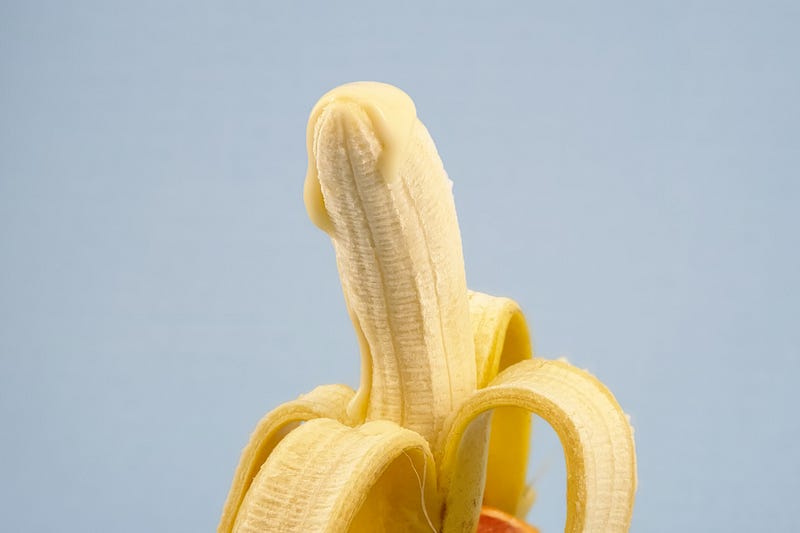
Sorry Guys, Your Penis Is Not As Powerful As You Think
Celebrating the penis as a symbol of masculinity and virility actually hurts men, women and society, a new book says
A few years ago I dated a man who was, as they say, well endowed. This actually worked well for me, but I am not here to brag. It’s more about how his generously sized and girthed penis gave him what might be considered a superpower — what he jokingly called BDS, aka Big Dick Syndrome, which has also been called Big Dick Energy.
Joke as he may, it’s actually a real thing. No matter what others thought or said of him, his “secret” gave him a certain attitude and confidence — dare I say cockiness?
He’s not the only man who has spent time thinking about his penis, especially its size. Women aren’t nearly as concerned about size as men are, but you might not know it. Why? Because people who are possession of a penis have long dominated the research about such things and thus have driven the narrative. (In fact, most women indicate they need four things to enjoy sex and have orgasms — gender equality, partner-specific learning, commitment and “technically competent genital stimulation.” None of which have anything to do with penis size.)
And, as it turns out, that hasn’t worked out well for those who have a penis, those who don’t, or those who love a person who has a penis — thus pretty much everyone — and has impacted, not always for the better, science, society and relationships, according to Emily Willingham, author of the highly entertaining and incredibly informative book Phallacy: Life Lessons from the Animal Penis, which comes out Sept. 22.
While most of us think of a penis as something that’s necessary to be able to procreate (although once artificial insemination came along, a penis and the person attached to it don’t seem to be necessary at all), it has come to mean much more than that. We have elevated the penis into something as powerful, masculine, virile, superior, and that often matters more than the actual person that it’s attached to, she says.
“Society’s messaging tells them that the organ represents everything about them, that without its meeting some fantasy threshold of impressive size, the people they want to attract will reject them, just because of their penis. It’s time to change that message and decenter the penis. This organ has gone from being a symbolic protector of contributor to life to becoming the embodiment and full measure of masculinity, something that men never fully comfortably feel they have achieved and women envy.”
Willingham doesn’t just focus on the human penis — the world is full of interesting intromittum, the term she uses to describe an organ that transmits gametes (sperm or eggs), not all of which are technically penises.
She starts with the world’s oldest largest erect penis (it’s a type of spider, of all things); moves on to bedbug sex (gals, be thankful you’re not a bedbug) and barnacle sex (which Charles Darwin evidently had an “almost pathologically avid interest in,” calling its penis “wonderfully developed”); details the holdings of the Icelandic Phallological Museum, which contains the world’s largest display of penises and penile parts (who knew?); and throws in Freud, Jeffrey Epstein and evolutionary biologists (overwhelmingly men, who seem to forget, or be oblivious to the fact, that vaginas matter as much as penises in shaping evolution), all with the goal of helping us see the penis as an implement for intimacy, not intimidation.
The idea that females and their genitalia and reproductive lives have always been secondary to those of males permeates much of biology and society, she says. And yet, we’ve learned that males are not always the aggressors when it comes to sex, and time and time again we find that numerous female species have copulatory tubes that suck up sperm instead of having the males send it out. If females can do that, well, who truly has the power?
“Many humans have the notion that sex is fixed and that an intromittum is the province of males. Nature defies these assumptions in species after species, including humans, pushing against the boundaries we try to draw between ‘male’ and ‘female’ using genitalia alone … we have used these assumptions to reduce humans to nothing but genitalia — especially to the phallus, or erect penis. Even though this modestly contoured organ lacks features associated with sexual antagonism, we have lapsed into centering it as the avatar of threat and aggression and the target of antagonism to the exclusion of our humanity. Centering the penis in this way diminishes not only the power of people without one, but also the personhood and humanity of those who have them.”
The #MeToo movement revealed how many men have used their penis to intimidate and engage in other bad behavior. Science would have us believe that the penis makes the man and, well men just can’t control themselves. Except humans — and that includes men — have a huge capacity for impulse control. Maybe not little kids, but surely grown men.
Yet we’ve seen them be unable, or unwilling, to allow those impulse controls to kick in. And if they’ve absorbed the societal message that the world (and women) “owe” them something, they behave accordingly (and it isn’t just incels — involuntary celibates — who feel that way, as Kate Manne details beautifully in her new book, Entitled: How Male Privilege Hurts Women, which I’ll be writing about soon).
They send dick pics. They use drugs and booze to numb whatever filters they may have and lose any sense of impulse control. And then they get angry and confused about why the messages they’ve been sold aren’t working, she says.
“With famous men who don’t have the excuse of underdeveloped impulse control, whipping out dicks at subordinates and otherwise behaving criminally, the penis is having a #AllAboutMe moment, implicated as the symbol of all these men — and their brains — behaving badly. … That’s because culturally, we’ve come to use the penis as the symbol for some men and their shitty behavior, and we continue to disbelieve or background their targets.”
Rather than focus on the penis as having the power and being the key to masculinity, Willingham believes it’s time to put that in the hands of where it belongs — the brain.
“Our obsession with the size, power, and appearance of the penis is a cultural remnant of a symbolic use that no longer applies. It’s not the penis’s fault that it’s freighted with this baggage. Our brains did this, and our brains can undo it. We can use them to have a more realistic and healthy view of the penis as an organ worth getting to know, intimately and consensually, along with the person who has it.”
We see over and over that an unhealthy view of masculinity actually does more than hurt women, it hurts men. It’s time to put the penis back in its place and celebrate the person attached to it.
Want to discuss how to deal with the penis in your relationship? (Of course you do!) Read The New I Do: Reshaping Marriage for Skeptics, Realists and Rebels (Seal Press). You can support your local indie bookstore (please do) or order it on Amazon. And we’re now on Audible.