
Sororities in the United States Have a Classism and Exclusivity Problem
By Rose Carlson and Dr. Benjamin Drury
Fraternal organizations, including sororities, have long been recognized as institutions within higher education institutions. As members of these organizations, people gain access to networks with social and cultural capital that open doors that would otherwise be closed or slammed shut in their face. Animal House romanticized the white male fraternity highlighting such rites of passage that have become synonymous with fraternity parties as binge drinking, toga parties, and stereotypical poor grades…but eventually become wildly successful in politics (re: Senator Blutarsky). When speaking the words ‘fraternal organization’ to the average American, this is where their will likely go. Even for me, when growing up in the 90’s my friends and I would frequently visit area campuses on weekends and make appearances at the fraternity parties. Many times, I felt like I was in Animal House. Sororities have a decidedly different vibe.
Originating in the early nineteenth century when women were granted access to college, sororities were initially established as “secret societies” designed to safeguard and support women on campus. Women needed safe spaces where they could discuss topics of interest in their studies, personal and professional challenges, and other topical issues of the day. As with any college student at the time, these women were immersed in an experience designed intentionally to transform their thinking and worldview. Their male counterparts had a few century head start on them, but fortunately the only progress they made in that time were the invention of the Beer Bong, various intramural sport championships, and scientific advances in odor removal. Sororities, like fraternities, were designed to be organizations that privde a sense of camaraderie and solidarity through shared rituals, passwords, and handshakes. However, an unintended consequence of this exclusivity was the exclusion of individuals who were either not allowed to attend college or could not afford it.
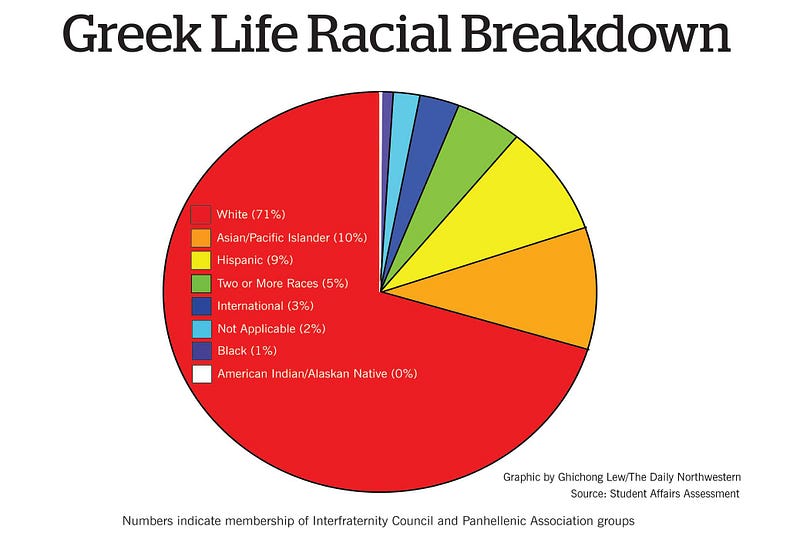
Today, when we examine sororities, particularly within the Panhellenic Council (PHC) at The University of Illinois, we find that these organizations continue to be predominantly composed of upper-middle-class, White, heterosexual, able-bodied, cisgender, and thin women. This lack of diversity and representation within sororities reflects systemic issues of classism and exclusivity, limiting access to valuable sources of social and cultural capital for racialized and minoritized individuals.
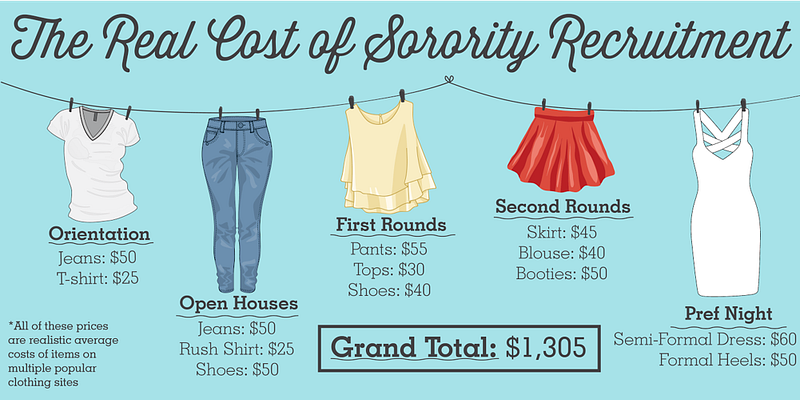
The socioeconomic barriers that exist within Greek life contribute to the exclusion of marginalized communities. Fraternal organizations often entail significant financial commitments, including membership fees, housing costs, and various social expenses. These financial obligations can pose significant obstacles for individuals from lower-income backgrounds, making it difficult or impossible for them to participate fully in Greek life. As a result, the composition of these organizations becomes skewed towards those who can afford to bear these financial burdens, perpetuating a cycle of privilege and exclusivity.
We need to take a minute to unpack the reality of the social and cultural capital gained through participation in Greek life. It is the people you meet and the ideas they turn you onto that provide the biggest return on investment for participating in fraternal organizations, and sororities are included in that conversation. Truly, the social and cultural capital gained through participating in the courting and initiation process — and then weekly meetings, fundraisers, and interhouse drama — can have far-reaching implications for personal and professional networks, career opportunities, and social mobility for those willing to make that transaction. These networks are often composed of individuals who share similar backgrounds, reinforcing existing inequalities and limiting access for racialized and minoritized individuals. Unfortunately, the homogeneity — largely white and upper-middle class — within sororities perpetuates a sense of exclusivity and can create an unwelcoming environment for those who do not fit the dominant narrative of the organization.
Dr. Kimberle Crenshaw is credited with the term “intersectionality” which assumes we are all a composite of our collective identities that connect from all areas of our life. Our race, ethnicity, gender identity, and other forms of social difference compounds the challenges faced by marginalized individuals seeking inclusion in broader society, and these limitations can be exacerbated in Greek life. Women who identify as anything other than white, upper-middle class, and heterosexual have historically been met with some resistance from dominant sororities in the Panhellenic circle. Stereotypes, biases, and microaggressions may further marginalize racialized and minoritized students within sororities, making it difficult for them to fully engage in the organization’s activities and feel a sense of belonging. A relative lack of representation and limited opportunities for diverse voices and perspectives within sororities reinforce the systemic barriers that restrict access for marginalized groups.
Addressing the issues of classism and exclusivity within fraternal organizations requires a collective effort to foster inclusivity and promote diversity. From an objective standpoint, Greek organizations are not immune to the decline of students available in the United States of traditional college age. Like any other organization, sororities require members. In the absence of an abundance of available population to select from, Greek organizations must actively work to eliminate financial barriers, such as providing scholarships or financial aid programs, to ensure that individuals from all socioeconomic backgrounds can participate without undue burden if they intend to stand the test of time (and inflation). Creating inclusive and anti-discriminatory recruitment practices, training members on allyship and inclusivity, and promoting diverse leadership within sororities are crucial steps towards dismantling the structures that perpetuate exclusivity. By acknowledging and actively challenging classism and exclusivity within Greek life, sororities and other fraternal organizations can transform themselves into spaces that celebrate diversity, empower marginalized individuals, and provide equal opportunities for social and cultural capital accumulation. Through these efforts, sororities can become agents of change within higher education institutions, fostering inclusivity, and creating a more equitable environment for all students.