
Sophie Germain: A Revolutionary Mathematician Beyond Her Time
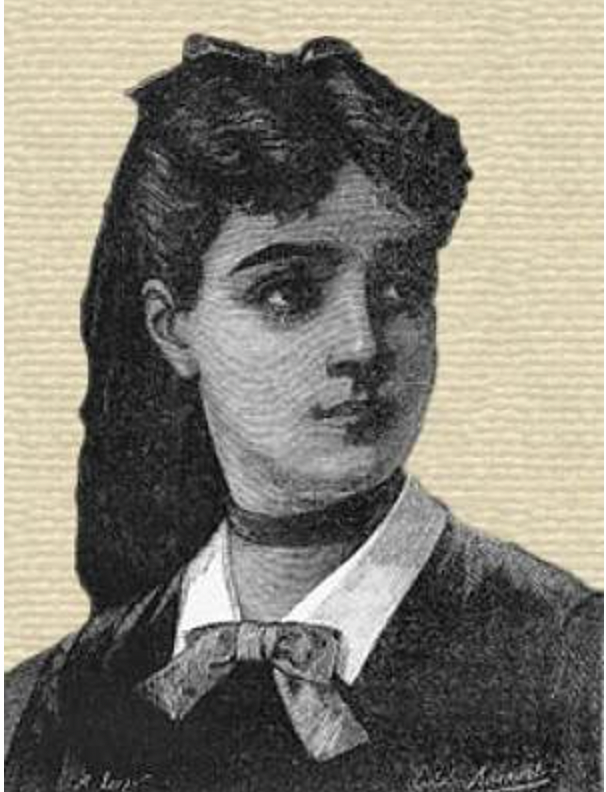
Sophie Germain’s life story is an inspiring testament to the indomitable spirit of a woman who, against the backdrop of two major revolutions, carved a niche for herself in the male-dominated world of mathematics. Born in Paris on April 1, 1776, into a time of upheaval and change, Sophie’s journey was one of defiance, perseverance, and unparalleled dedication to the sciences, especially mathematics, a field largely inaccessible to women, specially in her era.
Germain’s interest in mathematics sparked during the tumultuous years of the French Revolution. Confined to her home for safety, she stumbled upon the story of Archimedes’ death in her father’s library. The tale of Archimedes, so engrossed in his geometric studies that he ignored a Roman soldier’s inquiry and met his end, ignited Sophie’s curiosity in mathematics. Despite her family’s strong opposition — stemming from societal norms that deemed mathematical studies inappropriate for women — Sophie’s passion for numbers was unwavering. She resorted to studying at night, undeterred by her parents’ attempts to stop her, including taking away her light and warmth. Eventually, her determination won, and her family acquiesced to her studies.
At the age of 18, Sophie found a way to bypass the gender restrictions at the newly established Ecole Polytechnique by obtaining course lectures and submitting her work under the pseudonym M. LeBlanc. Her exceptional work in analysis caught the attention of J.L. Lagrange, a prominent mathematician, who became her mentor upon discovering her true identity. This relationship opened doors for Germain to enter scientific circles previously closed to her, not just because of her gender but also due to her middle-class background.
Sophie’s correspondence with Carl Friedrich Gauss, under her pseudonym, marked a pivotal moment in her career. Her work in number theory, particularly her theorem which was a significant step towards proving Fermat’s Last Theorem for the case of n=5, showcased her profound understanding and innovative approach to mathematics. Gauss’s eventual discovery of her true identity only deepened his respect for her intellect.
Germain’s persistence also led her to tackle a problem posed by the French Academy of Sciences regarding the vibration of elastic surfaces, inspired by Chladni’s experiments. Despite initial setbacks and a lack of formal education that was evident in her submissions, Sophie’s relentless pursuit of knowledge and improvement led her to win the prize in 1816 with her paper on the vibrations of elastic plates. This achievement was monumental, not just for the advancement of the theory of elasticity but also for breaking gender barriers in the scientific community.
The recognition by the Academy, and her collaboration with renowned mathematicians as an equal, underscored Sophie Germain’s remarkable transition from a self-taught mathematician to a celebrated figure in the scientific world. Despite her death from breast cancer at the age of 55, Germain’s legacy endures through her contributions to number theory and mathematical physics. Her story is a powerful reminder of the strength of the human spirit in the face of societal and personal adversities.
Sophie Germain’s life encapsulates the essence of a revolution — not one fought on the streets with weapons but a silent, persistent battle against the entrenched norms of her time. Her achievements are a beacon for future generations, illustrating that passion, resilience, and hard work can overcome the most formidable obstacles. Today, as we celebrate her contributions, it’s clear that Sophie Germain was not just a woman of her time but a revolutionary whose impact transcends the era into which she was born.