
Music
Songstories May Music Writing Prompt: What’s Your Go-To Summer Song?
Hysteria / Def Leppard, Hysteria (1987)
Every now and again, you’ll see a kid (ie: anyone younger than you) wearing a Mötley Crüe, Guns and Roses or AC/DC t-shirt. It might cause you to smile and think, “Ahh…things are going to be ok after all”. But at all costs, whatever you do, I implore you to resist the urge to engage them in conversation about the band and its music.
I once asked a student of mine what his favourite song on Appetite for Destruction was — you know, maybe connect with him a bit on that level — and all I got back for my efforts was a blank look.
I haven’t tried this again.
But I do remember a time, now covered in the frosts of my suburban past, when kids did wear band shirts without irony.
You remember them. They were called “baseball t-shirts” because the sleeves ended between the elbow and the wrist. Typical t-shirt design was turned on its head, because the sleeves were white and the body was black. The black seemed to represent the darkness within and the “don’t fuck with me, I know things that you don’t” attitude that the badassed wearer sought to project. The front was emblazoned with the dark, sepulchral, apocalyptic album covers of such hard rock / metal icons such as Judas Priest, the Scorpions, and Iron Maiden.
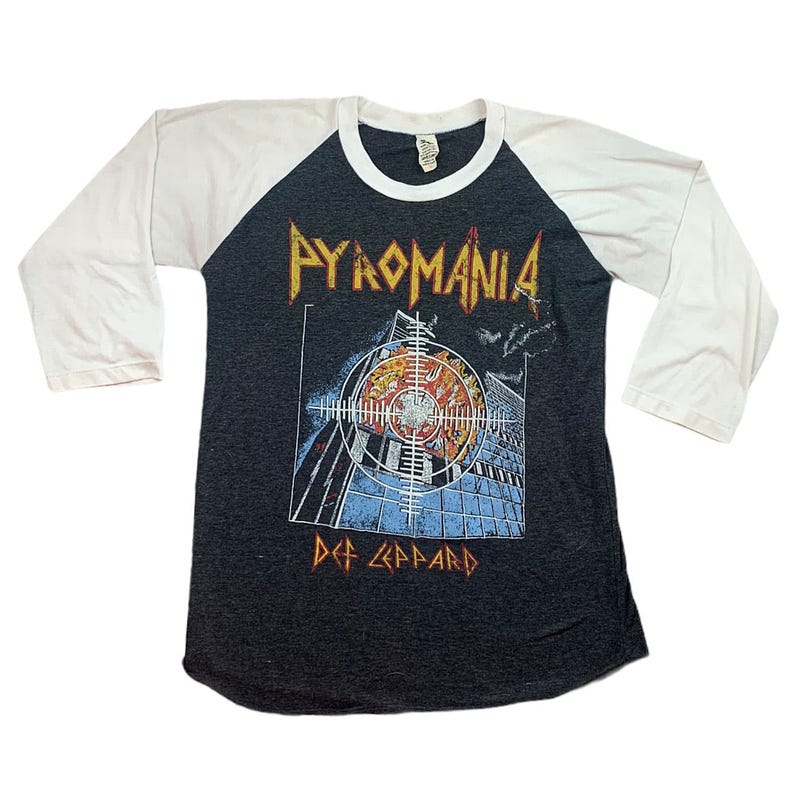
But my favourite of these was Def Leppard. On the cover of Pyromania in 1983, there was a burning building and the band’s name was in a font that can only be described as pure 80s metal. What did it all mean? What did it say about me if I wore it on a t-shirt?
On the one hand, the radio was full of Wang Chung, Spandau Ballet and Culture Club. Those truly in the know were starting to make noise about New Order, Depeche Mode and Pet Shop Boys. Someone gave me Theatre of Pain by Mötley Crüe for my 11th birthday. My mom made me take it back to the Alley Cat Records store at Scottsdale Mall from whence it came. Something about pentagrams on the album cover.
There was a lot going on.
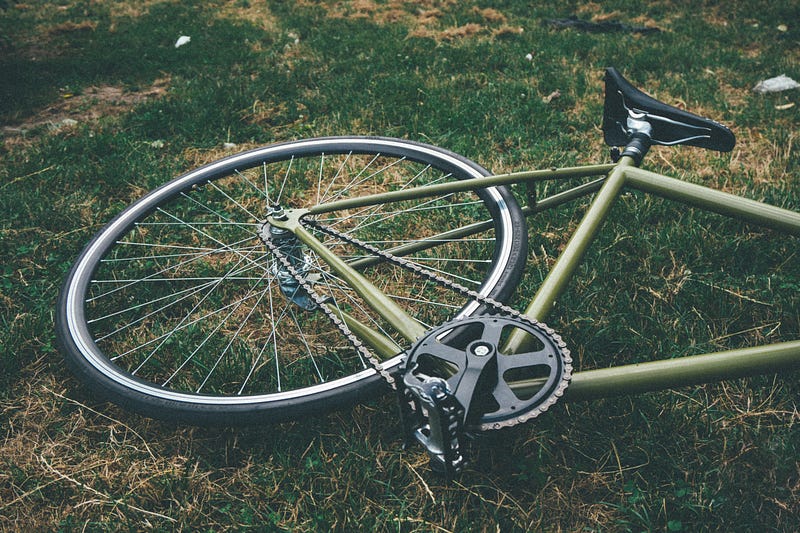
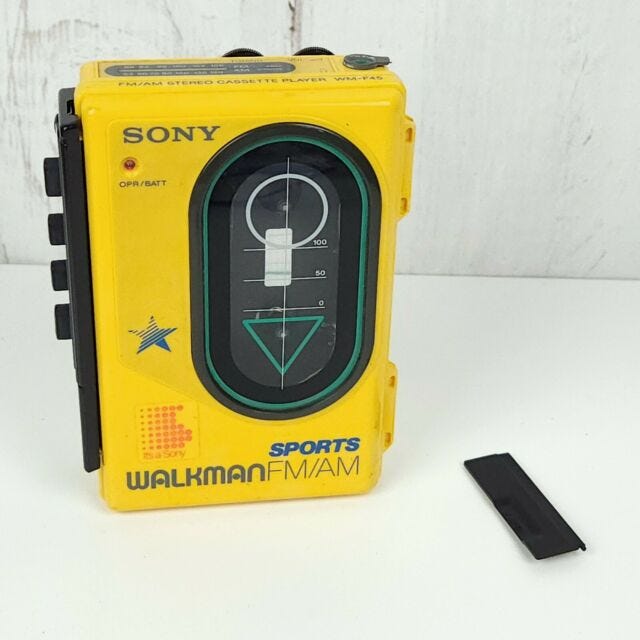
And so, Def Leppard et. al. were shelved for a bit. Until the Summer of 1988, when Hysteria found itself on heavy rotation on my yellow, hard plastic cased Sony Sports Walkman, as I pedalled back and forth to the local pool, under threat of 9pm curfew, for furtive meetings with my first ever romantic interest.
That album produced nothing but hit after hit, even a year after its release. However, Animal, Pour Some Sugar on Me, Rocket and such were all derided by original t-shirt wearers as the work of overproduced, overhyped sellouts.
They were probably not wrong.
But for me, that summer, the standout was the title track, Hysteria. I am instantly transported back to that summer every time that song comes on.
Off the hop, we get the one armed drumming of Rick Allen that so amazed us at the time, the bass of Rick Savage, and the shimmering rhythm guitar of Steve Clark. But it is the instant, trademark sound of Phil Collen on guitar that is layered on top that sets the stage. The start is subdued and Joe Elliott’s first vocal matches that.
“Out of touch, out of reach, yeah
You could try to get closer to me
I’m in luck, I’m in deep, yeah
Hypnotized, I’m shakin’ to my knees”
Things ramp up from this point and don’t come back down until just before the end. Elliot’s voice goes up an octave and he sings the familiar refrain of yearning and longing that was a staple for 80s hair bands, that would repeat throughout the song.
“I gotta know tonight
If you’re alone tonight
Can’t stop this feeling
Can’t stop this fight”
The sound of this whole album is different from the pure hard rock of the three albums that came before it, it is much more cinematic and theatrical. The chorus, heavily produced and mega multi layer overdubbed, with backing vocals comes in and is an example of this. They have continued to pursue this sound ever since.
“Oh, I get hysterical, hysteria
When you get that feelin’, do you believe it?
It’s such a magical mysteria
When you get that feelin’, better start believin
’Cause it’s a miracle, I see you will, ooh babe
Hysteria when you’re near”
The next verse chorus sequence repeats the one at the start, but it is the guitar solo that follows that really takes this song to its high water mark and places me directly into the middle of that summer and what I was up to. Phil Collen absolutely nails it.
Searching, wondering, hoping at first and then eventually taking the bull by the horns in a high pitched riff leading into the height of August. It can’t be sustained though, can it. Just when I think it’s going to last forever, the end of August and with it the end of this song, brings it all back down to earth again. Next is the sadness of September, when it’s all over and I pedal home for the last time, wondering how I’m ever going to get that t-shirt back. (868)
I really do hope that you like what you have just read. If you want unlimited access to thousands of writers, consider a subscription to Medium. It will set you back $5 a month and if you use this link, then I get a slice of that. I might get to see Def Leppard this summer after all.


