
Sonar for Soil — How We Can Use Sound to Save Our Farms and Forests
We can now decode the Earth’s subtle language if we care to listen
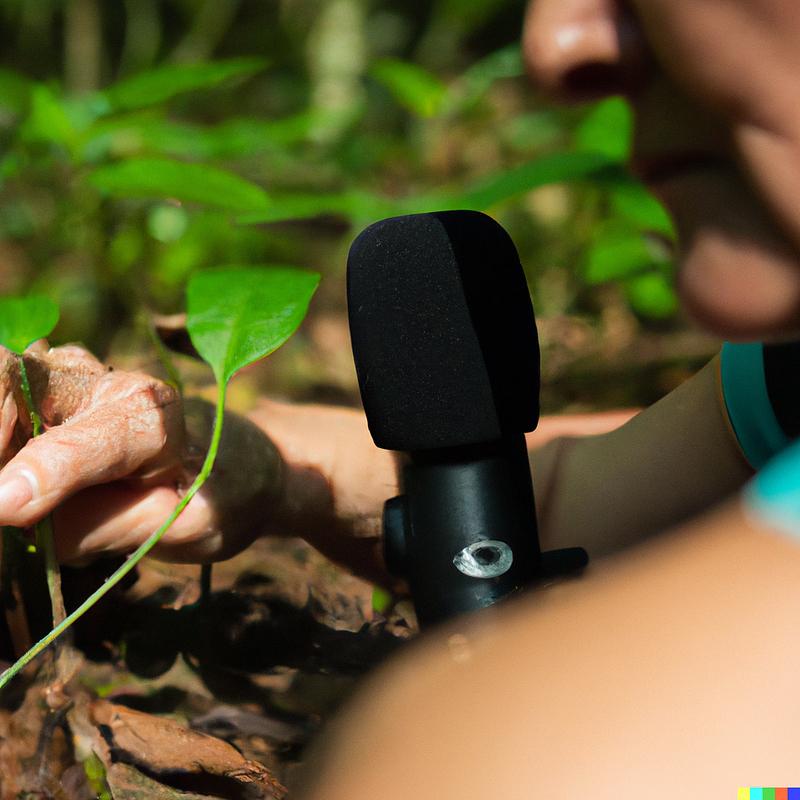
By listening to the ground, we can uncover the profound story of our planet’s health.
Soil is the home to a whole range of creatures, from worms to moles to bacteria and a lot of their action happens out of sight, underground. And where there’s movement, there’s sound.
So researchers have come up with sound tools to decode what’s going on in the soil without having to dig up (i.e. destroy) everything. By analyzing sound patterns in the soil they can learn what the biodiversity looks like, the land’s moisture levels, the rate of natural to human sounds, and much more. These indicators help assess the overall health of the land.
In basic terms, more sounds mean more species, which usually translates to healthier soil. But there’s more to it.
What happens when we actively use acoustics to track the health of different landscapes?
The sound of sustainable agriculture
Over the last century, industrialized farming practices have spread far and wide to meet the demands of our ever-growing global population. However, they have often led to a decline in biodiversity.
What if we could maintain both high agricultural productivity and biodiversity on that same farm?
Researchers have developed something called acoustic monitoring which could help achieve both of these goals.
- Pest control: Certain animals like bats and birds are natural pest controllers. They feast on insects that could otherwise damage crops. By monitoring their presence through acoustics, farmers can learn how effective they are at keeping those pesky pests in check. Farmers could also use this to track pests like May beetle larvae without resorting to tons of insecticides.
- Branding: Many consumers are becoming more conscious of where their food comes from and how it’s produced. Using sustainable practices and being able to demonstrate that farmers are actively preserving biodiversity can be a strong selling point for the farm’s products. That’s how they’ll attract environmentally conscious consumers.
- Financial incentives: In some regions, there are regulations and incentives related to sustainable farming practices. By monitoring biodiversity and showing the farmers are actively working to maintain it, they may become eligible for financial incentives or other benefits provided by government or industry sustainability programs.
Thus, soil sounds can not only reveal management issues that aren’t immediately visible above ground but also help develop more sustainable and profitable agricultural practices.
The sonic path to protecting our forests
It’s concerning how rapidly forests are disappearing.
In the last 30 years, humanity has lost 10% of the world’s forests, which is equivalent to an area greater in size than the European Union.
We need to take care of our forests or we won’t have them (and humanity alongside them). We can start by monitoring them but it’s not an easy task. This is where eco-acoustics comes into play. It offers a rapid, efficient, and non-intrusive way to monitor biodiversity.
Researchers from Flinders University in Australia have applied a variety of eco-acoustic tools and indices to measure belowground biodiversity in a forest restoration site. This site had recently deforested plots and other ones undergoing restoration over several decades which allowed for a good comparison of the land’s health.
They found some intriguing results:
- Restored plots showed significantly higher acoustic complexity and diversity compared to the deforested plots.
- Having more earthworms and other critters in the soil typically indicates healthier soil, unless those worms are not native to the region.
- Restored plots had a greater high-frequency to low-frequency ratio, meaning there are more natural sounds coming from living organisms (biophony) compared to human-made sounds (anthrophony). In other words, the sounds we hear are primarily from nature and wildlife rather than man-made noises like cars or machines.
In a world where 95% of the Earth’s land is projected to be degraded by 2050 without large-scale ecosystem restoration and effective monitoring, tools like ecoacoustics could be a game-changer.
- Monitor the ecosystem’s health: Foresters could figure out which parts of the forest are suffering from drought or pest infestations. With eco-acoustics, they can detect changes in biodiversity, identify specific species, and even recognize distress calls or unusual patterns.
- Detect problems early on: For instance, if certain insects known to cause damage to trees have distinctive sounds, foresters could use eco-acoustic data to identify areas where these pests are becoming a threat before visible signs of damage appear.
- Evaluate restoration efforts: By comparing the soundscape of restored areas with degraded ones, foresters can assess whether these efforts are effectively restoring biodiversity and ecological balance.
There’s so much we can do with the effective use of sound.
Recording nature is no easy endeavor
Mother Nature herself can be quite tricky.
First of all, the weather can mess up the recordings easily. Rain, wind, or even a thunderstorm can turn that carefully collected data into a cacophony of noise. It’s like trying to record a symphony during a hurricane.
Then there’s the sheer volume of acoustic data. It’s like trying to drink water from a firehose. There’s a ton of storage and processing power required to handle all those sound waves. And then making sense out of it!
That’s the price we pay to unlock the secrets hidden beneath the Earth’s surface.
Final thoughts
We now have a way to sneak peek into the underground world that’s been hidden from us for so long.
The soil symphony not only showcases the beautiful melodies of nature, but it signals the health of the environment.
If we’re able to identify what a healthy environment sounds like we can become much more efficient at handling it.
We can detect pests before they become too big, maintain healthy biodiversity on our farmlands, track a forest’s restoration process, and much more.
And it’s also a bonding exercise with nature. The more we listen to it the more aware and empathetic we become, and the more we’ll do to preserve it.
Let’s be smart about sound and put it to good use.
Want to learn more about the sound verse?
Join my newsletter to explore everything related to music and sound, from the effects on our psyche to the technologies that use sound to improve our lives.


