
Somewhere Between Monkeys and Global Governance
The limits of democracy.

“The Destiny of Man is to unite, not to divide. If you keep on dividing you end up as a collection of monkeys throwing nuts at each other out of separate trees.”
— T.H. White, The Once and Future King
I was always convinced by these words. Maybe I read them before any real political sensibilities had been formed. Perhaps I was swept along by the majestic sweep of this re-telling of the Arthurian legend. Either way, I didn’t submit the notion to any critical review for decades.
United States of Europe? Bring it on. I had always enjoyed a cafe con leche with churros, and the beaches of the Mediterranean trounced the windswept misery of the English seaside.
Global government, perhaps under the benign oversight of the United Nations? Why not? Both politicians and philosophers had long held that all men were brothers. Why not take concrete steps to make it a reality?
In practice, a Europe tending towards federalism became too unwieldy to make the necessary differentiation between the needs of its members. Ask the Greek population, who were frogmarched into austerity in service of keeping the Eurozone afloat. Or the Bulgarians, expected to bear the brunt of the past decade of migration into Europe from the Middle East.
I set out my reasons for wanting to leave the EU in answer to a maudlin lament from someone on how society had died on the night of the last UK election (to which I would rather not give the oxygen of further publicity).
What is interesting to me, given my belief in the validity of the 2016 Brexit vote, is that I can’t come up with a convincing reason why Scotland, in turn, shouldn’t be able to withdraw from the United Kingdom.
Nicola Sturgeon is right that the voters in Scotland appear to have given her a strong mandate to pursue her plans for a further Scottish Independence referendum.
If I were to say “No, the United Kingdom as a whole must prohibit Scotland from leaving”, why would I have been perturbed at the thought of the EU prohibiting the UK’s exit from their club?
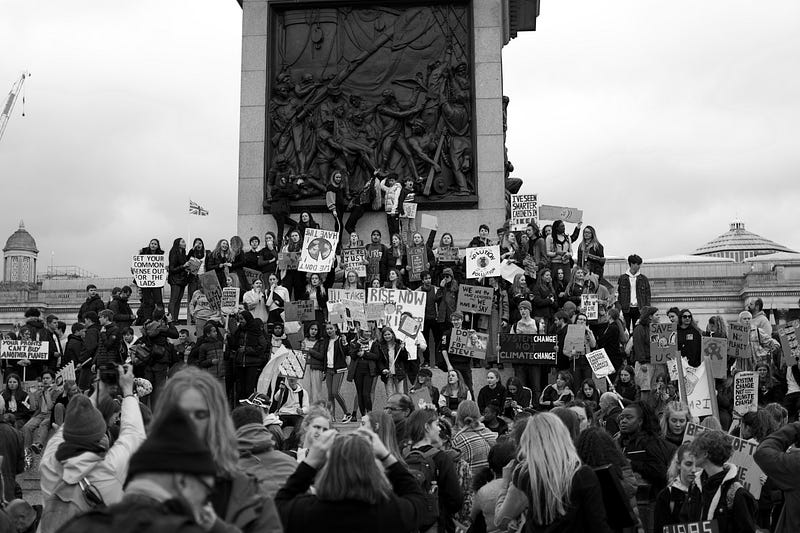
How do we draw the boundaries within which democracy must be respected?
A similar question could be posed to Nicola Sturgeon.
The Shetlands, Orkneys and the Outer Hebrides have always aligned more closely with Westminster than with Edinburgh. During the first Independence Referendum, there were those in the Islands ready to launch an independence bid from Scottish rule, should the main vote be for departure from the UK. How could Sturgeon rule this out with any measure of consistency?
Take this to its absurd conclusion and you get the case of Sealand, the rusting platform in the North Sea, which was once part of the UK’s coastal defences, and declared itself a sovereign principality back in 1967. Since it is just outside official UK waters, and probably because they can’t be bothered, the UK government has never tried to overrule this declaration.
What would happen if every county, town, hamlet and household were to make a Unilateral Declaration of Independence, provided always that this was in accordance with the majority will of the arbitrary group of people thus segregated?
I wish I had an answer.
Tradition, which mainly means ‘the settled outcome of historic warfare’, determines most of the broad zones within which democracy operates.
This isn’t necessarily a philosophically satisfying answer, but it seems to be all we have as an intermediary step between global government on the one hand and those monkeys in the trees on the other.
Many thanks for reading! If you enjoyed this, you may be interested in my take on Jeremy Corbyn’s quandary, which can be found here:
Note from the editor: The views expressed by any Thought’s writer on political issues are entirely their own and do not necessarily reflect those of the editor.


