
Sometimes, to Keep Moving Ahead, You Need to Stop
Progress Isn’t a Linear Progression
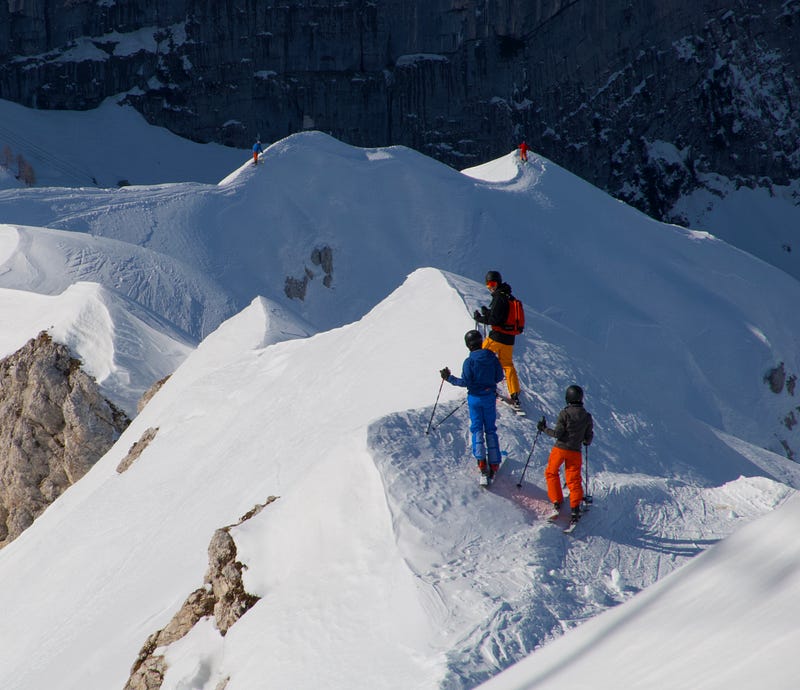
I’m sure there is a psychologist out there that can identify the particular personality type, but I like to keep moving forward. Always. Maybe that’s why I loved running so much. Every step moved you that much closer to the finish line. It didn’t matter whether it was a running step or a walking step; each one got me 31 inches closer. Unlike other sports where you move back and forth, sometimes close, sometimes farther away.
Maybe all creatives are this way; I don’t know. But once I start something, I not only want to finish it. I want to finish it now. Sure, I enjoy the process, but I need to see progress. I need to see forward momentum. That’s why I could never be a sculptor. All of my works would be entitled “Little Pieces of Stone.”
As my many faithful followers know, (and I thank you), I recently purchased a guitar. And as anyone who has ever tried to play, and indeed, anyone who has mastered it knows, it’s a long and painful process. I don’t mind the painful part; I know that too shall pass. But the long part, not so much. I want to learn it today.
But, as they say, progress, not perfection. And I can live with that. But I want it to be a linear progression. Every day, I get one day better. But that’s not the way it works. As the lady said in the insurance commercial said, “That’s not how any of this works.” Creating, learning, whatever; it’s not a linear progression.
Some days, I learn a little. Some days, I learn a lot. Other days, I got nothing. And those are the days and times I want to talk about. Those times when the chords just won’t form. When I’ve suddenly forgotten how to read music. When the melody just won’t come. That’s when I have to stop. If I want to keep moving ahead, I need to stop.
Because, if I don’t, then best case, I just get frustrated and make no progress. Worst case, I move backward, I regress. I enforce negative behavior that my muscle memory may not forget.
So, I stop. And walk away. I come back later, maybe not until the next day. And then, hopefully, things are better. My fingers work again, and I can make progress I desire.
I’ve written a couple of articles about my experiences as a video gamer. (Wow, a geek that plays video games. What are the chances?) For those not familiar, there are plateaus in video games you have to master called ‘boss fights.’ These are much harder battles than those leading up to it and meant to test your skill before allowing you to graduate to the next level. (Hey, there’s an idea. Start calling final exams boss fights. Then maybe kids would get into them.)
More often than not, these are frustrating to me. I’m older now and don’t have the reflexes I once did, so I find myself repeatedly trying to beat the same boss. But I have (almost) learned a lesson over the years. If I try a few times, or a few dozen, and don’t make any progress, I just need to stop and walk away. More often than not, the next day, I come back and beat the bastard on my first try.
I ran into the same thing back in my programming days. This was before APIs and GUIs. When you had to control every aspect of each piece of hardware, writing to registers and moving blocks of memory around. I hope I didn’t scare anybody. But the point is, I would reach a point, I couldn’t get beyond. How can I make this thing do that thing?
Finally, frustrated, I would stop and walk away. Then, later, on the drive home, or in the shower, or the middle of the night, the answer would come to me. But if I had stayed and tried to work it out, it would most likely have continued to elude me.
These days, in my photography, I hit the same walls. How do I process these images? How can I make this better? I sit there and stare at the screen, hoping the answer will appear.
It usually doesn’t.
But I want to progress. I want to finish. I had a vision when I took the shot, and now I want to bring that vision to its conclusion. But I get hung up on the white balance, or some tweaking of the exposure. I should stop. But I don’t, and before I know it, I’ve made a complete mess of things. Fortunately, unlike in my film days, there is a reset button.
I will often walk away from a frustrating image and come back to it the next day. I take one look and reset. Then start over. I have found that if I try to push forward, I completely muck it up, piling one wrong choice on top of another. If you are building a house, you can’t fix a lousy foundation by putting a bad frame on top.
With my writing, I’ve found the same thing, but with an important caveat. If I hit a wall in an article, I need to stop and walk away. Let it marinate in my mind a bit. Let it, as a friend of mine says, cogitate. Then, the finish will appear to me. Or at least the next sentence.
And sometimes, that’s all it takes.
But, and this is critical to my process, if I don’t hit that wall, never, ever stop. Keep going. If the creative juices are flowing, let ’em rip. Don’t stop for any reason. I hope my house never catches on fire. They might find my charred corpse, fingers poised over a melted keyboard in mid-phrase. Because if I stop, I may not be able to pick up the thread again. I could finish, but it would be a different story. I have found this more in my fiction work than non-fiction. I can always reread a non-fiction piece, figure out where I was going and continue. Or not. Maybe I change directions. It doesn’t matter, as long as I make progress.
With fiction, it’s different. At least for me. You do you. When I start writing a story, that’s all I do; start. Then the story takes over. The characters are in charge. I don’t tell the story so much as let it evolve. Back when I wrote almost exclusively fiction, virtually every story was finished in one sitting. The ones that weren’t are still sitting there. I should probably just delete them.
But that’s the exception to the rule. (Everybody plays the fool. Come on; you know that’s what went through your head.)
I want to move forward. I want to finish. Always. Things unfinished nag at me and worry me until they are done. But sometimes, that’s the price you have to pay. Banging your head against a wall only gives you a headache.
The wall doesn’t care.
Sometimes, to keep moving ahead, you have to stop.


